Falklands Leader Accuses Trump of Using Islands as Political Pawn
Falklands Leader: Trump Uses Islands as Political Pawn

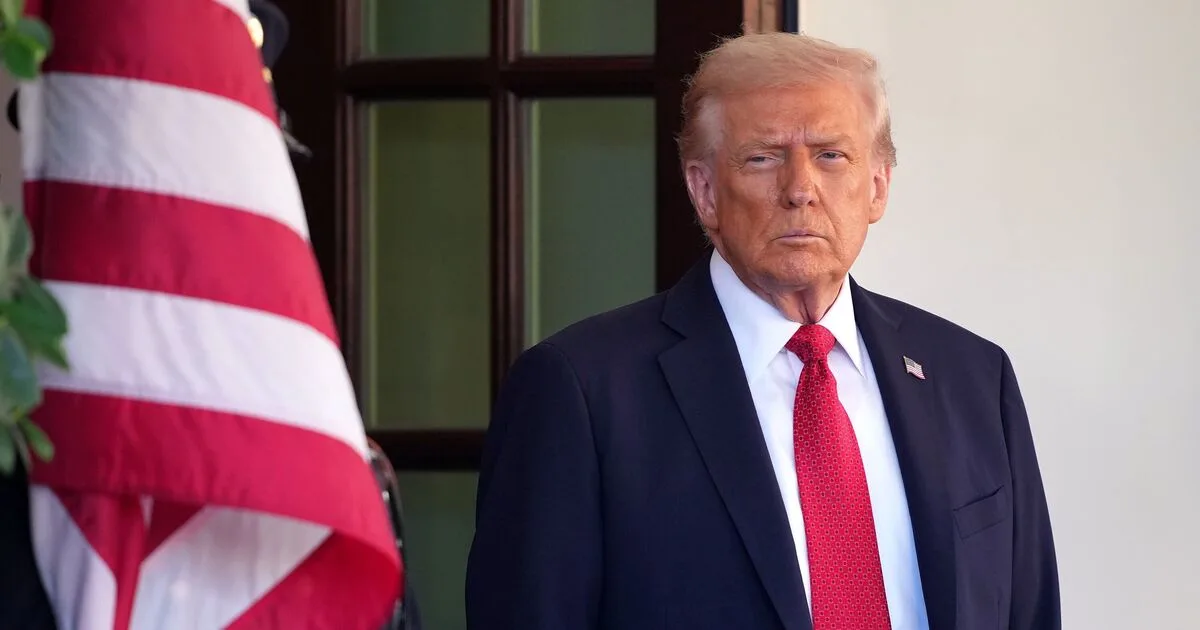
The leader of the Falkland Islands government has accused US President Donald Trump of using the territory as a political 'pawn' to punish Britain for failing to support his military campaign in Iran. Dr Andrea Clausen, chief executive of the Falkland Islands government, said local residents feel insulted by recent political 'games' played by Washington and Buenos Aires over the future of the isolated South Atlantic archipelago.

Leaked Memo Sparks Tensions

The controversy follows a leaked internal memo last month suggesting the US would 'review' the UK's claim of sovereignty over the Falklands, citing a perceived lack of British support for the Trump administration's military actions in Iran. Although US Secretary of State Marco Rubio dismissed the leak as 'just an email' and downplayed the reaction as 'overexcited', the proposal emboldened Argentina's libertarian President Javier Milei.

Milei responded to the news with a fiery post on X, declaring that the islands—known in Argentina as Las Malvinas—'were, are and will always be Argentine'. In a radio interview, he stated, 'We are doing everything humanly possible so that the Argentine Malvinas, the islands, the entire territory return to the hands of Argentina.' His deputy, Victoria Villarruel, went further, insisting that all Britons living on the islands should 'go back to England'.

Wide Pickt banner — collaborative shopping lists app for Telegram, phone mockup with grocery list

Falklands Leader Responds

Clausen described the comments as 'very frustrating' and 'belittling' towards the Falklands, completely sidelining the will of the islanders to determine their own fate. 'There are a lot of big games being played by a lot of people, and we might be a very useful pawn for somebody,' she told The Telegraph. 'As a nation, we are fundamentally resilient, vociferous, quite political, and fiercely independent, but very, very British… We've been British since 1833 – before Argentina existed, just so we're clear.'

Britain and Argentina fought a brief war in 1982 over the islands after Argentina made a failed attempt to take them. Some 650 Argentine soldiers and 255 British troops died before Argentina surrendered. The leaked email, apparently drafted by a junior advisor, claimed the US could review its position on Britain's claim to 'imperial possessions' after Prime Minister Keir Starmer refused US jets access to Diego Garcia and mainland bases at the start of the Iran war. Starmer later agreed to allow defensive missions aimed at protecting residents of the region, including British citizens, amid Iranian retaliation.

Naval Display and Argentine Rearmament

Last week, a US naval battle group led by the aircraft carrier USS Nimitz was spotted sailing alongside Argentine warships in the South Atlantic. The US military claimed the encounter was part of a 'bilateral engagement' between the two nations. Falklands residents have been left worried by the display of force, fearing that Argentina is seeking to rearm, having recently signed a multi-million-pound deal to buy F-16 fighter jets.

Jack Ford, a member of the Falkland Islands Legislative Assembly for Camp since 2023, said there is now a 'nervousness' among locals over the sabre rattling from Argentina. 'There is still a threat hanging over us all the time which isn't going to go away anytime soon,' the 27-year-old politician told the newspaper. He added that Milei's government had become obstructive and was increasingly trying to make things more difficult for the territory and its population of 3,600 inhabitants. 'We're a small democratic, peaceful nation and are being bullied by a much larger nation next door,' he said.

Pickt after-article banner — collaborative shopping lists app with family illustration

UK and Argentina Positions

Downing Street insisted that the sovereignty of the islands is 'not in question' in response to reports of the leaked Pentagon memo. 'Sovereignty rests with the UK and the islands' right to self-determination is paramount. It's been our consistent position and will remain the case,' a spokesperson said. But Argentina was immediately upbeat about the proposal, calling for renewed talks over the future of the Falklands after Washington suggested it could support its claims of sovereignty. Vice-president Villarruel insisted: 'The discussion over the sovereignty of our islands is between states, therefore the United Kingdom must discuss bilaterally with Argentina the claim that we maintain for legal, historical, and geographical reasons.' Pablo Quirno, the Argentine foreign minister, demanded an end to British 'colonialism' and new bilateral negotiations to build a 'peaceful and definitive solution'.

In a March 2013 referendum on the status of the Falkland Islands, 99.8 per cent of the islanders voted in favour of remaining a British overseas territory. Argentina views the vote as a sham, however. Clausen—who has a framed copy of Argentina's surrender letter in her office—rejected the comments, accusing politicians in Buenos Aires of ignoring the views of the islands' inhabitants. 'It demonstrates a complete lack of respect and understanding for another people on this planet who are just quietly trying to get on, themselves, develop their own economy, look after their own people and make the Falklands a great place to be and to live,' she said. 'Sadly, we all know the games that people like to play and we just have to navigate our way through that and try not to get dragged into it as much as possible.'

Public Opinion in Britain

A new poll by More in Common found that only one in ten young people in Britain think it's 'very important' for the Falkland Islands to remain British. Voters under 25 were less likely than older people to consider it necessary for the UK to retain sovereignty over the islands. The survey of 2,041 British adults showed that only nine per cent of 18 to 24-year-olds felt it was 'very important' that the Falklands remained British, compared to 29 per cent of all Britons. Meanwhile, just 19 per cent of under 25s said it was 'quite important', versus 22 per cent of all voters. The poll also found that 56 per cent of the British public would be in favour of military action if Argentina tried to seize the islands.




