

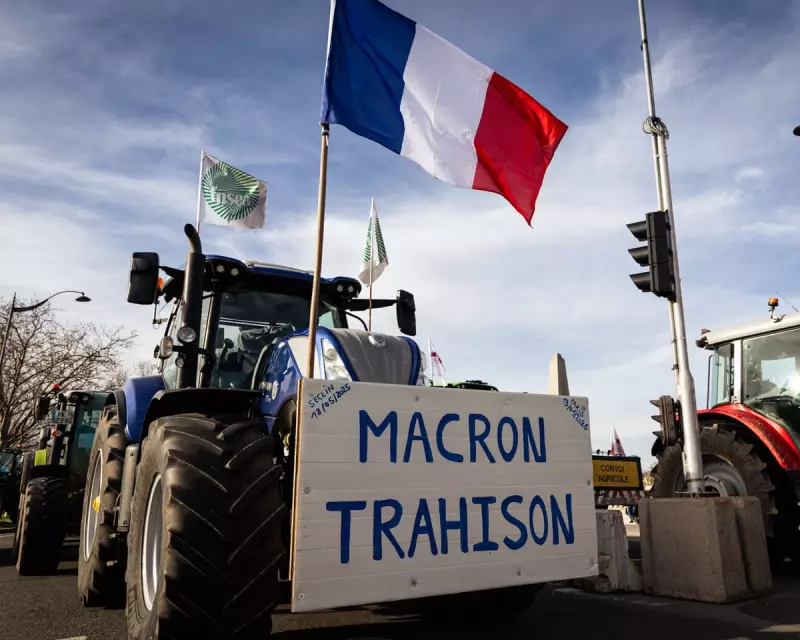
On 13 January 2026, a convoy of tractors rolled into the heart of Paris, parking defiantly in front of the National Assembly. The dramatic scene, captured by photographer Telmo Pinto, symbolised a fresh wave of rural anger sweeping France. The target of their fury: a pending European Union trade agreement with the South American Mercosur bloc, a deal a quarter of a century in the making.
A Political Gift for the Far Right
The core tragedy of this protest, according to analyst Paul Taylor, is that a significant EU strategic victory is inadvertently paving the way for a Eurosceptic far-right victory in France. The deal, designed to counter US protectionism by establishing rules-based trade with key global partners, is deeply unpopular with French agriculturalists. They fear being undercut by cheaper South American beef, produced outside the EU's stringent environmental and welfare standards.
Taylor argues that the potential loss of France, a founding EU member, to a hostile far-right government would inflict more damage on European stability than any economic benefit from trading with Brazil, Argentina, Paraguay, and Uruguay. This perilous situation, however, is not the fault of "Brussels bureaucrats". The European Commission has incorporated extensive safeguards, including emergency brakes for import surges, and front-loaded agricultural subsidies to appease concerned nations like France, Poland, and Ireland.

The Cowardice of French Leadership
The blame, Taylor asserts, lies squarely with France's political cowardice, led by President Emmanuel Macron. Despite having secured protective clauses, Macron voted against the Mercosur pact. Across the political spectrum, leaders are pandering to a farm lobby representing under 4% of GDP, rather than defending the deal's merits for other sectors like wine, cheese, and industry.
Macron, elected as a pro-European reformer, now finds himself a lame-duck president without a parliamentary majority. His surrender to beef producers legitimises their false claim that Mercosur will destroy French farming—a claim previously made about the EU-Canada deal (Ceta), which later boosted French exports. The real issues for farmers are rising costs, squeezed supermarket prices, and burdensome red tape.
With his weak government fearing a censure motion and Prime Minister Sébastien Lecornu struggling to pass a budget, Macron is cornered by the electoral calendar. All parties are seeking to oppose the unpopular president ahead of municipal and presidential elections.
Feeding the Eurosceptic Narrative
This political vacuum allows "Brussels" to become a convenient scapegoat, powerfully reinforcing a Eurosceptic narrative championed by the far right and hard left. Opinion polls show nearly 80% public support for the farmers. The anti-Mercosur movement has been spearheaded by the rightwing Coordination Rurale union, now France's second-largest, which is closely aligned with Marine Le Pen's National Rally (RN) in its hostility to EU farm policy.
Macron appears weak on the European stage, having failed to rally a blocking minority against the deal. The pact was due for signature by Commission President Ursula von der Leyen in Paraguay. France's last-ditch efforts to send it for legal scrutiny or vote it down in the European Parliament are unlikely to succeed.
The deeper consequence is a reinforced public fear that Europe is sidelining France. This plays perfectly into the RN's campaign to reclaim powers from Brussels and cut France's EU contributions. While Le Pen has abandoned calls for a Frexit, a softer Euroscepticism could propel her protégé, Jordan Bardella, into the Élysée Palace in 2027, setting Paris on a collision course with Berlin and the EU itself.






