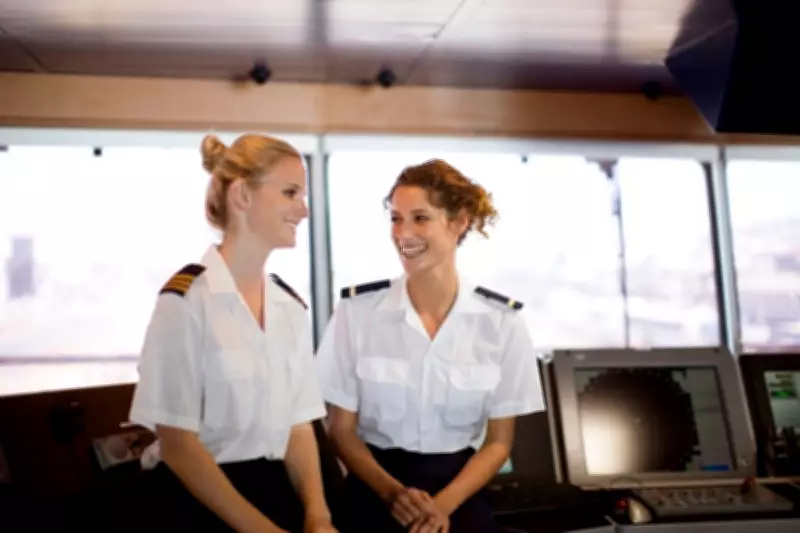
Female Cruise Captains Navigate Male-Dominated Seas and Shatter Maritime Barriers
The familiar sound of a captain's voice over a cruise ship tannoy is a hallmark of maritime travel, yet it is almost never a female voice. This reality reflects a stark gender disparity in the industry, where fewer than three per cent of cruise ship captains are women, according to industry data. The path to captaincy spans decades, and part of this imbalance stems from maritime academies only beginning to admit women from the mid-1970s onward.
The first female cruise ship captain was appointed as recently as 2007, when Karin Stahre-Janson took command of Royal Caribbean's Monarch of the Seas. She was followed by British captain Sara Breton with P&O Cruises in 2010. Among the most notable figures is Kate McCue, who became the first American female captain in 2015 as commanding officer for Celebrity Summit, departing in 2025, and will serve as the inaugural captain of the Four Seasons l upon its launch later this year.
Despite cruise lines increasingly tailoring offerings to female passengers—such as women-only sailings and wellness retreats—the presence of women in the captain's chair remains rare. In anticipation of International Women's Day, insights were gathered from three female cruise ship captains and a high-level expedition leader, exploring their motivations and the persistent barriers for women in this field.

'I Was Told the Sea Was Not for Women'
Captain Belinda Bennett, the first black female cruise ship captain, took the helm at Wind Star in 2016, part of the luxury Windstar fleet. Hailing from the remote Atlantic island of St Helena, where ships were the sole means of departure in her youth, she embarked on her maritime career at age 17 on RMS St Helena, driven by a desire to see the world.
Her ascent to captaincy took 21 years, a delay she attributes to outdated attitudes toward women. "I know I didn't get my promotion as quickly as I am very vocal and not afraid to challenge," Bennett remarked. "That was something that blocked my promotions previously." Now commanding Emerald Sakara, she recalls being told early on that "the sea was not for women," a sentiment she was determined to disprove.
Bennett notes that such attitudes likely deterred many women from maritime careers, but she observes that this "dinosaur mentality" is fading. "Newer generations are more accepting that women have a place in the workplace, shoreside or sea," she said. However, she emphasizes that strength of mind and character are essential, as the field remains male-dominated, though more women are entering. The personal sacrifices are significant, including strained relationships due to long periods away from home. "Your family has to understand that there will be some days where you don't have time to answer messages as soon as they are sent," she added.
'Mentorship Is Important to Encourage Female Captains'
Inger Klein Thorhauge made history as Cunard's first female cruise ship captain in 2010 aboard Queen Victoria and now commands the line's newest vessel, Queen Anne. Growing up in the Faroe Islands within a maritime family—her father was a chief engineer and her grandfather worked in fishing—she credits her background for making captaincy seem attainable.
"If I had not grown up in a maritime family, I might not have thought of becoming a captain as an option," Thorhauge explained. "When you do not see people like yourself in certain roles, it can be harder to imagine yourself there." After obtaining her Master's Licence in 1994 and joining Cunard as a deck officer in 1997, her rise has been positive, and she hopes to inspire others through her role.
She underscores the importance of visibility and mentorship in fostering change. "When people see women in senior roles at sea, it helps make the path feel more real and possible," she said. "Mentorship is key. Having someone you can talk to, ask questions and learn from makes a real difference."

'Cruise Ship Life Isn't for Everybody'
Serena Melani, the first Italian female cruise ship captain, initially served with Regent Seven Seas in 2016 before joining Explora Journeys in 2022, where she has commanded Explora I and Explora II. A graduate of the Nautical Technical School in Livorno, she gained experience as a bridge officer on various cargo and cruise ships.
Reflecting on her early days, she noted, "When I first stepped on board 36 years ago, I remained the only woman on board for several years. It took me 26 years to reach the highest rank as a master unlimited licensed captain." Despite facing gender bias, which she describes as now more subtle, she actively mentors new officers, including men, to shift mindsets.
Melani highlights positive strides, such as Explora Journeys' cadet programmes in the UK and Italy that strongly encourage female candidates with dedicated support. "Some gender bias can still exist, but it has evolved over time," she said. "It is something I continue to work on – not only for myself, but especially for the women who will come after us."
'Men Treated Us Like Second Class Citizens on Board'
While female captains are rare, women hold other senior roles in the industry, such as Laura Hodges Bethge, president of Celebrity Cruises, and Christine Duffy, president of Carnival Cruise Line. Karin Strand, vice president of expedition development for HX, oversees tours in regions like Scandinavia and Antarctica, having started as an expedition leader over 25 years ago.
Strand recalls a time when "women had to be tough and work in an environment where men treated us as second class citizens." Expedition cruising's physical demands—knowledge of engines, diesel filters, and zodiac manoeuvring—initially deterred many women, but attitudes are changing as veterans like her move shoreside to advocate for more female inclusion.
"The barriers aren't there anymore," she asserted, adding that women often excel as expedition leaders due to better control and empathy appreciated by passengers. She points to recruitment and careers advice as crucial for overcoming stereotypes. "There are still stereotypes in the way we bring up girls," Strand noted. "I wish the sky was higher and people shouldn't be pigeon-holed."
The Cruise Lines International Association (CLIA) emphasizes the cruise industry's role in employing the largest representation of female seafarers globally. In a statement, CLIA highlighted that over 90 per cent of female seafarers work within the cruise sector, showcasing broad opportunities both on board and onshore. "From the navigation bridge to the boardroom, the cruise industry recognises that gender diversity is critical, encouraging teamwork and creativity from a range of perspectives," the association stated.