

In a landmark move for global commerce, the European Union and the South American Mercosur bloc are poised to formally sign a historic free trade agreement this Saturday in Paraguay. This deal, a quarter of a century in the making, will establish one of the planet's largest free-trade zones, encompassing over 700 million people and accounting for a quarter of global GDP.
A Quarter-Century of Negotiation Culminates
Talks for this trans-Atlantic pact began in an era before the euro's circulation, before China joined the WTO, and when Venezuela was America's top oil supplier. Against a transformed geopolitical backdrop and significant protectionist opposition, the EU and Mercosur—comprising Brazil, Argentina, Paraguay, and Uruguay—have finally reached the finish line. Bolivia, the newest Mercosur member, was not part of negotiations but can accede later.
The significance of this achievement is magnified by the current international climate. European Commission President Ursula von der Leyen recently praised the deal as a robust endorsement of multilateralism in a "hostile and transactional world." Similarly, Brazilian President Luiz Inácio Lula da Silva, 80, hailed it as a victory for dialogue and cooperation.

Economic Winners and Political Concessions
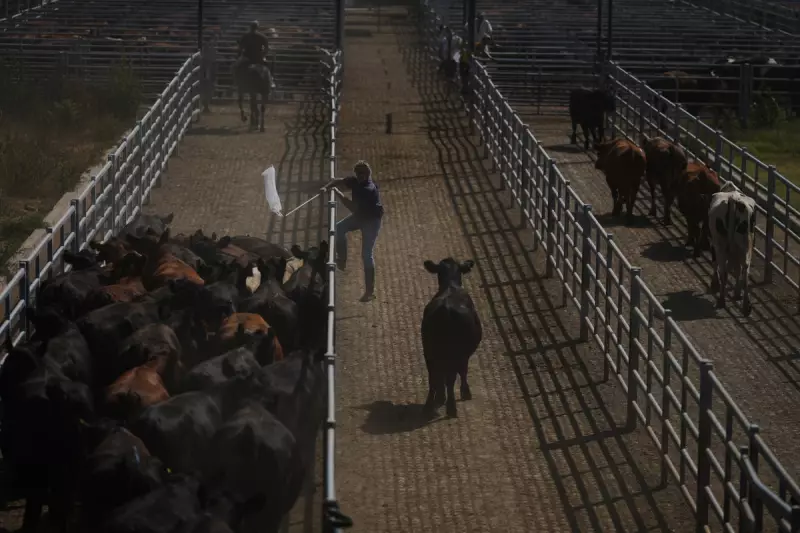
The agreement, which must still be ratified by the European Parliament, will eliminate tariffs on a vast array of goods. This ranges from Argentine beef and Brazilian copper to German automobiles and Italian wine, in what some term a "cows for cars" exchange.
For South America's agricultural powerhouses, the benefits are immediate. Argentine exporters, for instance, will see the 20% tariff on high-quality meat exports to the EU scrapped, saving tens of millions annually. Argentine President Javier Milei, despite his libertarian ideology, has embraced the deal as a tool to revitalise Mercosur and slash trade barriers.
In Europe, industries like German automotive (including giants Volkswagen and BMW), pharmaceuticals, and machinery gain crucial access to a massive new market, helping them compete with cheaper Chinese rivals. However, the deal faced fierce resistance from European farmers, who secured strict quotas for South American meat and sugar and billions in EU subsidies to ensure competitiveness.
A Strategic Shift in Global Trade
Analysts view the pact as a strategic manoeuvre by South American economies to diversify away from the great power competition between the US and China. "It shows that South America can... exert a certain level of autonomy it’s often denied," said Lee Schlenker of the Quincy Institute.
Agathe Demarais of the European Council on Foreign Relations noted that failure to sign would have risked pushing Latin America closer to Beijing's orbit. While celebrations are tempered by the knowledge that ratification hurdles remain, the mood among signatories is historic. As Argentine economic analyst Marcelo Elizondo stated, this agreement re-signifies Mercosur's role on the world stage.
For the UK, observing from outside the EU, this colossal trade bloc's creation underscores the shifting architecture of global trade and the enduring power of ambitious multilateral deals.






