In a stark warning to the government, Liberal Democrat leader Ed Davey has declared that Britain must abandon its strategy of "quiet appeasement" towards Donald Trump and instead develop its own formidable "trade bazooka" to confront the American president's aggressive international stance. Davey's comments come as tensions escalate following Trump's recent threats towards Greenland and his continued undermining of NATO alliances, which the Lib Dem leader describes as behaviour akin to that of an "international gangster".
The Failure of Appeasement Diplomacy
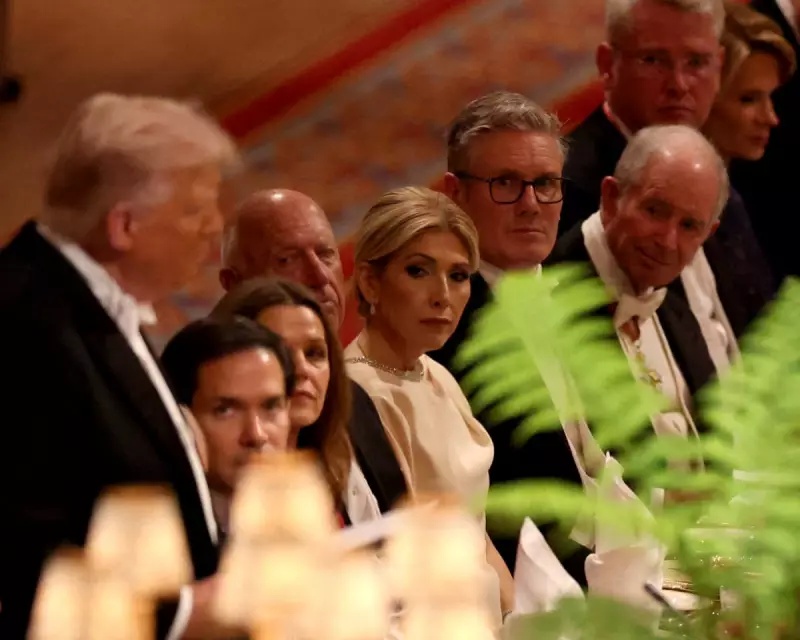
Davey directly criticises Prime Minister Keir Starmer's approach, which has centred on avoiding confrontation in the hope of securing a special status that would shield UK industries from potential trade storms. This strategy was exemplified during Trump's state visit to Windsor Castle in September 2025, where the American leader was lavishly entertained and spoke warmly of the "special relationship". However, Davey argues that this diplomatic nicety has proven utterly futile, with Trump's subsequent actions bringing that relationship to the brink of collapse.
"Starmer's Mr Nice Guy diplomacy has failed," Davey states unequivocally. "There is no doubt that a full-blown trade war damaging jobs and living standards on both sides of the Atlantic benefits nobody. Yet the answer is not, as Starmer seems to suggest, to simply accept Trump's tariff threats without response."

Building a British Trade Bazooka
Drawing inspiration from French President Emmanuel Macron's suggestion that the European Union should prepare punitive trade measures—a so-called "trade bazooka"—Davey insists the UK must develop its own equivalent arsenal. He advocates for close coordination with European allies to present a united front, arguing that collective economic strength is the only language Trump understands.
"Bullies like Trump only respond to strength," Davey asserts. "As witnessed during the aborted US-China trade war, Trump disregards diplomatic pleasantries but pays acute attention to warning signals from Wall Street. He will retreat if the consequences of his trade aggression result in economic damage and falling stock markets domestically."
With crucial US midterm elections approaching in November, Davey identifies Trump's primary vulnerability as the financial impact of his "America First" policies. Recent polling indicating that 75% of Americans are already feeling the pinch from associated tax increases strengthens this point. By aligning with the EU, the world's largest trading bloc, Britain could exert significant pressure to force a presidential rethink.
Targeted Measures to Hit Trump's Inner Circle
Beyond broad tariffs, Davey proposes several specific, targeted actions the UK government could take:
- Cancel the pharmaceuticals deal with the US, which is projected to cost the NHS an additional £3 billion in higher medicine prices.
- Implement tariffs on Tesla products to impact billionaire Elon Musk, a figure closely associated with the Trump administration.
- Exclude US defence firms such as Palantir—owned by key Trump supporter Peter Thiel—from future UK government contracts.
"We are dealing with the most reprehensible US president in living memory," Davey contends. "The only way to compel him to back down is to strike where it hurts most: targeting his financial interests and those of his inner circle."
A Pivotal Moment for Global Stability
Davey portrays the current situation as an exceptionally grave moment for the UK, Europe, and global order. He insists that the reality must be faced: for as long as Trump occupies the White House, the famed "special relationship" is effectively suspended. The choice for Starmer, he concludes, is clear—persist with a failed policy of appeasement or demonstrate the courage to stand up to a bully.
"Bullies do not desist when politely requested; they only stop when forcefully compelled," Davey concludes, framing this as a fundamental test of British leadership and resolve on the world stage.