In a significant move to rebalance economic and geopolitical relationships, Canada and India have announced plans to substantially expand their energy trade partnership. The agreement, unveiled at India Energy Week in Goa, represents a strategic reset following diplomatic tensions and signals both nations' determination to diversify their energy markets.
Ministerial Meeting Marks New Chapter
The breakthrough came during talks between Canada's Energy and Natural Resources Minister Tim Hodgson and India's Petroleum and Natural Gas Minister Hardeep Singh Puri. This meeting effectively restarted the ministerial energy dialogue that had been stalled by the diplomatic crisis surrounding the killing of a Canadian Sikh activist. Previously, this dialogue served as the primary channel for bilateral energy cooperation between the two nations.
According to Bloomberg News reports, the new arrangement will see Canada commit to supplying increased volumes of crude oil, liquefied natural gas (LNG), and liquefied petroleum gas (LPG) to India. In return, Delhi will send more refined petroleum products to Canadian markets, creating a reciprocal trade relationship that benefits both economies.

Addressing Strategic Vulnerabilities
Speaking at the conference, Minister Hodgson delivered a frank assessment of Canada's previous energy export strategy, stating that heavy reliance on the United States as an export destination had left the country vulnerable. "Canada used to provide 98 per cent of its energy exports to a single country. That was a strategic blunder," he told Reuters. "We are committed to diversifying. We see the opportunity to work with India."
Hodgson emphasized that India represents the world's fastest-growing source of energy demand in coming decades, presenting a natural opportunity for Canadian exporters. "The fastest growing demand for energy in the world will be in India," he declared, noting that Canada could supply not only fossil fuels but also uranium to support India's expanding nuclear power generation.
Current Trade Landscape and Infrastructure Development
Currently, Canada doesn't export crude or LNG directly to India, which sources the bulk of its oil from Russia, Iraq, and Saudi Arabia, while obtaining LNG primarily from Qatar, according to data from analytics firm Kpler. Over the past three years, India's oil imports have risen by an average of 2.5 per cent, though LNG cargoes fell 6.3 per cent in 2025 as gas prices increased and the market shifted back toward oil.
Canadian officials are actively developing infrastructure to make new Asian exports viable. "We're now building pipelines to the West Coast. We have three pipelines built here and are looking at building more," Hodgson explained. The expansion of Canada's Trans Mountain pipeline has created a direct route for crude exports to the Pacific, though most Canadian shipments to India still move through the US Gulf Coast.
Canada began exporting LNG to Asia in June 2025, strengthening its ability to serve Asian markets. Officials note that Canadian LPG terminals offer relatively short shipping routes to India compared with Atlantic suppliers, providing logistical advantages.
Geopolitical Context and Market Dynamics
The renewed Canadian outreach comes as India seeks to diversify its energy supplies amid growing scrutiny of Russian energy trade and uncertainty over future sanctions. Indian refiners had previously rushed to purchase discounted Russian crude following the Ukraine conflict, making Moscow the South Asian country's largest crude supplier.
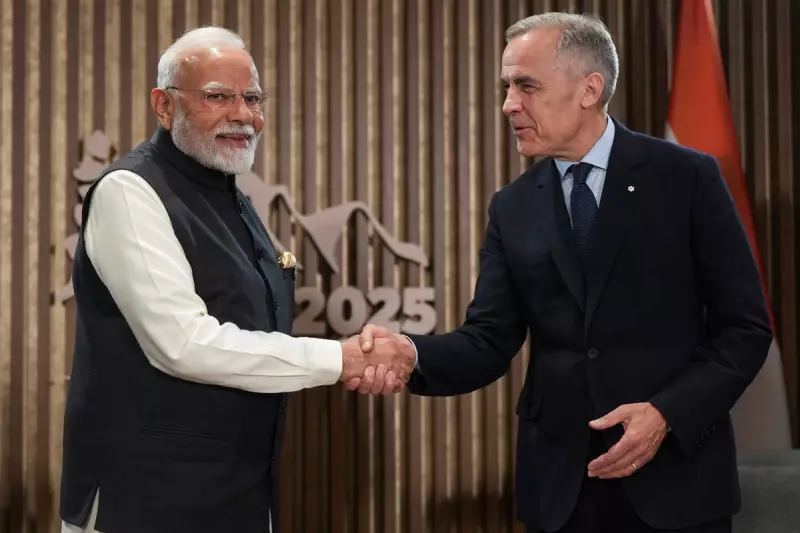
This energy agreement forms part of a broader diplomatic reset under Canadian Prime Minister Mark Carney, who has prioritized diversifying Canada's export markets amid rising trade tensions with Washington. Carney and Indian Prime Minister Narendra Modi restarted talks in November on a comprehensive economic partnership agreement, with the Canadian leader expected to visit India in coming weeks.

Beyond Fossil Fuels: Clean Energy Cooperation
The partnership extends well beyond traditional energy sources. According to the joint statement, Canada and India will work to facilitate reciprocal investment and explore collaboration across multiple clean energy sectors. These include hydrogen development, biofuels, battery storage technology, critical minerals extraction, electricity system modernization, and the application of artificial intelligence within the energy industry.
Two-way goods trade between Canada and India reached $9.7 billion in 2024, with Ottawa arguing there remains significant room for growth, particularly in energy. Currently, India accounts for just 1 per cent of Canada's critical minerals exports, a gap that Canadian officials say highlights the substantial potential for expansion.
Complex Global Trade Backdrop
The reset with India occurs against a complicated global trade landscape. Prime Minister Carney's expected India visit follows his recent trip to Beijing, where Canada and China agreed to reduce tariff barriers. This comes despite US President Donald Trump threatening 100 per cent tariffs on Canadian goods if Ottawa "makes a deal with China," though Carney has stressed Canada isn't seeking a free trade agreement with Beijing.
For India, these talks represent a broader effort to balance energy security, cost considerations, and geopolitical realities as demand rises and supply chains remain volatile. For Canada, they signify an ambitious attempt to transform new pipeline capacity and LNG export capabilities into long-term strategic partnerships extending well beyond North American borders.