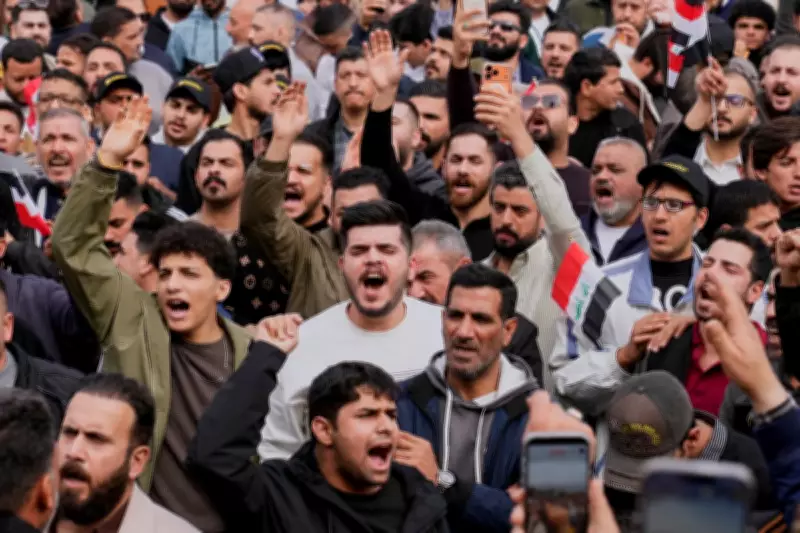
Baghdad Traders Stage Major Protest Against New Customs Tariffs
Hundreds of traders and customs clearance company owners have taken to the streets of central Baghdad in a significant demonstration, demanding the Iraqi government reverse recently imposed customs tariffs. The protest, held on Sunday, highlights growing discontent as traders argue the new fees have drastically increased their operational costs and severely disrupted trade flows across the country.
Economic Pressures Drive Tariff Implementation
The new customs tariffs, which came into effect on January 1, were introduced as part of a broader governmental strategy to address Iraq's mounting debt and reduce its heavy reliance on oil revenues. With oil prices experiencing a notable decline, Iraq faces a substantial debt burden exceeding 90 trillion Iraqi dinars, equivalent to approximately $69 billion. Despite ongoing efforts to diversify the economy, the state budget remains overwhelmingly dependent on oil, which accounts for about 90% of revenues.
Traders report that the tariffs, in some instances reaching as high as 30%, impose an unfair financial strain on their businesses. In response, opponents have initiated a legal challenge, filing a lawsuit aimed at overturning the decision. The Federal Supreme Court of Iraq is scheduled to deliver a ruling on this matter on Wednesday, adding a critical legal dimension to the ongoing dispute.

Protesters Voice Grievances and Allegations of Corruption
Demonstrators congregated outside the General Customs Directorate, voicing their frustrations through chants against corruption and outright rejection of the new fees. Haider al-Safi, a transport and customs clearance company owner, provided a stark example of the impact, stating, "We used to pay about 3 million dinars per container, but now in some cases they ask for up to 14 million. Even infant milk fees rose from about 495,000 dinars to nearly 3 million."
Al-Safi further explained that the new tariffs have led to a significant backlog of goods at the Umm Qasr port in southern Iraq. Additionally, electric vehicles, which were previously exempt from customs duties, are now subject to a 15% fee, further complicating trade operations.
Broader Economic and Social Implications
Mohammed Samir, a wholesale trader from Baghdad, emphasized the wider societal consequences, noting, "The main victim is the citizen with limited income, and government employee whose salary barely covers his daily living, those who have to pay rent, and have children with school expenses — they all will be affected by the market." This sentiment underscores concerns that the tariffs could exacerbate economic hardships for ordinary Iraqis.
Protesters also levelled accusations of widespread corruption, claiming that influential groups are facilitating the release of goods in exchange for lower unofficial payments. Many traders are reportedly considering rerouting their imports through the Kurdistan region, where fees are comparatively lower, potentially undermining national trade cohesion.
Nationwide Strike Amplifies Opposition
The protests coincided with a nationwide strike organized by shop owners, who closed markets and stores in several parts of Baghdad to oppose the tariff increase. In major commercial districts, shops remained shut, with banners prominently displayed reading, "Customs fees are killing citizens." This coordinated action highlights the depth of opposition and the potential for broader economic disruption if the tariffs remain in place.
As Iraq continues to wrestle with shrinking oil revenues and significant debt, the government's tariff policy has sparked a contentious debate over economic management and fairness. The outcome of the upcoming court ruling and the government's response to the protests will be crucial in determining the future trajectory of Iraq's trade environment and economic stability.