A Journey Through Millennia on Spain's Green Coast
On the lush northern coast of Spain, the region of Cantabria offers a remarkable voyage through time. Within a mere half-hour drive from the capital, Santander, visitors can encounter some of humanity's oldest artistic expressions, step into a impeccably preserved medieval settlement, and unwind at a vibrant beach resort. This area feels like a living time machine, seamlessly blending epochs from the Stone Age to modern existential reflections.
Echoes of the Paleolithic in Altamira
My weekend adventure began under rainy skies, leading me first to the Upper Paleolithic era at the Cave of Altamira, a UNESCO World Heritage site. Here, I gazed upon replicas of the world's most ancient art, as the original cave has been largely closed to protect its delicate paintings. For just €3, the Neocueva—a meticulously reconstructed replica adjacent to the original—allows access to this awe-inspiring spectacle.
Above, bison and deer seemed to charge across the undulating rock ceiling, rendered in rich ochres and charcoals by hunter-gatherers from 13,000 to 36,000 years ago. These prehistoric artists skillfully used the cave's natural contours to imbue the animals with a three-dimensional vitality. Often dubbed the Sistine Chapel of prehistoric art, Altamira's impact remains profound, even in replica form.

Discovered in 1868 and later championed by amateur archaeologist Marcelino Sanz de Sautuola, the cave's paintings were initially met with skepticism by experts who doubted prehistoric capabilities. Walking through the accompanying museum, it's striking to observe how little the human impulse to leave a mark has changed—from ancient handprints to modern selfies.
Medieval Magic in Santillana del Mar
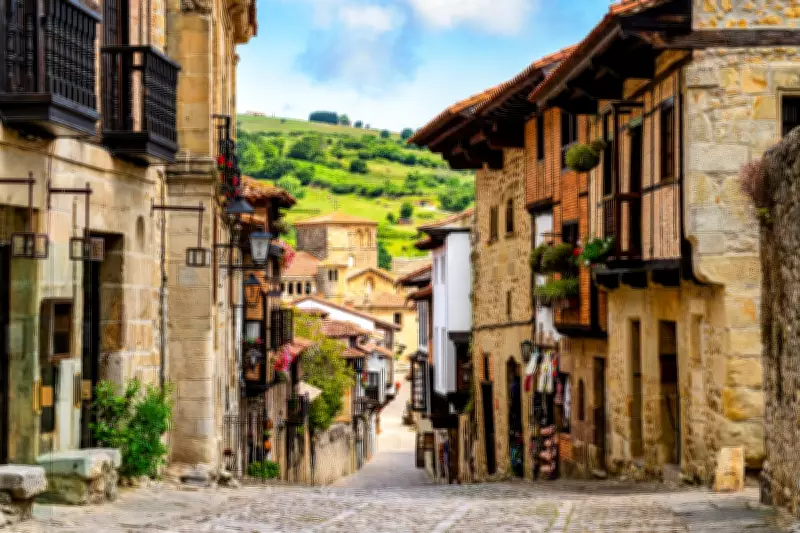
As time pressed on, my travel companions—my husband and infant son—grew restless, prompting a short drive to Santillana del Mar. This medieval town, serving as Altamira's gateway, transported us straight into the Middle Ages. Its cobbled streets, lined with noble houses, monastery buildings, and towers, evoke a fairytale ambiance, reminiscent of scenes from Game of Thrones.
Founded in the ninth century by monks bearing relics of Saint Juliana, Santillana flourished as part of the Astur-Leonese kingdom. It became a crucial stop for pilgrims on the Camino de Santiago, attracting trade and wealth that funded its grand stone architecture. In 1209, King Alfonso VIII granted the town a charter, marking its peak medieval prosperity.
Interestingly, Santillana is also linked to existential philosophy. Jean-Paul Sartre visited in 1935 with Simone de Beauvoir, later referencing it in his novel Nausea as "the prettiest town in Spain." This connection adds a layer of intellectual intrigue to its historical charm.
Coastal Contrasts in Suances
From Santillana, a ten-minute drive brought us to Suances, a seaside town offering another temporal shift. We stayed at Costa Esmeralda Suites, a five-star hotel with off-season discounts, blending traditional mansion exteriors with early-2000s luxury interiors. Nearby, Playa de la Concha beckoned with its Atlantic waves and sandy dunes, as the rain finally subsided.
Suances thrives year-round, unlike other surf towns that quieten in winter. Locals, like Inma at Marcelo Gourmet, praised its vibrant atmosphere. Surfers in wetsuits brave the swells, often with views of snow-capped Picos de Europa mountains. Culinary delights abound, from fresh rabas (fried calamari) at Bonito Verde to reputedly excellent sushi at Suka.
For breakfast, Castillo de Los Locos offers stunning cliff-top views above Playa de Los Locos. On my final morning, a walk along the peninsula between beaches provided a serene moment of solitude, with birdsong and crashing waves underscoring the region's natural beauty.
Reflections on Adventure and Time
As Sartre's protagonist in Nausea muses, adventures are often recognized only in retrospect, shaped into stories after the fact. My journey through Cantabria—from prehistoric caves to medieval streets and coastal retreats—embodied this idea, blending history, culture, and personal experience into a memorable tale. Whether seeking art, history, or relaxation, this corner of Spain invites travelers to live fully and tell their own stories.