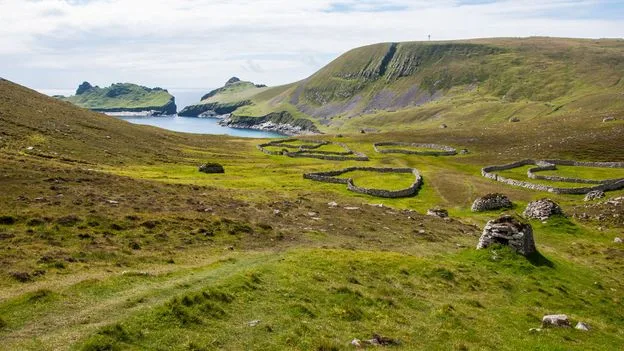
St Kilda, the most remote part of the British Isles, lies 40 miles west of North Uist in the Atlantic Ocean. The archipelago is home to northwest Europe’s largest seabird colony, cliffs taller than the Empire State Building, and an abandoned village that was evacuated in 1930. The last resident of St Kilda died in April 2023.
Accessible only by boat, St Kilda’s location makes travel highly dependent on weather conditions. The journey from the Isle of Skye can take over three hours, and trips are frequently cancelled due to rough seas. The archipelago’s isolation has attracted visitors for millennia, with evidence of Neolithic tools, Bronze Age burial mounds, and Viking artefacts.
The islands support about one million seabirds, including the world’s largest gannet colony and the EU’s largest puffin and fulmar colonies. However, climate change has caused bird numbers to drop by up to 90% in 15 years. The St Kildans historically relied on these birds for food and trade, hunting nearly 90,000 puffins in a single year.
Today, the main island of Hirta features a ghost town of 40 stone homes, maintained by the National Trust for Scotland. The island also hosts Ministry of Defence installations, including a communications centre, which are off-limits to the public. The military presence adds to the island’s mysterious atmosphere.