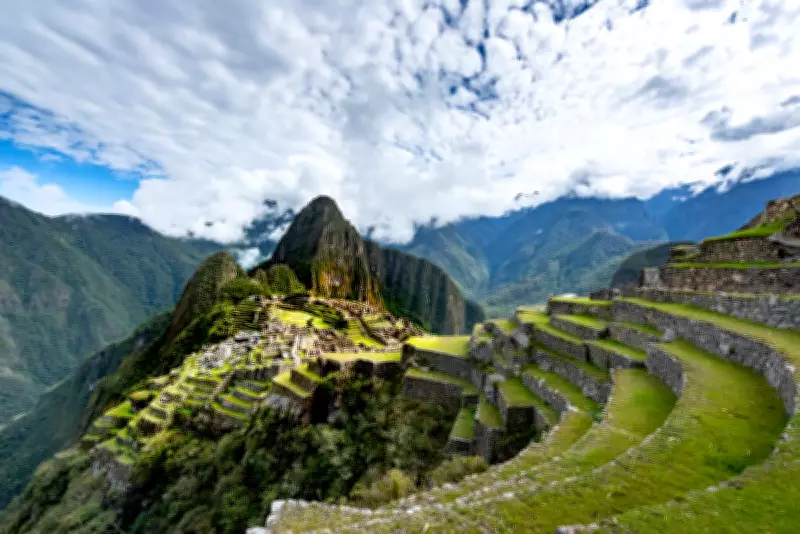
Will Peru's New Chinchero Airport Threaten Machu Picchu's Future?
The planned construction of an international airport at Chinchero, located approximately twenty miles north of Cuzco in Peru, has ignited a fierce debate about the future of tourism in the Sacred Valley. Scheduled to open in late 2027, this £500 million project promises improved connectivity to the iconic Machu Picchu, a UNESCO World Heritage Site, but critics warn it could overwhelm the region's fragile infrastructure and cultural heritage.
The Controversial Development
For decades, reaching Machu Picchu has been considered a pilgrimage. Visitors typically fly to Lima, then to Cuzco, before taking a train and a bus along winding mountain roads. This arduous journey has been viewed positively, allowing travelers to mentally prepare for the profound experience of exploring the ancient Inca citadel. The new airport at Chinchero aims to drastically shorten travel times, enabling direct international flights that bypass Lima, thereby attracting more mainstream, time-poor tourists, particularly from the United States.
However, local communities and tour operators express grave concerns. Detractors argue that the airport will negatively impact traditional communities, including Chinchero's renowned weavers, and strain local resources such as water, sewerage, roads, and energy. The influx of visitors could also pressure historic sites beyond Machu Picchu, including the Maras salt mines, Moray terraces, and the archaeological ruins at Pisac and Ollantaytambo.

Diverging Perspectives on Tourism Growth
Supporters of the airport highlight that tourism in the region remains thirty percent below pre-pandemic levels, suggesting there is capacity for growth. They believe cheaper flights and reduced travel times will boost the local economy by attracting higher-spending tourists rather than budget backpackers.
Conversely, Oliver Cripps of Cuzco-based Amazonas Explorer warns, "The fear is it will encourage shorter, more bucket-list style holidays... This will leave less money in the community and for businesses that depend on tourism revenue." He also notes that focusing on Machu Picchu contradicts the Peruvian government's goal of spreading tourism to lesser-known sites like Choquequirao and Kuelap.
Infrastructure Limitations and Accelerated Change
Gary Tombs, product manager for Peru at Journey Latin America, acknowledges the limitations of the current Cuzco airport, which is constrained by its urban location and cannot expand. "These constraints are the main reasons the Peruvian government intends for Chinchero to eventually replace it," he explains.
Tombs cautions against romanticizing the status quo, pointing out that development in the Sacred Valley has already been dramatic over the past twenty years, with communities merging into continuous stretches of tourist-oriented shops and restaurants. He cites Chinchero's market, once a local affair, now largely geared toward tourists, as an example of how traditional spaces evolve with rising visitor numbers. "The opening of an international airport will almost certainly accelerate this trend," he concedes.
Sustainability and Regional Development
With projections suggesting visitor numbers could increase by up to two hundred percent, the consequences are significant. Machu Picchu already operates under strict daily limits of 5,600 visitors, and without policy changes, it cannot accommodate a substantial rise in footfall.
Martin Romero of Explorandes advocates for a holistic approach: "We need to think about tourism development as an interconnected system... to spread the benefits over a wider area." He warns that building the airport without considering other factors will merely shift bottlenecks to the next weakest link in the system. Some experts point to Peru's Ancash department as a model, where airport modernization has been paired with sustainable growth in visitor numbers to its national park.
As construction progresses, the debate centers on whether the Chinchero airport will be a catalyst for economic revival or a threat to the very heritage that draws visitors to the Sacred Valley, forcing a reckoning with the balance between accessibility and preservation.