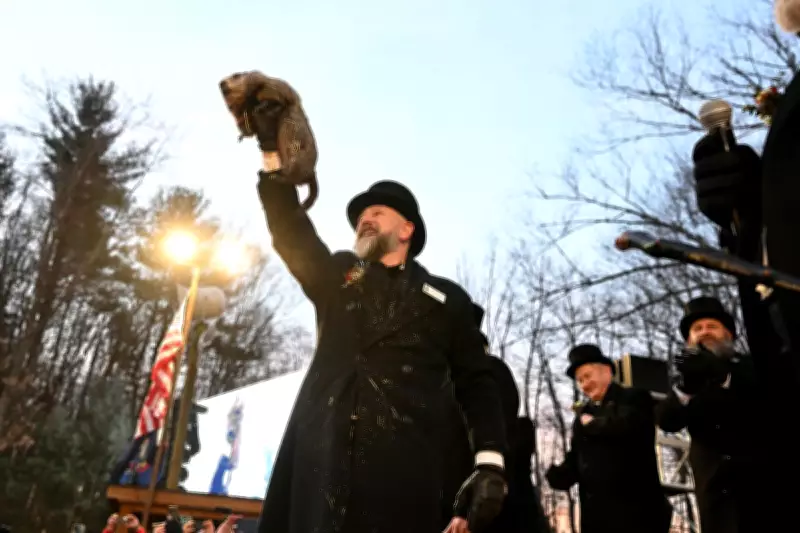
Groundhog Day 2026: Punxsutawney Phil's Annual Weather Prediction
Every February 2nd, the spotlight returns to Gobbler's Knob in western Pennsylvania, where handlers of the famous groundhog Punxsutawney Phil announce whether he has seen his shadow. This annual ritual determines the forecast: six more weeks of winter if Phil sees his shadow, or an early spring if he does not. Thousands gather for this unique event that has become a cultural phenomenon since the 1993 Bill Murray film "Groundhog Day" brought it to international attention.
The Ancient Origins of Groundhog Day
This tradition has deep roots in European agricultural practices, marking the midpoint between the winter solstice and the spring equinox. Celtic people across Europe celebrated Imbolc around this time, while Christians observe Candlemas, commemorating Joseph and Mary's presentation of Jesus at the Temple in Jerusalem. Ancient peoples would watch animal behavior, sun patterns, and stars to guide their farming decisions.
The specific practice of observing an animal's emergence from hibernation to predict weather originates from German traditions involving badgers or bears. Pennsylvania German settlers adapted this custom to the groundhog, an animal endemic to the eastern and midwestern United States. Historians have found references to groundhog weather forecasts in early February among German-descended families in Morgantown, Pennsylvania, dating back to at least 1841.

Punxsutawney's Rise to Prominence
Punxsutawney became the epicenter of Groundhog Day celebrations because Pennsylvania Germans settled there in the late 1880s. Initially, celebrations involved picnicking, hunting, and consuming groundhogs. The 1993 film caused such a resurgence of interest that organizers soon faced challenges with rowdy crowds, leading to alcohol prohibitions at Gobbler's Knob today.
Despite its popularity, the Punxsutawney event faces competition from other groundhog celebrations across Pennsylvania. In Quarryville, Lancaster County, the Slumbering Groundhog Lodge reports winter forecasts from Octoraro Orphie, whose preserved remains serve as their prognosticator. Lodge members claim Orphie has never been wrong, creating friendly rivalry with Punxsutawney Phil.
Groundhog Clubs and Cultural Preservation
Starting in the 1930s, groundhog lodges began appearing across eastern Pennsylvania as social clubs dedicated to preserving Pennsylvania German culture and traditions. These clubs, with similarities to Freemasonry, would sometimes fine members caught speaking anything but Pennsylvania Dutch during meetings. About a dozen such clubs remain active today, all sharing the unifying feature of groundhog weather prognostication.
As anthropology professor William W. Donner notes, these traditions offer participants a brief escape from modern life through rituals that connect them to heritage and community.
The Science and Skepticism Behind the Predictions
While the celebrations are taken seriously by participants, organizers acknowledge the lighthearted nature of the event. "We know this is silly; we know this is fun," says Marcy Galando, executive director of the Punxsutawney Groundhog Club. "We want people to come here with a sense of humor."
Skeptics question both the methodology and accuracy of groundhog predictions. The National Centers for Environmental Information compared Phil's record with U.S. national temperatures and concluded he was correct only three times in the past decade. What constitutes "six more weeks of winter" remains debatable, and the scientific basis for groundhogs predicting weather is problematic at best.
Groundhogs themselves are mostly solitary creatures that begin emerging in midwinter to find mates. Their typical lifespan in the wild is two to three years, and while they are edible to humans (with some comparing the taste to beef), they are not widely consumed despite Pennsylvania hunters taking over 200,000 annually.
A Celebration Beyond Weather Prediction
Ultimately, Groundhog Day represents more than just weather forecasting. It's a celebration of community, tradition, and cultural heritage that brings people together each February. Whether Phil predicts more winter or an early spring, the event continues to capture public imagination through its unique blend of ancient tradition and modern spectacle.