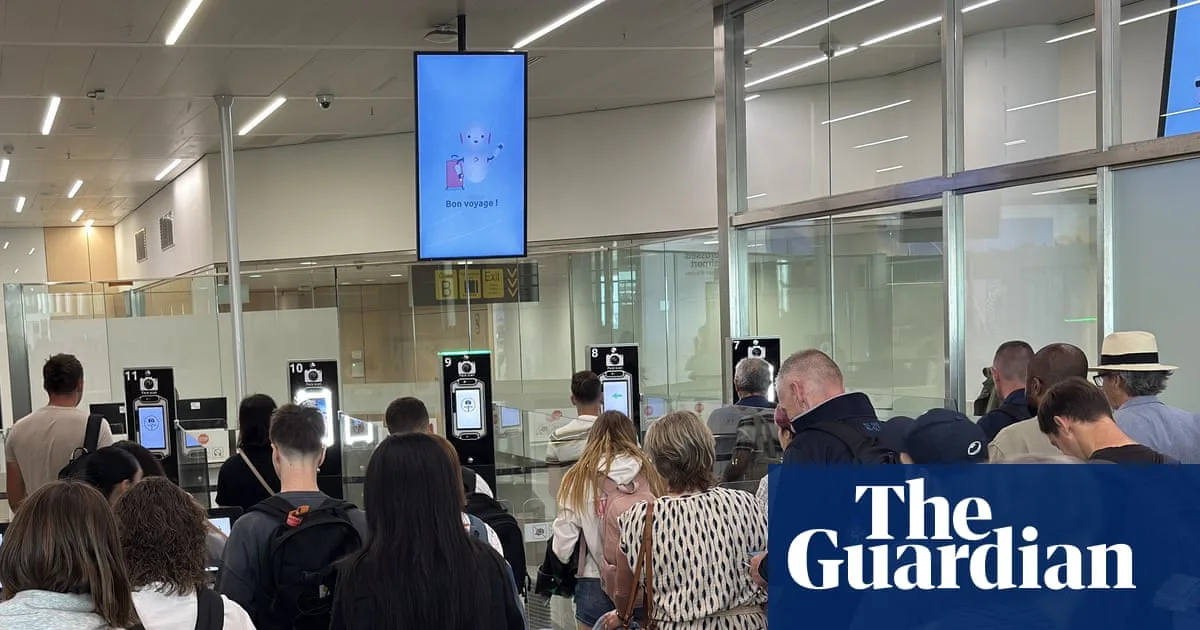
Airlines and airports have called for the suspension of the new EU biometric border check system during the peak summer holiday period, warning that flights are departing half empty and passengers face queues of up to five hours. In a letter to European Commission president Ursula von der Leyen, industry groups said the situation had reached a critical point and risked worsening during the busy summer season.
The system, gradually introduced since last October, requires non-EU citizens to register fingerprints and a photograph at their destination airport. The groups – ACI Europe, Airlines 4 Europe and the International Air Transport Association – said passengers had been forced to queue outside terminal buildings and on exposed aprons because border control facilities could not process arrivals quickly enough. Some flights have been delayed or have left passengers behind.
The groups called on the commission to allow airports to “completely suspend” checks whenever passenger volumes exceed operational capacity during July and August. They said border authorities, airports and airlines were under unsustainable pressure and urged immediate intervention. European airports are expected to handle approximately 40 million more passengers in July and August than the previous two months.
Greece has already suspended biometric checks for British travellers until September, and French police temporarily suspended the extra checks at the port of Dover in May. Last week, the head of Rome’s airports said the system would need to be suspended to avoid a disaster over the summer. The industry groups warned that some international travellers are reconsidering trips to Europe due to the prospect of excessive border delays, undermining the continent’s reputation and tourism.
Despite existing flexibility allowing countries to skip some checks, excessive queues are still forming. The groups said the ability to suspend the new border checks should remain until there are enough staff and automated kiosks are sufficiently reliable. They also called for flexibility to continue suspensions from September, when rules phasing out such exceptions are due to take effect, under clearly defined exceptional circumstances.