A journey into the heart of Australia's Northern Territory reveals the profound connection between its ancient landscapes and the vibrant world of Indigenous art, a legacy currently celebrated in a major retrospective of Emily Kam Kngwarray's work at London's Tate Modern.
From Utopia to the Canvas: The Source of Inspiration
Deep within the remote, sun-baked centre of Australia lies Utopia, an Aboriginal homeland. It was here, clambering up a rust-toned sandstone cliff in 40-degree heat, that the true source of artistic genius became clear. Local artists Jennifer and Jedda Kngwarray Purvis guided the way to the birthplace of their late great-aunt, Emily Kam Kngwarray. On the rock walls, carvings of pencil yam vines mirrored the patterns that would later explode across her grand canvases.
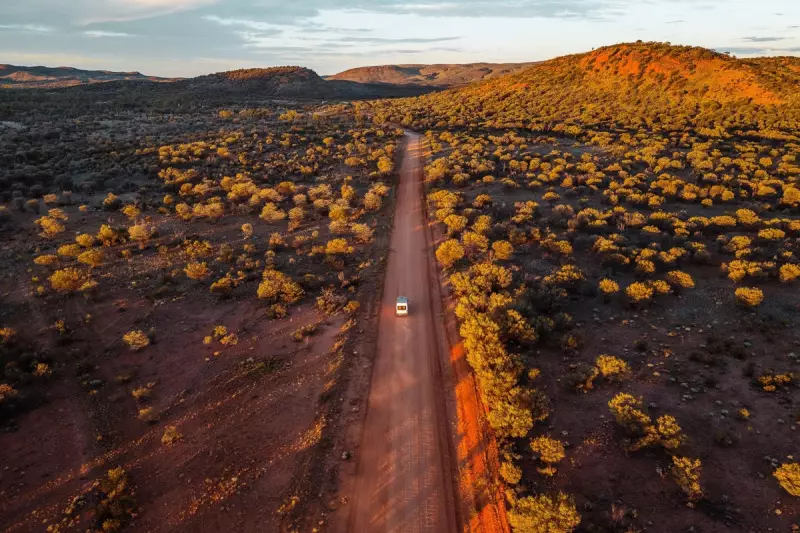
Looking out from the ridge, the sweeping palette of reds, yellows, greens, and browns was instantly recognisable from Kngwarray's work. This same connection is alive in the bold, swirling patterns of Jennifer and Jedda's own paintings, sold at the Utopia Art Centre. This government-funded centre, part of a network across the Territory, provides studio space and ensures artists receive fair payment for work that explores a deep spiritual link to Country.

Alice Springs: The Heartbeat of an Art Industry
The creative journey continued to the desert town of Alice Springs, cradled by the MacDonnell mountains. As British artist and tour guide Anna Dakin explained, this is where the contemporary Aboriginal art industry was born. Over a dozen galleries dot the town, from the pedestrian Todd Mall to unlikely industrial estates.
Venita Poblocki, director of the This is Aboriginal Art gallery, confirmed that dealers globally source work here. Alongside monumental canvases, accessible pieces start from around £40. At the Aboriginal-run, not-for-profit Tangentyere gallery, the story told through art is palpable—like Isobelle Spencer Napaljarri's painting depicting women collecting acacia seeds for medicine, its deep aubergine circles set against ochre and cornflower.
Uluru, Watarrka, and Darwin: A Territory of Wonders
The open road led to the iconic, 550-million-year-old rock of Uluru. A pre-dawn start was rewarded with an unforgettable spectacle: Aboriginal drawings projected onto the landscape as dawn broke, painting the sky in silvery pinks and oranges before Uluru itself emerged in a breathtaking reveal. Walks around Uluru and the neighbouring Kata Tjuta unfolded with Anna's explanations of the local stories embedded in the land.
The journey also included the spectacular red sandstone chasms of Watarrka National Park (Kings Canyon), before a final stop in Darwin, the Northern Territory's capital. A short flight from Alice Springs, Darwin is another key hub for Indigenous art. The Museum and Gallery of the Northern Territory (MAGNT) hosts the prestigious annual Telstra Natsiaa awards, showcasing powerful works from abstract canvases to vast installations that address history and portray the unforgettable natural world.
The entire experience underscores a fundamental truth, perfectly summarised by artist Jennifer Kngwarray Purvis: "You need to understand the landscape to understand the art." The Tate Modern's Emily Kam Kngwarray exhibition runs until 11 January, offering a London glimpse of this profound connection, with general admission at £22.
Travel Notes: Qantas offers return flights from London Heathrow to Alice Springs from £1250, with a stop in Sydney. In Alice Springs, the centrally located DoubleTree by Hilton offers rooms from £82 per night. In Darwin, the Adina Darwin Waterfront aparthotel provides smart accommodation from £79 per night.