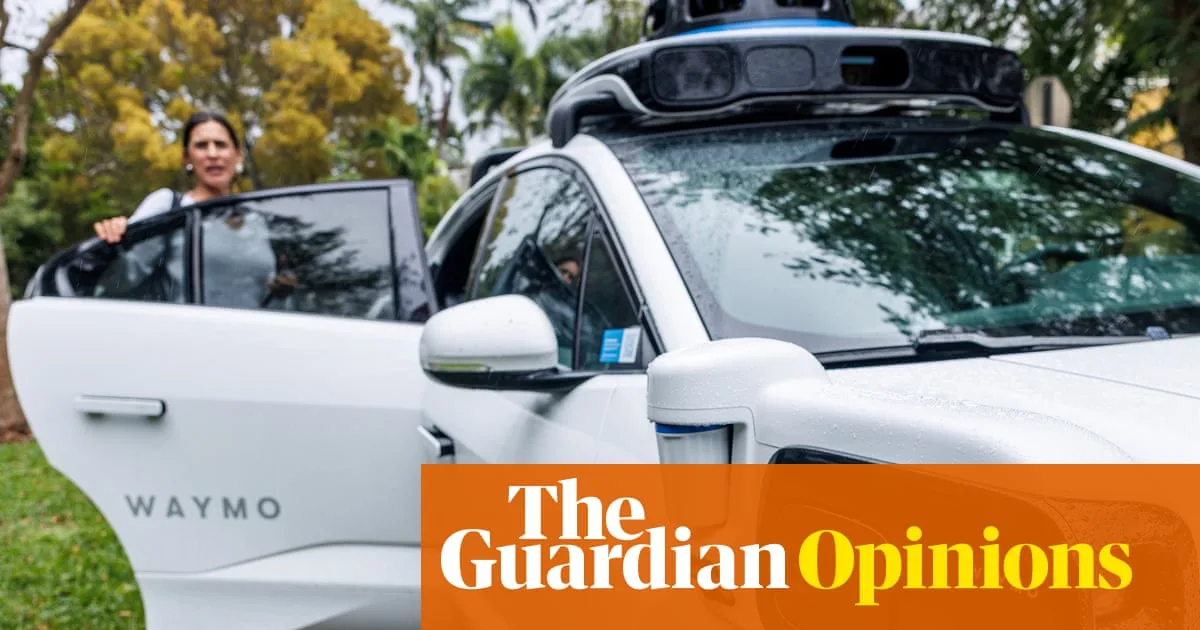
In a significant development for urban mobility, Waymo, the prominent US self-driving car company, has announced its intention to bring fully autonomous taxis to London by the end of 2026. This move promises to revolutionise how residents and visitors navigate the English capital, yet it raises profound questions about safety, infrastructure compatibility, and the broader impact on the city's transport ecosystem.
Historical Parallels: From Horse Manure to Autonomous Vehicles
The introduction of self-driving cars evokes historical parallels with the advent of motor vehicles in the late 19th century. At that time, cities grappled with streets flooded with horse manure, leading the fledgling car industry to promote automobiles as a cleaner, safer alternative. The Horseless Age, a US car magazine, optimistically declared in 1896 that motorcars would result in cleaner streets and fewer accidents. While streets did become cleaner, the rise of cars brought new challenges, including millions of annual deaths worldwide, pollution, and suburban sprawl by the 20th century's end.
This historical shift was not inevitable but rather the result of concerted lobbying by the US car industry, which campaigned for the removal of public transport, the banning of jaywalking, and street redesigns. As historian Peter Norton details in his book Fighting Traffic, this serves as a cautionary tale for the UK as it considers integrating self-driving cars into its urban fabric.
Waymo's Pitch and Safety Record
Waymo's sales pitch centres on enhanced safety and efficiency, arguing that their vehicles, devoid of human drivers, won't succumb to distractions or impairment. The company suggests that as computing and hardware costs decrease, self-driving rides could become more affordable than traditional taxis. Over the past few years, Waymo has operated approximately 1,500 driverless cars across the US, maintaining a generally good safety record without life-threatening incidents. However, these vehicles have encountered minor scrapes, such as impeding emergency services, causing traffic jams, and, in one notable case, running over a beloved San Francisco cat.
London's Unique Challenges
London presents distinct challenges compared to US cities like San Francisco. Much of its road layout predates the automobile era, resulting in more chaotic environments where the balance of power is less skewed towards vehicles. Unlike in the US, jaywalking is permitted in London, a practice the police attempted to curb in 1966 but abandoned after three months. Zebra crossings, designed for nuanced interactions between drivers and pedestrians, are far from machine-readable, complicating navigation for artificial intelligence.
Experiments in "shared space," such as on Exhibition Road in South Kensington, further introduce uncertainty by removing traditional lane demarcations, slowing down drivers and posing additional hurdles for AI systems. Moreover, London has successfully reduced car numbers in its centre while boosting public transport and cycling. If self-driving cars divert people from active travel and public transport, they could undermine the city's broader transport strategy rather than support it.
Key Questions and Public Expectations
As self-driving cars approach London's streets, several critical questions remain unanswered. How many mistakes, crashes, and traffic snarl-ups will the British public tolerate? Should these vehicles clearly indicate when they are operating autonomously? Will the technology's benefits be widely distributed or concentrated among a privileged few? When malfunctions occur, will investigators be able to determine the causes? There is also concern about potential pressure to alter road rules to accommodate the technology.
Based on public attitude surveys, expectations are high for safety, transparency, and equity. Lilian Greenwood, the minister for local transport, has emphasised that "government must be in the driving seat," ensuring that UK cities have a regulatory say—a contrast to the less controlled rollout in places like San Francisco.
Transparency and Data Sharing Concerns
If London becomes a testing ground for self-driving technology, ensuring that knowledge isn't hoarded by companies is paramount. Transport scholar David Zipper has highlighted the difficulty in assessing Waymo's safety when relying solely on the company's data. Historically, self-driving car firms have been reluctant to share data with crash investigators and opaque about the number of remote operators involved behind the scenes.
The initial experience of riding in a self-driving vehicle can feel magical, akin to the Wizard of Oz's allure. However, to harness technology for transport improvement without creating future problems, it is crucial not to be swayed by hype. As Jack Stilgoe, a professor in science and technology studies at University College London, notes, a cautious and informed approach is essential to navigate this transformative shift in urban mobility.