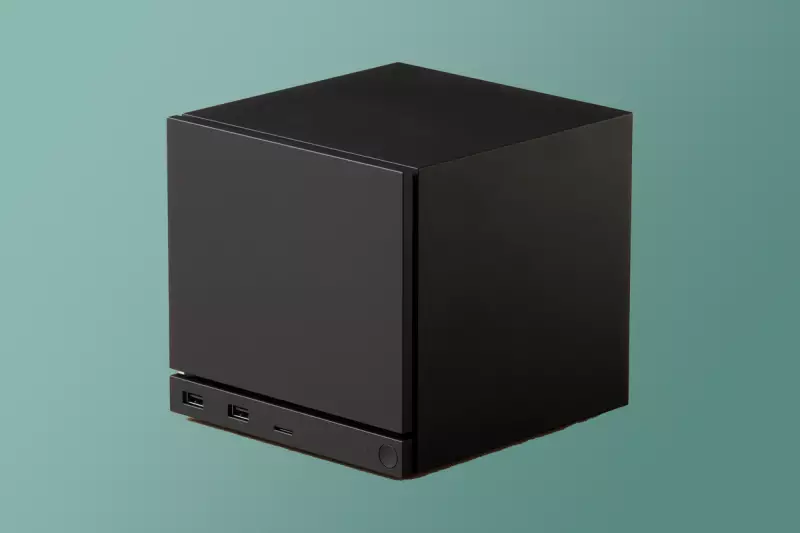
Valve's Steam Machine Console Set to Rival PS5 and Xbox with 2026 Launch
Valve is poised to shake up the gaming industry with the imminent launch of its Steam Machine console, a device designed to challenge the dominance of the PlayStation 5 and Xbox Series X. The all-new cube-shaped console, accompanied by a Steam controller, is expected to hit the market early this year, marking a significant push into hardware for the PC gaming giant.
Resurrecting a Concept with Modern Flair
After the resounding success of the Steam Deck in 2022, Valve has decided to revive the Steam Machine concept from 2014, transforming it into a purpose-built living-room console. Unlike its predecessor, this iteration is not merely a PC in a box; it features a sleek, compact design small enough to fit under a TV, optimised for sofa-based gaming. Powered by a custom AMD chip, Valve promises smooth 4K gaming enhanced by upscaling technology for sharper images and improved performance.
Release Date and Pricing Speculations
Valve has confirmed that the Steam Machine will launch early in 2026, though an exact date remains unannounced. Drawing parallels to the Steam Deck's mid-February 2022 release, a February 2026 debut seems plausible. The launch strategy may mirror the Steam Deck's gradual rollout, potentially starting with invitations before a wider release. Valve plans to sell the console directly through Steam and via regional partners, ensuring a controlled distribution.

In terms of pricing, Valve has indicated that the Steam Machine will be comparable to a PC with similar specs but positioned at the entry level of the PC space, aligning with other consoles on the market. Recent speculation from a Czech retailer, Smarty, suggests prices of approximately £708 for the 512GB model and £796 for the 2TB model. However, these figures are unofficial and may include mark-ups, with the final cost likely to be closer to the PS5 Pro's £700 price point rather than the Nintendo Switch 2's £395.
Specifications and Design Features
The Steam Machine boasts a compact 6-inch cube design, running SteamOS with features like fast suspend and resume, cloud saves, and a Steam Deck-style interface. It includes a customisable LED light strip on the front and a built-in power supply, eliminating the need for an external brick. Connectivity is robust, with twin display outputs via HDMI 2.0 and DisplayPort 1.4, four USB-A ports, a 10Gbps USB-C port, Gigabit Ethernet, Wi-Fi 6E, and Bluetooth 5.3.
Notably, the console is not locked down; users can install other operating systems and bootloaders, allowing for third-party apps and games outside of Steam. The Steam controller, compatible across all Steam devices, features magnetic thumbsticks for responsiveness and durability, along with a magnetic charging puck that serves as a wireless adapter. It supports motion controls through Grip Sense and can power on the console via HDMI-CEC integration.
Performance and Gaming Capabilities
Valve claims the Steam Machine delivers over six times the horsepower of the Steam Deck, capable of running entire Steam libraries, including modern AAA titles. It utilises a semi-custom AMD processor and graphics chip, supporting 4K gaming at 60fps through FSR upscaling. With 16GB of RAM and options for NVMe SSD upgrades, it also supports features like ray tracing when paired with compatible displays.
Early demos, such as running Cyberpunk 2077, suggest performance on par with the PS5 Pro. The console supports HDR over HDMI and DisplayPort, along with variable refresh rate technologies like AMD FreeSync, ensuring rich colours, better contrast, and smoother gameplay on modern TVs and monitors.
Storage and Additional Details
At launch, the Steam Machine will be available in 512GB and 2TB storage variants, both supporting additional storage via microSD cards. It was unveiled alongside the Steam Frame VR headset, positioning it as a competitor to the Meta Quest. While compatibility may not be perfect initially, particularly for multiplayer games with kernel-level anti-cheat software, Valve's Proton compatibility layer aims to bridge gaps over time.
In summary, the Steam Machine represents Valve's ambitious foray into the console market, blending PC flexibility with console convenience to rival established giants like PlayStation and Xbox.