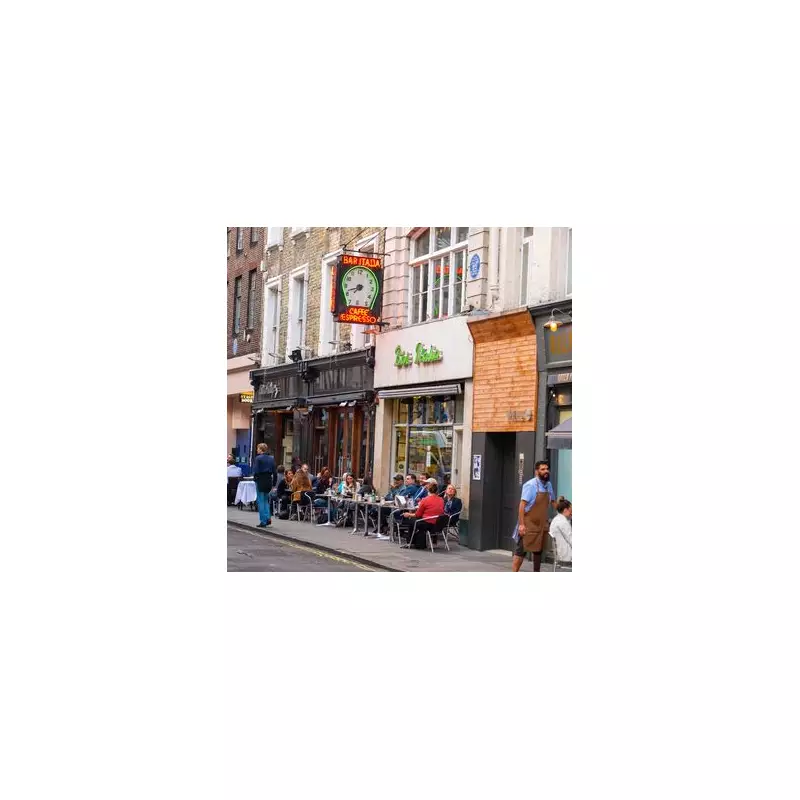
As you stroll through the vibrant streets of Soho, amidst the neon lights and bustling nightlife, it's easy to miss the historical significance hidden behind the facade of a popular bar. At 22 Frith Street, a gleaming blue plaque marks a location that forever changed global communication and entertainment.
From Laboratory to Legendary Bar
Today known as Bar Italia, a beloved establishment that has served London's nightlife since 1949, this building holds a secret history that predates its current incarnation by decades. The Polledri family, who have owned the venue since its opening, maintain a business that stands on hallowed technological ground.
The Birth of Television in a Soho Attic
Rewind to 1924, when Scottish engineer John Logie Baird rented an attic space at this very address to establish his laboratory. Here, surrounded by scattered components and intricate machinery, Baird embarked on a relentless pursuit that would culminate in one of the twentieth century's most transformative inventions.

His early experiments involved a ventriloquist's dummy named Stooky Bill, but the true breakthrough came when he enlisted William Taynton, an office boy working downstairs, as his first human subject. This successful test marked a pivotal moment in the development of television technology.
The Historic Demonstration That Changed Everything
While Baird achieved his initial transmission success in October 1925, it was on 26th January 1926 – exactly one hundred years ago – that he presented the world's first formal public demonstration of television. In that same Frith Street laboratory, Baird showcased how his system could transmit and receive moving images to an assembled audience, forever altering the course of media history.
The subsequent year saw television sets go on sale for the first time at Selfridges in London, with early models reportedly costing around £60 – equivalent to approximately £4,000 in today's money. Baird would later transport his revolutionary creation across the Atlantic, spreading television technology worldwide.
From Innovation to Cultural Icon
Today, Bar Italia has developed its own rich cultural legacy, becoming deeply embedded in Soho's artistic community. The establishment gained musical immortality when it inspired Pulp's track 'Bar Italia' on their acclaimed 1995 album Different Class. The song's lyrics describe the bar as a sanctuary where "all the broken people go... round the corner in Soho," capturing its enduring appeal.
A Living Legacy
Recent visitors continue to celebrate Bar Italia's unique atmosphere, with one TripAdvisor reviewer describing it as "an oasis of calm to escape the madness of the West End" and praising its "authentic experience." For seventy-five years, the establishment has welcomed diverse patrons, building what one might call "a history and loyal following to die for."
The walls themselves tell stories, adorned with photographs and trophies from both famous and everyday visitors who have enjoyed the venue's distinctive charm. This unassuming bar thus represents a remarkable convergence of technological history and cultural continuity, where groundbreaking innovation meets enduring community spirit.
Next time you pass 22 Frith Street, take a moment to appreciate the dual legacy contained within its walls: both the birthplace of global television and a living piece of London's social fabric, continuing to serve patrons just as it has for generations.