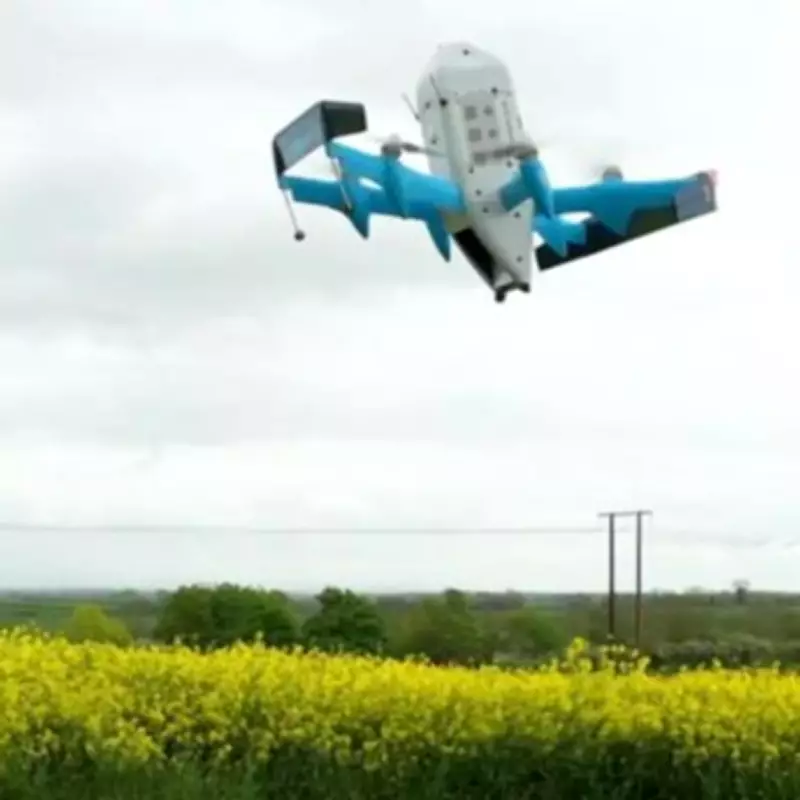
Amazon has launched its first UK-based drone delivery service in Darlington, marking a new chapter in the historic market town's pioneering history. The retail giant's Prime Air service will deliver small items weighing less than 5lb (2.2kg) within a 7.5-mile radius of its fulfilment centre, with a promised delivery time of under two hours. However, the rollout has sparked significant safety concerns among locals, who worry about potential malfunctions and noise.
Local Safety Fears
Darlington resident Mary Warner, 56, expressed her unease about the drones. "I would be very unhappy to see an airborne drone. They could run out of battery power due to human error and land on someone's head, the worst case scenario being a baby. The noise would be quite unnerving," she told the Mirror. Her fears are not unfounded, as the technology has experienced mishaps in the US, including a drone crashing into a Texas apartment building and another severing an overhead internet cable. In October last year, two Amazon drones struck a crane in Tolleson, Arizona, causing substantial damage and a fire, though no injuries were reported.
Noise and Environmental Impact
The noise from the drones has been compared to a "giant hive of bees" or a "giant blender" by US residents. However, Amazon insists that the latest MK30 model is 50% quieter than previous versions, with a noise footprint similar to a standard delivery van. Mary Warner noted she hasn't heard the drones yet, adding, "We have enough nocturnal din with the occasional flight of the old bill chopper!"

Tech analyst Paul Armstrong, founder of the TBD Group, believes noise, rather than safety, will be the ultimate test of public tolerance. "The real question is whether the public is willing to accept a low level of risk and noise in exchange for convenience," he said. He emphasised that these are not hobby drones but heavily regulated systems with multiple backup systems, though accidents remain possible due to battery or software failures and weather changes.
Positive Reactions and Environmental Benefits
Not all residents are sceptical. Jean Irwin, 76, who lives near the depot, said, "I think I would prefer a drone delivery. My parcels are sent from Leeds or Newcastle even though we have a big Amazon warehouse on our doorstep. What about the cost of fuel for the long journey? That could be saved by using a drone delivery." Richie Barlow, 43, sees the move as environmentally positive. "It will reduce carbon emissions with fewer deliveries by diesel vehicles," he noted. Experts suggest drones could cut greenhouse gas emissions by up to 84% compared to traditional trucks, though they are best suited for short distances to avoid high battery energy use.
Wildlife and Job Concerns
However, concerns extend to wildlife. An RSPB spokesperson told the Mirror: "Drones can pose risks to sensitive species and habitats. Disturbance may not always be visible, and even low-level flights can cause physiological stress." Additionally, the shift toward automation raises questions about job losses. Leaked documents from 2024 suggested Amazon aims to automate 75% of operations at its delivery hubs over the next decade, though the company rejected this. Paul Armstrong added, "Drone delivery will not suddenly wipe out thousands of jobs, but it will gradually reduce parts of the delivery chain. Amazon have wanted drones for years because they get rid of the messy humans."
Amazon's Response
An Amazon spokesperson told the Mirror that the service has successfully completed over 170,000 deliveries globally with "very few mishaps." They added: "We won't cut corners. Prime Air systems are built with multiple safety features. Our MK30 drone has received Civil Aviation Authority (CAA) approval to fly Beyond Visual Line of Sight. This enables drones to navigate safely to their destinations and return, ensuring the safety of people, pets, and property."