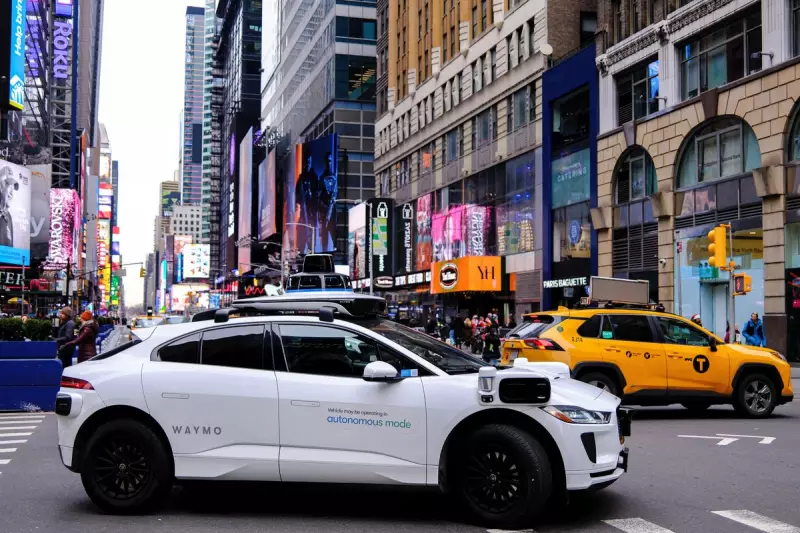
The prospect of robotaxis operating on the bustling streets of New York City remains uncertain, caught in a complex political crossfire between state ambitions and local apprehensions. While state legislators in Albany show openness to introducing autonomous vehicle technology, significant resistance persists within the city itself, particularly from officials protective of traditional taxi services.
State-Level Momentum for Autonomous Vehicles
Governor Kathy Hochul has recently indicated her intention to propose legislation that would permit a limited commercial fleet of self-driving vehicles to operate in areas outside New York City's five boroughs. This initiative aims to cautiously introduce the technology while prioritising safety protocols. Concurrently, other lawmakers in the state capital have put forward bills seeking to allow autonomous vehicles on public roads across New York, signalling a broader legislative interest in embracing this emerging transport sector.
City Officials and Taxi Unions Voice Strong Opposition
Within New York City, however, enthusiasm for robotaxis appears markedly subdued. Mayor Zohran Mamdani, a staunch advocate for the city's taxi drivers, has historically expressed serious reservations about the arrival of autonomous vehicles. His administration is particularly focused on safeguarding the livelihoods of drivers who have already faced considerable financial strain from the rise of rideshare applications like Uber and Lyft.

The New York Taxi Workers Alliance, a powerful union that played a crucial role in Mayor Mamdani's election, has articulated profound skepticism. Bhairavi Desai, the Alliance's executive director, has warned of the potential for massive job losses and a fundamental degradation in the quality of transport services available to residents. This perspective underscores a deep-seated concern that technological advancement could come at a significant human cost.
Legislative Proposals and Testing Programmes
Brad Hoylman-Sigal, the Manhattan Borough President and a former state senator, previously introduced legislation designed to prohibit self-driving vehicles from operating in New York City without obtaining a licence from the city's taxi and limousine commission. Although this bill did not progress beyond committee stages, it highlights the regulatory hurdles envisioned by some city representatives.
Under the previous administration, former Mayor Eric Adams authorised a limited testing programme, permitting companies such as Waymo to trial a small number of autonomous taxis in Manhattan and Brooklyn. This pilot scheme is scheduled to conclude on April 1, 2026. A spokesperson for Waymo described these operations as extraordinarily helpful for preparing their technology for future deployment in the city's unique urban environment.
Political Calculations and Future Prospects
The debate is further complicated by political timing. Governor Hochul's proposal emerges as she prepares for an election year, during which she aims to position herself as a champion for working-class and lower-middle-class constituents. Bhairavi Desai has questioned whether the governor would ultimately endorse legislation that could be perceived as threatening jobs, suggesting that electoral considerations may influence the policy's trajectory.
Despite the cautious state-level approach, Waymo has expressed optimism, viewing Governor Hochul's initiative as a step toward eventually serving communities throughout New York state. The company's spokesperson emphasised their safety-focused operations and eagerness to explore opportunities beyond the city limits.
As the discussion evolves, the central conflict remains between the promise of innovative transportation technology and the protection of established workforce interests. The outcome will likely depend on whether policymakers can devise a framework that addresses safety imperatives, economic impacts, and the practical realities of integrating autonomous vehicles into one of the world's most demanding urban landscapes.