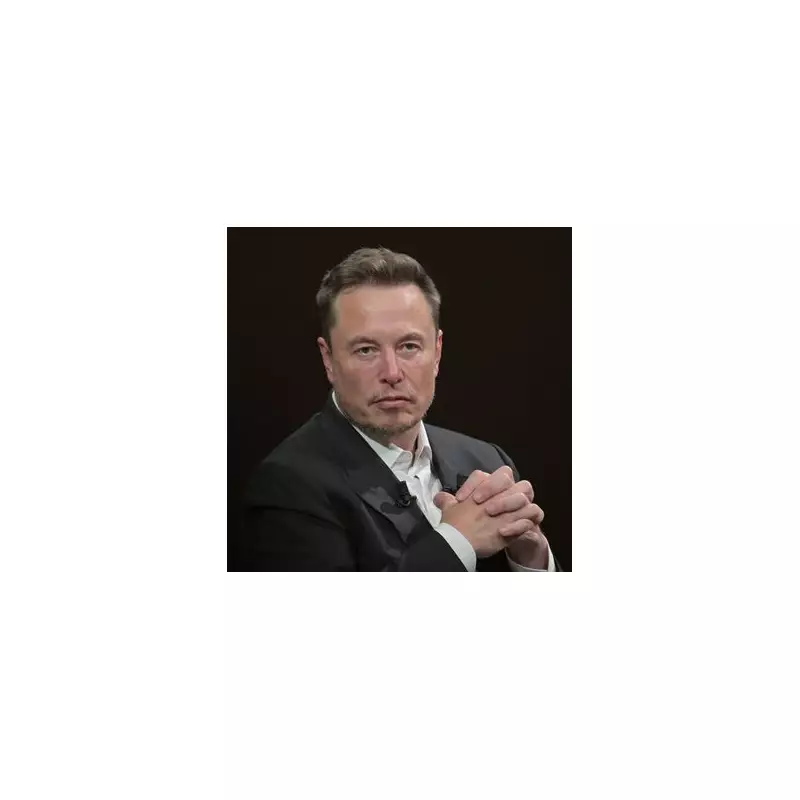
Tesla and SpaceX CEO Elon Musk has issued a striking vision for the future of global employment, predicting that within the next ten to twenty years, work could become entirely optional for hundreds of millions of people. The billionaire entrepreneur delivered this provocative forecast during his recent appearance at the US-Saudi Investment Forum held in Washington DC.
A Future Where Employment is a Choice, Not a Necessity
Musk articulated that in this forthcoming era, having a job might be akin to maintaining a personal vegetable garden—a pursuit undertaken not out of economic necessity, but for personal satisfaction or hobby. "My prediction is that work will be optional," Musk stated. "It’ll be like playing sports or a video game or something like that. If you want to work, [it’s] the same way you can go to the store and just buy some vegetables, or you can grow vegetables in your backyard. It’s much harder to grow vegetables in your backyard, and some people still do it because they like growing vegetables."
The Driving Forces Behind Musk's Vision
According to Musk, this seismic shift will be propelled by the widespread integration of millions of robots and advanced artificial intelligence systems into the workforce. These technologies are expected to dramatically enhance productivity across multiple sectors, potentially rendering traditional human labour redundant on an unprecedented scale. Musk suggests this disruption could materialise as soon as the next decade, fundamentally altering how societies perceive and engage with employment.

Economic Experts Voice Caution Over Timeline
While Musk's vision of a fully automated labour market finds some theoretical agreement among economists, many express scepticism regarding his proposed timeframe. Ioana Marinescu, an economist and professor at the University of Pennsylvania, acknowledged the long-term trajectory towards automation but highlighted historical patterns of technological adoption.
"We’ve been at it making machines forever, since the industrial revolution, at scale," Professor Marinescu told Fortune. "We know from economics that … you often run—for these kinds of activities—into decreasing returns, as it gets harder in order to make progress in a line of technology that you’ve been at, in this case, for a couple of centuries."
Marinescu noted that the current workforce has yet to experience a "discernible disruption" directly attributable to AI automation, raising questions about the immediate feasibility of Musk's predictions. The potential social and economic consequences of mass automation, which could leave vast numbers unemployed, remain unclear and largely unaddressed.
Musk's History of Bold Technological Predictions
Elon Musk is no stranger to making ambitious forecasts about technological milestones, though his track record for accuracy is mixed. In 2016, he predicted that manned missions to Mars would occur by 2022—a deadline that passed unfulfilled. Similarly, his claims that roads would be filled with mass driverless vehicles by late 2025 did not materialise, nor did his 2013 assertion that Tesla would achieve 90 per cent autonomous driving within three years.
Despite these past inaccuracies, Musk maintains an optimistic outlook regarding rapid technological advancement. In a recent episode of Moonshots with Peter Diamandis, he even speculated that artificial intelligence could eventually help humanity overcome its biological limitations, including our finite lifespans.
The debate surrounding Musk's latest prediction underscores a broader conversation about the pace of automation and its implications for global labour markets. While the direction of travel towards greater automation seems certain, the exact timeline and societal impact remain subjects of intense speculation and analysis among technologists, economists, and policymakers worldwide.