GM's High-Stakes Gamble: Abandoning CarPlay for Proprietary Software
American drivers have developed an undeniable affection for Apple CarPlay and Android Auto. These systems transform every vehicle's dashboard into something instantly recognisable, seamlessly integrating favourite Spotify playlists, Google Maps navigation, and familiar smartphone interfaces directly onto the car's display. Their popularity has reached such heights that they've become virtually essential for many buyers. A revealing July AutoPacific survey indicated that over 60 percent of prospective car shoppers would refuse to purchase a new vehicle lacking either Apple CarPlay or Android Auto.
This devotion has made perfect sense for years, but now a significant crack is appearing in this established paradigm. The fundamental limitation of both systems is that they operate as surface-level interfaces layered atop the vehicle's actual operating brain. Recognising this, General Motors, America's largest automotive manufacturer, has made a decisive move. The company no longer wants Apple or Google occupying prime real estate in its future vehicles' dashboards without deeper integration.
The Detroit Alternative: GM's Own Software Ecosystem
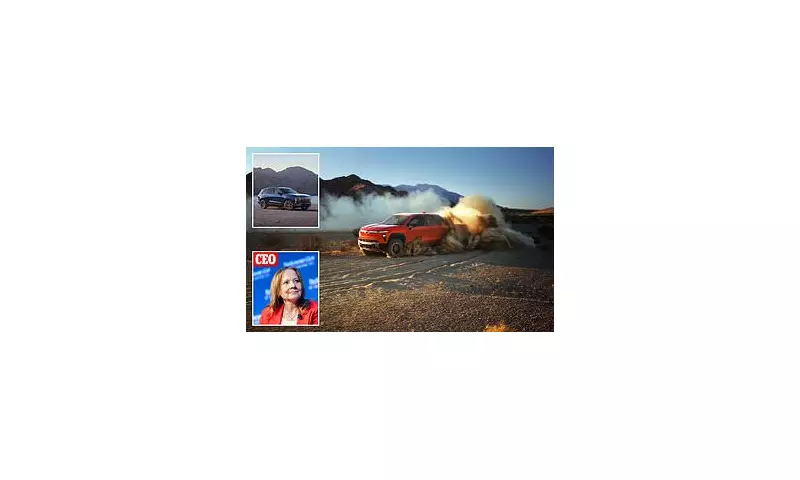
Instead of continuing with the Silicon Valley staples, GM is introducing a new generation of electric vehicles powered entirely by its own proprietary software. This represents a significant technological pivot, developed by computer specialists in Detroit rather than borrowed from California's tech giants. To properly assess how this ambitious gamble might play out in the real world, we conducted an extensive week-long test with two GM vehicles that fully embrace this post-CarPlay future: the 2026 Chevy Silverado EV Trail Boss and the Cadillac Vistiq.

Our evaluation vehicles, provided as standard press loans, arrived with fully charged batteries and necessary equipment like an E-ZPass already mounted for our New York City journey. Importantly, our verdict remains entirely independent and unsponsored by any manufacturer.
2026 Chevy Silverado EV Trail Boss: Off-Road Tech Pioneer
On paper, abandoning Apple CarPlay seemed almost heretical. In practical application with the Silverado EV Trail Boss, we discovered how GM's alternative might actually succeed—provided automakers avoid the temptation to burden drivers with excessive subscription fees for basic features.
This year, the Trail Boss represents the pinnacle of the Silverado EV lineup. Where last year's top RST trim emphasised sporty characteristics, the Trail Boss veers decisively toward rugged off-road capability. To enhance its dirt-trail prowess, it rides two inches higher for improved rock clearance, features chunkier tyres designed for loose terrain, and carries a price tag reflecting its ambitious positioning. Our test vehicle came in at $91,845.
Is this the electric truck that finally converts EV sceptics who complain about near-six-figure prices, battery weight, and whether electric vehicles belong on challenging trails? Probably not yet. However, the technological case proves more nuanced than anticipated.
Nearly every instinctive action you'd perform with Apple CarPlay or Android Auto—skipping music tracks, scrubbing through podcasts, activating navigation—is thoughtfully accounted for in GM's system. The Silverado remains a massive, expensive electric truck that may not sway doubters, but its interior technology offers a compelling roadmap for the automaker's future direction.
GM's interface proves remarkably intuitive and easy to read. Within just two days, we found ourselves fully adjusted to its controls and toggles. The Silverado's substantial 17.7-inch centre display seamlessly integrates all vehicle safety guidance and information. Muscle memory quickly develops, and the absence of CarPlay gradually fades into the background. GM has intelligently positioned each crucial phone function at the display's bottom edge for effortless access.

Where GM's System Excels: Vehicle-Aware Intelligence
Where GM's proprietary system genuinely advances beyond phone-mirroring solutions is through vehicle-aware features that CarPlay fundamentally cannot provide. When we mapped a 180-mile route to a remote trailhead, the navigation system recognised we began with 390 miles of range, intelligently factored in terrain and temperature variables, and automatically suggested an optimal charging stop for our return journey.
Even the voice assistant comprehends truck-specific commands. Instructions like 'Set maximum charge to 80 percent' or 'Show me charging stations with pull-through spots' execute smoothly without tedious menu navigation. These features aren't revolutionary in isolation, but they require the infotainment system and vehicle computer to communicate deeply—something phone mirroring was never designed to accomplish.
2026 Cadillac Vistiq: Luxury Reimagined
Cadillac is thoroughly reinventing itself as a serious luxury electric vehicle brand—and, somewhat quietly, executing this transformation exceptionally well. Detroit's most prestigious automaker lost its competitive edge in the late 2010s, producing a lineup of vague, forgettable vehicles that struggled against rivals like Lexus, BMW, and Mercedes-Benz.
Its new wave of electric models—including the Lyriq, Escalade IQ, Celestiq, Optiq, and now the Vistiq—finally represents a deeply considered strategic plan. The three-row Vistiq stands out as particularly exquisite value within this portfolio.
Our $98,000 test vehicle impressed from every perspective, featuring a jewel-like front grille and sharp, angular LED taillights. The luxury continues uninterrupted inside with supple leather seats, a sweeping curved digital display, and no cheap plastics in evidence. Like the Silverado EV, the technology feels seamlessly integrated.
Augmented-reality navigation projects bright blue directional markers onto the head-up display, making it nearly impossible to select the wrong lane at complex interchanges. Voice commands operate comprehensively, allowing drivers to request temperature adjustments in the third row, volume changes in the second row, or deactivation of the heated steering wheel—all hands-free.
Once again, these are capabilities Apple and Google cannot access through their mirroring systems. On its own merits, the Vistiq is a beautifully crafted luxury SUV. Layered with GM's latest software, it unexpectedly builds a credible case for existence after CarPlay.
The Broader Industry Implications
GM's gamble carries significance for anyone considering a future Chevrolet, GMC, or Cadillac—even those not yet ready to transition to electric vehicles. When questioned whether GM shoppers should expect all future vehicles to launch without CarPlay, CEO Mary Barra confirmed on The Verge's Decoder podcast: 'As we approach a major rollout, I believe that's the correct expectation. Yes.'
This represents a dramatic departure from most industry players. Only a handful of automakers—most notably Tesla and Rivian—have completely abandoned Apple and Google's phone-mirroring solutions. Having tested Rivian's system as well, we found it succeeds for the same fundamental reason as GM's: it communicates with the vehicle in ways the Silicon Valley giants simply cannot.
Automakers are now flexing their driver-related knowledge superiority. Their navigation systems understand battery status. Driver assistance features comprehend destination context. The overall product feels less like a smartphone application and more like a fully integrated technological ecosystem.
The Critical Caveats: Subscription Traps and Data Privacy
There exists, however, a certain path that could cause this entire strategy to collapse spectacularly. If automakers begin charging recurring subscriptions merely to unlock basic infotainment features, consumer goodwill would evaporate instantly. Integrating all driver technology into one seamless system only succeeds if it feels like genuine progress—not a restrictive paywall.
The same principle applies to excessive, Orwellian-esque data collection practices. Without committing these critical errors, GM's post-CarPlay future appears genuinely promising. Should they mishandle these aspects, drivers will undoubtedly clamour for their familiar iPhone-like screens to return.