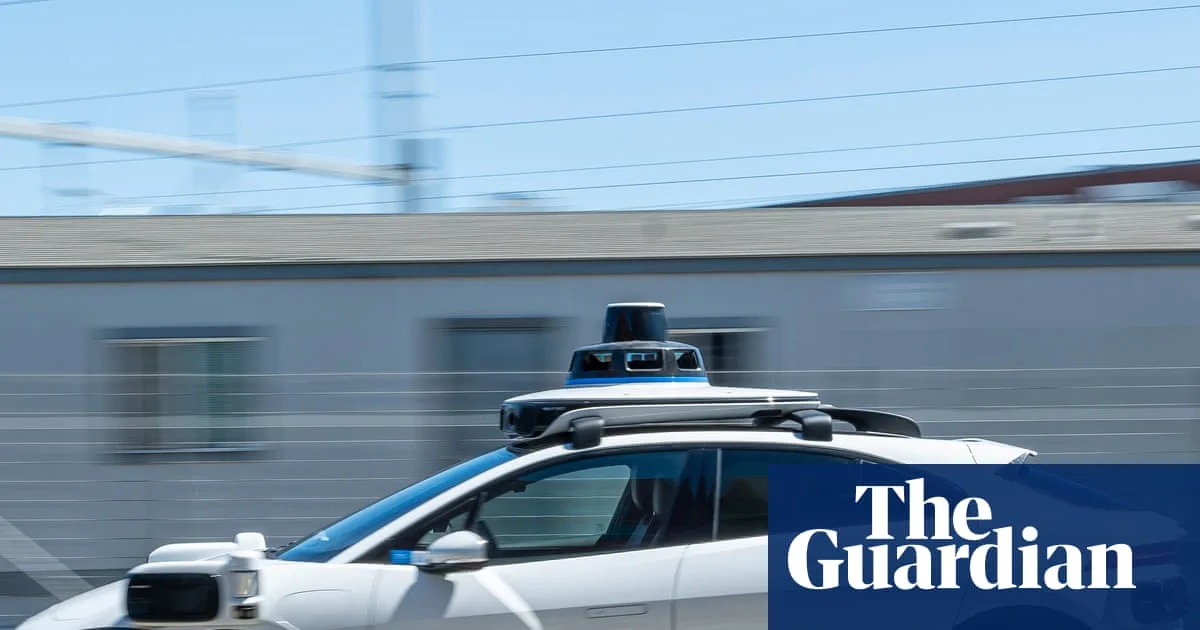
In a significant development for urban mobility, a futuristic driverless taxi service operated by US technology firm Waymo could be transporting passengers across London as early as September this year. This ambitious expansion marks Waymo's first major foray into the European market, building on its established operations in the United States and a recent launch in Tokyo.
Regulatory Green Light and Pilot Programme
The UK government has agreed to amend legislative regulations in the latter half of the year to permit the operation of fully autonomous vehicles on city streets, although a precise date for these changes has not yet been specified. This regulatory shift paves the way for advanced transport solutions.
Waymo, which is owned by Alphabet, the parent company of Google, announced its plans following an event at the London Transport Museum on Wednesday. The firm intends to commence a pilot service as soon as April, showcasing its fleet of specially adapted vehicles to stakeholders and the public.
Advanced Sensor Technology and Operation
The autonomous taxis, which are technically already navigating London's roads with safety drivers present for mapping purposes, will eventually operate without any human occupants. When the service fully launches, paying passengers will be able to book these empty cabs via a dedicated mobile application.
Each vehicle is equipped with a sophisticated suite of four high-tech detectors: lidar, vision systems, radar, and microphones. Waymo claims this combination provides a comprehensive 360-degree view of the car's surroundings, extending as far as three football fields, even in challenging weather conditions.
The data harvested by these sensors is processed in real-time by a powerful computer located in the boot of the car. This system determines the vehicle's movements, actions, and reactions, enabling fully autonomous navigation. Waymo has indicated that this cutting-edge service will be offered at a competitive yet premium price point for users.
Government Support and Safety Assurances
Local Transport Minister Lilian Greenwood, who attended the museum event, expressed strong governmental support for the initiative. We're supporting Waymo and other operators through our passenger pilots, and pro-innovation regulations to make self-driving cars a reality on British roads, she stated.
Minister Greenwood predicts that the introduction of this technology will enhance road safety by eliminating the human error that frequently leads to accidents. We know that unlike human drivers, automated vehicles don't get tired, don't get distracted and don't drive under the influence, she explained.
The minister also emphasised that rigorous safety protocols will be enforced before these vehicles are permitted to operate without human supervision. These measures will include robust protections against hacking and other cyber threats to ensure system integrity and passenger security.
Market Context and Established Operations
The move comes as existing app-based ride-hailing giants Uber and Lyft, both of which have partnered with Chinese technology firm Baidu, are reportedly prepared to launch their own driverless services once UK legislation permits.
Waymo currently operates a substantial fleet of approximately 1,000 Jaguar vehicles in San Francisco and 700 in Los Angeles. The company reports that its cars have already driven a remarkable 173 million miles fully autonomously, primarily across the United States, demonstrating extensive real-world testing.
However, the technology is not without its challenges. Recent reports have highlighted incidents where passengers were temporarily trapped inside autonomous vehicles, indicating that operational refinements may still be necessary as the systems evolve.