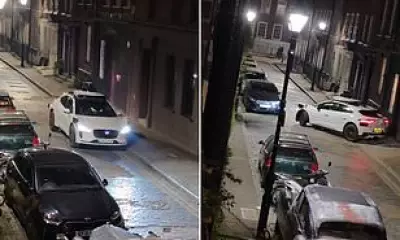
Dashcam footage has emerged showing one of London's pioneering driverless taxis committing a traffic violation by running a red light. The incident occurred as the autonomous vehicle transported Alex Kendall, chief executive of British tech start-up Wayve, to Buckingham Palace where he was due to receive an OBE honour for his services to artificial intelligence.
Social Media Revelation
Mr Kendall shared the footage on social media platforms, apparently unaware that his self-driving vehicle had broken traffic laws during the journey through central London. Alongside a photograph of him receiving his honour from the Princess Royal, he posted what he described as footage of an 'impressive drive without intervention', responding to requests from followers who wanted to see the autonomous journey to the Palace.
The Controversial Journey
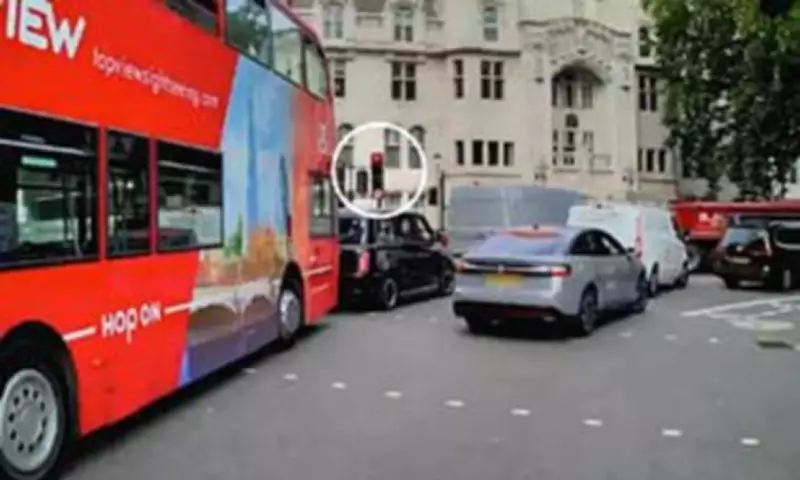
The video documentation shows Mr Kendall's vehicle travelling to the ceremony via Victoria Embankment and Parliament Square. As the car approached the south-west corner of Parliament Square, it encountered heavy traffic congestion and stopped correctly at a white stop line.

A London bus can be seen in the footage straddling and crossing beyond the stop line, having followed slow-moving vehicles to the junction. When the traffic light controlling that arm of the junction changed from green to red, both the bus and the Wayve vehicle proceeded forward as the traffic jam began to clear.
Legal Implications and Industry Response
Although this manoeuvre represents what many human drivers might consider in similar circumstances, running a red light constitutes a motoring offence carrying three penalty points and a £100 fine under UK traffic regulations.
Wayve subsequently acknowledged the incident, stating that their vehicles remain 'prototypes' and confirming they would conduct a thorough review. A company spokesman explained that all journeys include 'trained safety operators in the driver's seat' for monitoring purposes, adding: 'We acknowledge that the more appropriate action would have been to manually take over the vehicle and keep it stationary until a green light was visible again.'
Industry Concerns Raised
The incident has prompted questions about regulatory oversight for autonomous vehicles. Steve McNamara, general secretary of the Licensed Taxi Drivers' Association, highlighted the disparity in consequences, noting: 'London cabbies have their licences revoked at six points. Who is going to police these things and who is responsible for the points?'
Broader Context and Potential Benefits
This development emerges alongside broader discussions about autonomous vehicle technology. Human rights lawyer Cherie Blair recently suggested that driverless cars could potentially assist women attempting to leave abusive relationships, telling The Mail on Sunday that such vehicles could reduce risks as 'male drivers can be a risk for women'.
As a Refuge charity ambassador, she added that it 'would be good to see them integrated with domestic abuse charities', highlighting potential social benefits of the technology despite current teething problems.
The incident underscores the complex challenges facing autonomous vehicle deployment in urban environments, balancing technological advancement with road safety regulations and public acceptance.