

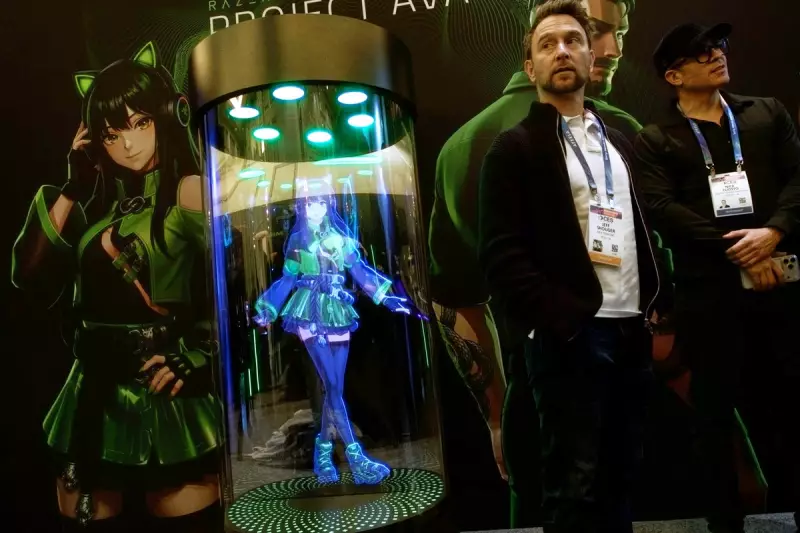
The second day of the CES 2026 tech expo in Las Vegas saw exhibition halls packed with visitors exploring a vast array of futuristic innovations. The event, held on Wednesday 07 January 2026, was dominated by thousands of robots, AI companions, health longevity devices, and cutting-edge wearables.
Industry Leaders Herald AI-Driven Future
The day's proceedings were opened by Siemens President and CEO Roland Busch, who detailed how clients are using artificial intelligence to revolutionise their operations. He was joined by Nvidia CEO Jensen Huang to announce an expanded partnership. This collaboration aims to launch a new AI-driven industrial revolution to reinvent manufacturing, production, and supply chain management globally.
Later, Lenovo concluded the day with a major presentation featuring tech luminaries. CEO Yang Yuanqing was joined by Nvidia's Jensen Huang, AMD CEO Lisa Su, and Intel CEO Lip-Bu Tan. They spotlighted how Lenovo's AI platforms can assist individuals through wearables, businesses with enterprise solutions, and have a broader global impact.

Groundbreaking Consumer Tech Unveiled
Among the standout products were several prototypes pushing the boundaries of consumer technology. Gaming hardware firm Razer showcased two AI-powered prototypes. The first, Project Motoko, is an over-ear gaming headset that also functions as a general-purpose AI assistant. The second is an AI desk companion, a holographic sprite named Project Ava, which has evolved from an on-screen assistant into a physical glass tube with a camera and speakers. It can offer gaming tips and help organise a user's life. Both devices are AI-agnostic, with demos using OpenAI's ChatGPT and xAI's Grok respectively. Razer expects commercial release later in 2026.
In robotics, Oshkosh Corporation debuted a fleet of autonomous airport robots designed to handle the complex "perfect turn" process after a plane lands. CEO John Pfeifer stated the goal is to reduce delays and maintain operations in severe weather. Testing with major airlines is underway, with a rollout at large hubs like Atlanta or Dallas targeted over the next few years.
Chinese company Roborock introduced a novel vacuum, the Saros Rover, which uses chicken-like legs to climb and clean stairs, including spiral staircases. The device, still in development, was demonstrated cleaning each step during its ascent and descent.
Health Tech and Fusion Energy Advance
Health technology also saw significant advances. Withings unveiled the Body Scan 2, a smart scale that measures 60 different biomarkers in 90 seconds, including heart age, vascular age, and nerve health. Priced at $600 and available in spring 2026, it works with a subscription app to provide personalised health advice aimed at promoting longevity.
In the energy sector, a major partnership was announced to accelerate nuclear fusion. Commonwealth Fusion Systems (CFS), NVIDIA, and Siemens are collaborating to use AI to hasten the development of carbon-free fusion energy. CFS CEO Bob Mumgaard explained they will create a "digital twin" of their SPARC prototype power plant, which is 70% complete in Massachusetts. This AI simulation will compress years of manual experimentation into weeks, speeding progress toward their first planned power plant, ARC, targeted for the early 2030s.
The innovations presented on Day 2 of CES 2026 underscore a rapid convergence of AI, robotics, and sustainable technology, setting the agenda for consumer and industrial markets in the year ahead.






