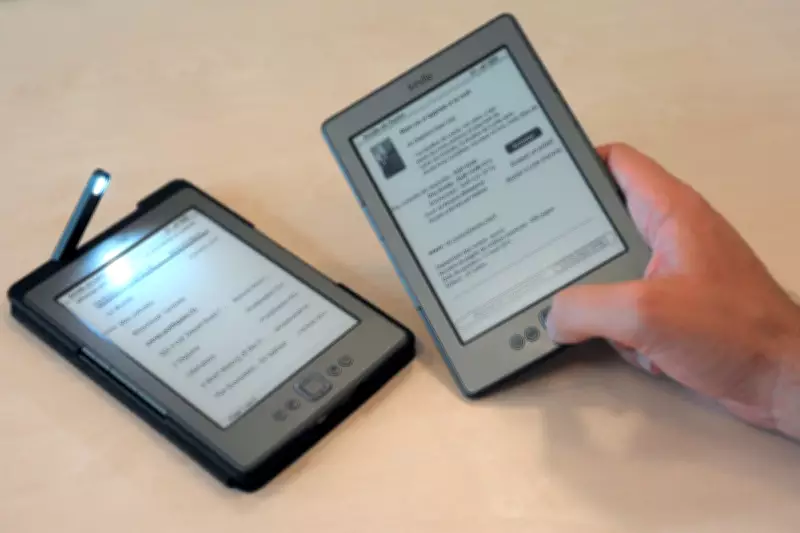
Long-standing Kindle users are facing an unwelcome digital divorce as Amazon prepares to end support for its older e-reader models. Devices released in 2012 and earlier will no longer be able to download new books or receive software updates after 20 May.
User Reactions
For Claudia Buonocore, 39, from Pittsburgh, the thought of parting with her 15-year-old Kindle Touch is particularly painful. "I've never felt the desire to have another device," she explained. "It's a part of me, a lifesaver, I fall asleep with it almost every night." She added, "It's just a complete betrayal of customers."
While Amazon offers a 20 per cent discount on recent models priced $110 to $680, and $20 in e-book credits for newer devices, many loyalists are reluctant to upgrade. Brian Oelberg, for instance, has been diligently loading his 2010-era Kindle Keyboard with an estimated 250 e-books since learning of the change. He plans to disable the device's WiFi from Wednesday to safeguard it from any updates that could wipe its contents.

Oelberg, 64, said he recently tried newer models at a Best Buy store but was unimpressed, noting they lack physical page-turn buttons. "There's no reason for Amazon to be doing this," said the Chicago resident, adding the buttons allow him to read outdoors in cold weather without removing gloves.
Durability and Design
Fans of older Kindles say the devices' durability and physical buttons are unmatched by newer versions such as the $180 Kindle Paperwhite, which they say drains battery life more quickly with its backlit screen.
Many technology firms phase out older devices due to security, cost and other factors, prompting users to upgrade. It was not possible to determine how many devices are affected by Amazon's move.
Amazon's Statement
Amazon said it had supported the devices for 14 years or more and could not continue doing so indefinitely. "Technology has come a long way in that time," said a spokesperson.
While the company wasn't the first to produce e-readers, it pushed them into the mainstream with the introduction of the first Kindle in 2007. Today, Amazon commands 72% of the e-reader market, according to research firm Business Research Insights.
Workarounds and Impact
Commentators on social media sites offer plenty of solutions to keeping the devices useful for years to come. That includes so-called jailbreaking, meaning removing software restrictions to allow other software to be installed; and sideloading, a means of adding books to the device from a computer, typically through a USB cord.
Cathy Ryan, who repairs older Kindles for resale on eBay as a hobby, expects the change to hurt her business. The 59-year-old Vermont resident owns five Kindles and still uses a second-generation device bought in 2009. "I suppose nothing lasts forever, but I am just really annoyed," said Ryan.
Cathy DeMail, 69, from The Villages, Florida, said she sees an ulterior motive and has been trying to load her device with books. "It's a shame I am getting railroaded into this," she said, adding she will likely have to buy a newer touchscreen model. "I hate it, it's the principle of the thing that bothers me."