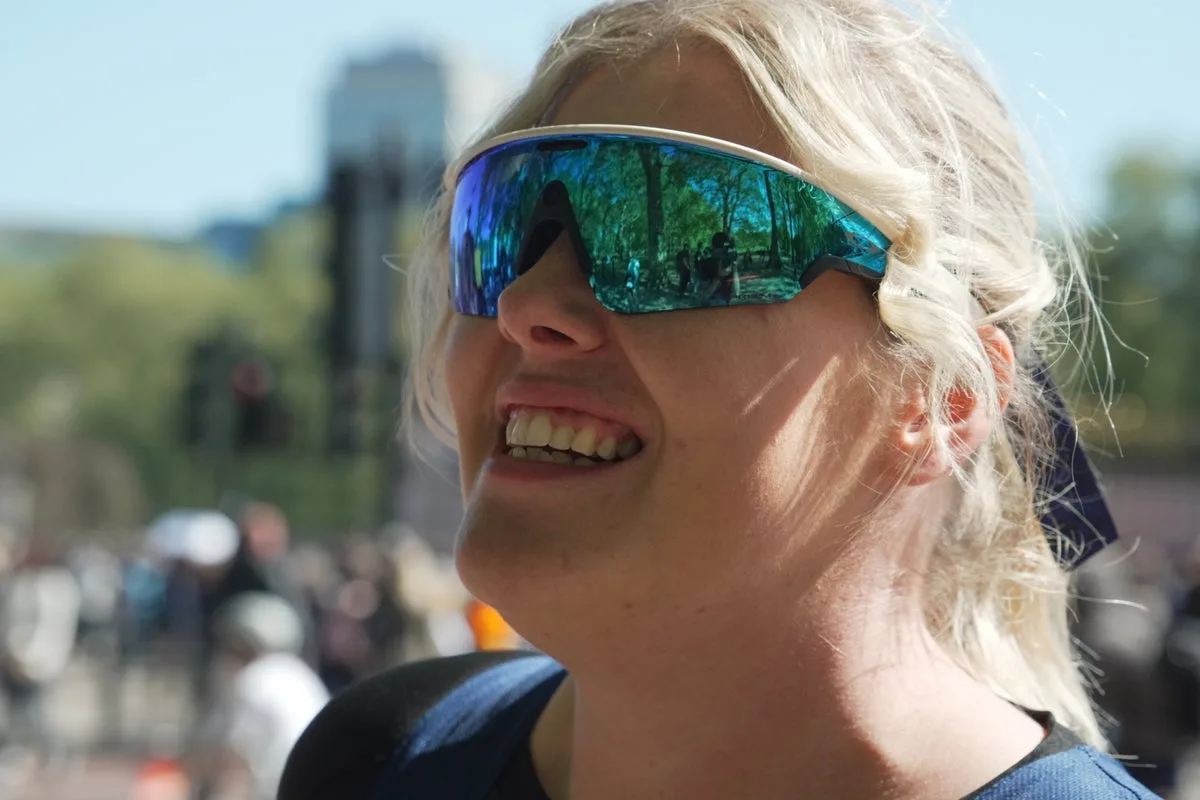
Visually impaired runners are using AI-powered smart glasses to take on the London Marathon, with the technology providing real-time audio cues about landmarks, distance, and surroundings. Among them is Tilly Dowler, who has Stargardt disease and about 10% useful vision. She began running last year and is now training for the marathon with her boyfriend as a guide, using Oakley Meta Vanguard smart glasses.
“While running, I can ask for live cues, such as what landmarks are around me and how far I have run,” Dowler said. The glasses allow her to combine audio feedback with guidance from her running partner while still listening to music. “My mission was to inspire other people with sight loss,” she added.
Sha Khan, who lost around 90% of his vision in 2021 due to retinitis pigmentosa and Stargardt disease, also relies on the glasses daily. “It’s like literally a part of me now,” he said. Khan uses voice commands to interact with the glasses while training with guide runners, avoiding the need to handle a phone. He also uses a guide dog, Moby, for general navigation.

The smart glasses, made by Meta in partnership with Ray-Ban and Oakley, use a front-facing camera and AI to analyse surroundings, converting visual input into audio delivered through built-in speakers. More than 7 million pairs of Meta Ray-Bans were sold last year. However, privacy concerns have been raised, including unauthorised filming and Meta sending video to human reviewers for AI training.
Technology analyst Chris Lewis, who is visually impaired and has used smart glasses while skiing, said the system provides an additional layer of awareness. “The AI is taking the images coming in, analysing it and giving you the information about what’s in front of you,” he said. He noted that large crowds at marathons can put pressure on mobile networks, potentially affecting reliability.
Guide Dogs UK, which provides guide dogs and mobility support, says the technology should complement existing support systems. “These glasses can really support and enhance somebody’s independence but they’re not there to be relied upon or replace core independent skills,” said Tommy Dean, a technology specialist at the charity. Analyst Ben Hatton of CCS Insight added that reliability remains a key challenge for such devices.