The upmarket bakery chain Gail's has announced plans to open 40 new stores across England in the coming year, accelerating its expansion beyond London. This ambitious growth strategy follows a period of significant sales increases, even as the company faces mounting pre-tax losses and protests from local communities concerned about gentrification.
Financial Performance and Expansion Drive
Sales for the year ending February 2025 reached £278 million, representing a substantial 20% increase compared to the previous year. This financial boost has emboldened the chain's directors to pursue aggressive growth. The company opened 36 new cafes in the last financial year, including its first venues in the South West of England. The next phase will see 40 additional stores opened by the end of February 2026.
However, this expansion comes at a cost. The firm's pre-tax losses grew to £7.8 million, up from £7.4 million the year before. This is attributed to significant investment in new store openings, alongside rising business expenses and staff costs. The company's workforce now exceeds 4,000 people, an increase of about 500 following a recent recruitment drive.

Local Backlash and Gentrification Concerns
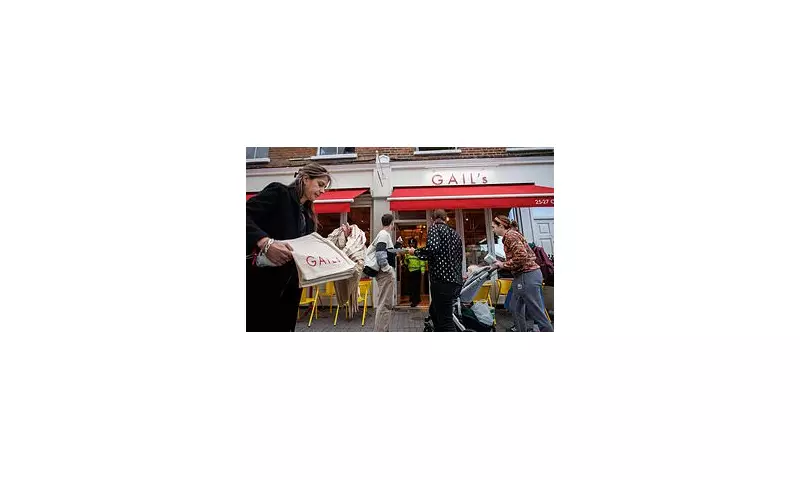
The chain's rapid growth has not been universally welcomed. In several neighbourhoods, the arrival of a Gail's bakery has sparked protests from residents and independent traders who fear it symbolises unwanted gentrification and could threaten local businesses.
In Crystal Palace, south London, independent cafe owners voiced serious concerns about a new large-scale Gail's outlet. Laura Tilli, who runs the Brown & Green cafe with her twin sister Jess, told the Standard that local independents were "trembling." She expressed worry that the corporate giant could "brainwash" customers and operate at a scale that smaller venues cannot match, stating, "We are all fighting to stay afloat."
Similar fears emerged in Stoke Newington, where locals feared their unique row of shops would be "ruined" and "turned into Oxford Street." Resident Jay Karim commented, "It is very much the peak of gentrification when a Gail's opens." Hundreds of residents in Walthamstow also previously signed a petition to stop a Gail's opening on their high street.
Business Model and Market Position
Gail's operates both a retail arm, comprising its bakeries, and a wholesale business supplying baked goods to retailers like Waitrose and Ocado. The company directors have identified the retail side as the "faster growing and more profitable part" of the group. They acknowledge the wholesale market is "very competitive" but believe they attract customers with high "quality at reasonable prices." A standard sourdough loaf from Gail's starts from around £4.80.
The company, which began as a wholesaler called The Bread Factory founded by Gail Mejia in 1993, opened its first retail branch on Hampstead High Street in 2005. It has since grown to approximately 170 outlets. In 2021, US private investment firm Bain Capital bought a majority stake, valuing the business at £200 million.
Responding to criticism, a Gail's spokesman told the Daily Mail that the chain "wholeheartedly supports independents" and is "only a small part of the retail picture." The company emphasises its commitment to providing "innovative world-class food in attractive neighbourhood bakeries" in a highly competitive market.
Despite the popular "Gail's theory" – the idea that the bakery's presence boosts local house prices – an analysis by MailOnline using Government figures found no meaningful evidence that house prices rise faster in areas with a Gail's bakery. The chain's expansion continues to be a flashpoint in the ongoing debate about the changing face of Britain's high streets.