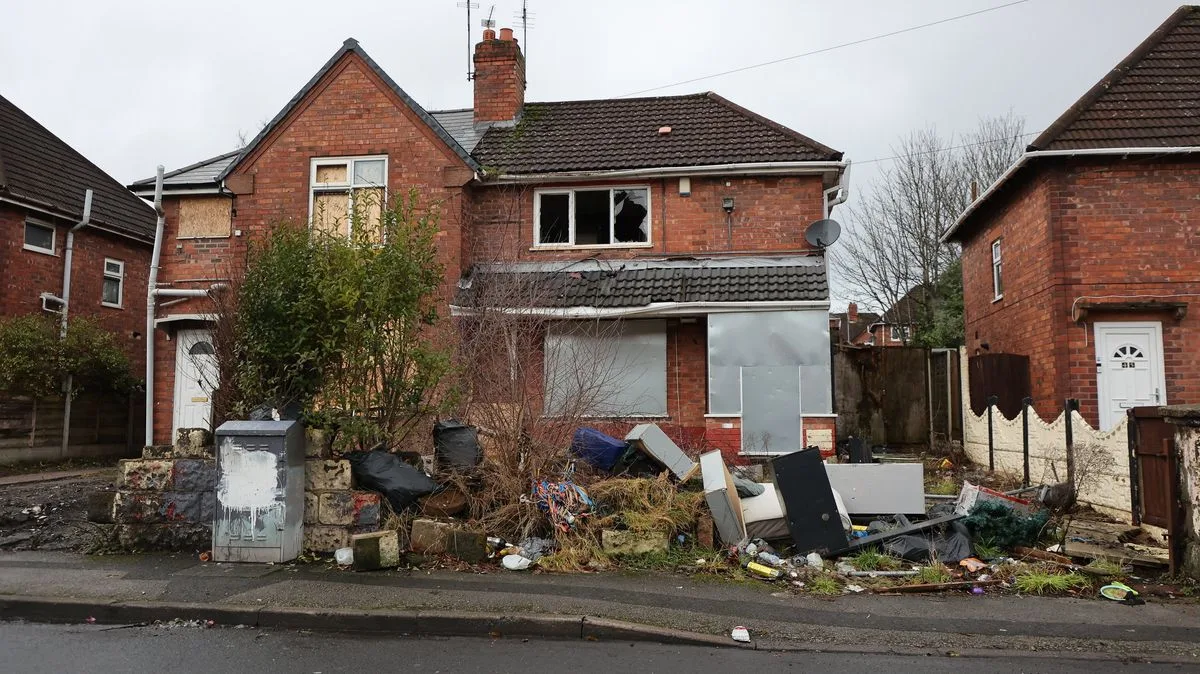
Residents of a West Midlands town branded the worst place to live in Britain have compared their daily reality to a 'real-life Shameless episode', with some claiming they are too scared to leave their homes after dark.
A Town in Decline: From Thriving Centre to 'No-Go Zones'
Walsall has been ranked the most deprived place in the UK according to the influential Demos-PwC Good Growth for Cities Index for 2025. The report, which measures economic performance and wellbeing, placed the town at the bottom for quality of life, also naming it the second least healthy high street and the third worst job market nationwide.
Locals paint a bleak picture of a community in steep decline over the past two decades. They speak of streets dominated by feral youths, gang violence, and drug addicts, creating areas considered no-go zones even in daylight. One suburb, Blakenall, carries the notorious reputation of being home to 'Britain's roughest estate'.
Visual evidence of decay is stark. The town centre is riddled with empty, boarded-up shop units, a stark contrast to its bustling past. Fly-tipped rubbish is strewn across roads and residential streets, with bins regularly overflowing.
'Homeless Earn More Than Me': Voices from the Community
The human impact of this deprivation is profound. Market trader Daniel Briars, 40, provided a startling economic comparison. 'I know a lad who runs a market stall and some days he takes home less than £100,' he said. 'I've spoken to homeless people who earn more than that by begging outside Spoons [Wetherspoons].'
He reminisced about a different Walsall: 'This town used to be buzzing. Every shop unit was taken in the 90s and people used to come for the nightlife here over Birmingham, believe it or not. Day or night it was thriving, and now look around - it's vape shops, charity shops or empty shops.'
A long-term resident of the Blakenall estate, who has lived there for 40 years, said the town's ranking was deserved. 'It's rubbish and drugs which are the issue,' he explained. 'The fire engines are here a couple of times a week as the kids keep setting stuff alight. This is worse than Shameless, it's honestly terrible here.'
Fear, Poverty, and a Glimmer of Civic Pride
The sense of danger is pervasive. Community worker Andrew, 38, stated bluntly: 'You're more likely to get caught up in knife crime here than 90 per cent of the UK.' His colleague Jayne revealed the grim reality in local schools, where Year 6 pupils as young as nine or ten are being appointed as 'anti-stabbing ambassadors' to tackle the knife crime epidemic.
Business owners are struggling. Jameel, 48, who runs Suits U men's clothing shop, fears growing shoplifting and gang activity. 'I'm scared in this stall... when we close up at night time, gangs hang around the front of the shop. They try to rob and steal the things,' he said.
Retired retail worker Alan Sharratt, 79, traced the decline back 25 years, citing rising unemployment and a lack of investment as key drivers. 'I don't know what the town centre is like of a night time, I wouldn't dream of going into it with all the risks,' he admitted.
Not all voices were entirely negative. Mary Davis, 83, who moved from Ireland as a teenager, said she remains proud to live in Walsall and has never been a victim of crime. However, she acknowledged the closure of many shops she once loved.
In response to the damning index, Councillor Adrian Andrew, Deputy Leader of Walsall Council, urged a change in narrative. 'Too often, we hear people talking our borough down, but Walsall is on the rise,' he asserted, pointing to the council's 'We Are Walsall 2040' plan and several ongoing redevelopment projects aimed at tackling deep-seated inequalities and securing vital investment for the future.