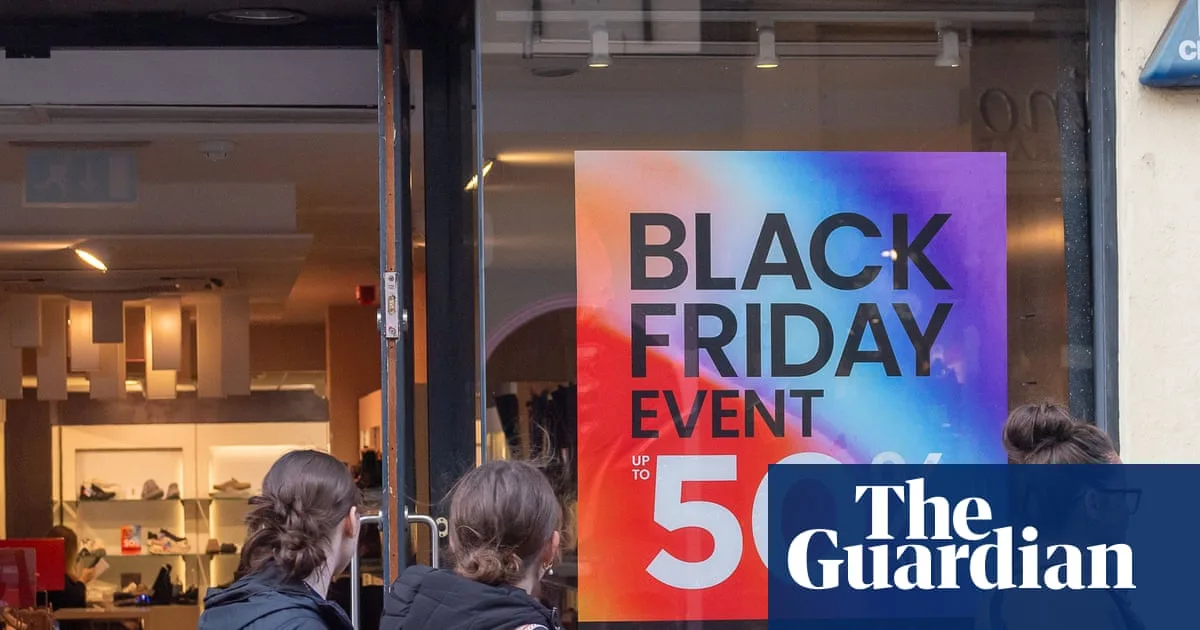
Black Friday 2025: Record Crowds But Spending Set to Fall
Black Friday 2025: Crowds Up, Spending Down

This year's Black Friday is set to attract unprecedented crowds to shops across the UK and beyond, yet retailers are bracing for a significant drop in consumer spending. The event, taking place on Friday 28 November 2025, presents a stark contradiction for the retail sector.

The Spending Paradox

According to the National Retail Federation (NRF), foot traffic is forecast to reach record levels. However, economic headwinds mean these bargain hunters are likely to be far more cautious with their wallets. The NRF survey reveals that nearly two-thirds of consumers plan to wait for Thanksgiving weekend deals, a notable increase from 59% in 2024. Despite this intent, the average spending per person is projected to fall to $890, down from $902 last year.

This downturn poses a serious challenge for retailers, who traditionally depend on the holiday season for about a third of their annual profits. The core of the issue lies with mounting inflation and persistently weak job growth, which are eroding household budgets.

Economic Pressures and Shifting Strategies

Massimo Basei, chief commercial officer of Pandora, confirmed this new consumer wariness, predicting "fierce competition" as a result. In the United States, retail sales grew less than expected in September, partly due to elevated prices. Analysis from the Tax Foundation indicates that tariffs implemented by former President Donald Trump have added approximately 4.9 percentage points to retail prices.

The situation is compounded by a sag in consumer confidence. The Conference Board reported that US consumer sentiment hit a seven-month low in November, with fewer households planning major purchases like vehicles or houses in the coming six months. With unemployment hovering near a four-year high, shoppers are becoming highly selective.

In response, retailers are adapting their tactics. Nikki Baird, Vice President of Strategy at Aptos, noted a strategic pivot towards smaller, more affordable luxury items and low-cost add-ons to attract budget-conscious consumers. Spending is increasingly concentrated among the affluent; Moody's Analytics data shows the richest 10% of Americans, those earning over $250,000 annually, now account for about 48% of all consumer spending, a significant rise from around 35% in the mid-1990s.

The Rise of AI and the Evolution of Black Friday

Shoppers are not just being more selective; they are also becoming more technologically savvy in their hunt for value. A Bank of America survey of 2,010 US shoppers found that half of all consumers, and a striking 71% of Gen Z, plan to use Artificial Intelligence this Black Friday. Their primary uses include comparing prices, generating gift ideas, tracking budgets, and even crafting personalised messages.

Furthermore, the very nature of Black Friday is changing. The rise of online shopping has diluted the day's significance, with promotions now spread across several weeks. Andy Tsay, a professor at Santa Clara University's Leavey School of Business, stated, "Black Friday is an obsolete concept and has now become just a point in time." This extended promotional period, coupled with economic pressures and the smart use of technology, is redefining one of the retail calendar's most iconic events.