
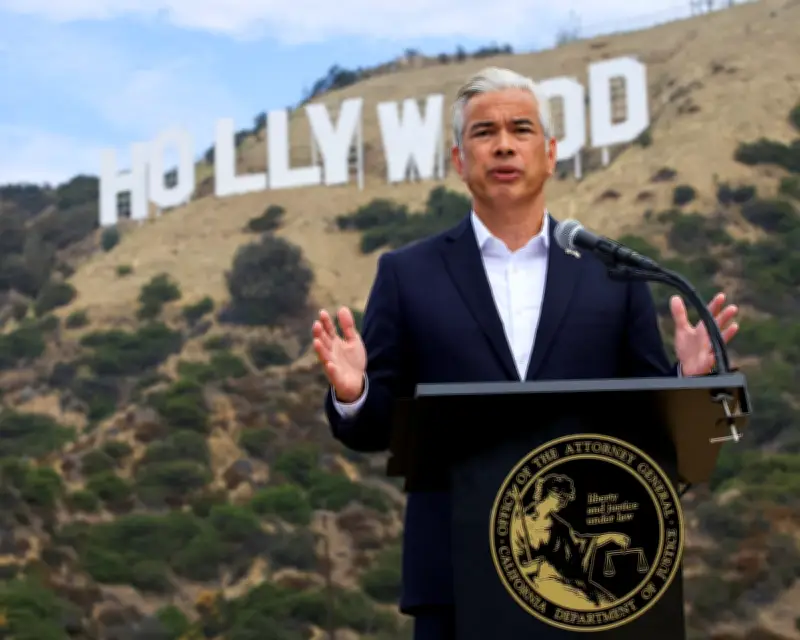
A coalition of 12 Democratic state attorneys general is taking legal action to block the $111bn merger between Paramount Skydance and Warner Bros Discovery (WBD), arguing that the deal violates federal antitrust law and would reduce competition in the film and cable television industries. The lawsuit, filed on Monday, faces a crucial hearing on Friday to determine whether a judge will issue a temporary pause on the merger or allow it to proceed toward final approval. The Department of Justice had already approved the merger in June.
Legal Arguments and Optimism
California Attorney General Rob Bonta, who is leading the lawsuit, expressed optimism about the case in an interview on Thursday. The complaint centers on the Clayton Act, a federal antitrust law that prohibits illegal market concentration. “In our complaint, it’s really clean, clear, concise,” Bonta said. “It’s precise with the data points that we’ve shared and courts have traditionally accepted exactly those types of arguments and that kind of data as a basis for finding a merger to be presumptively unlawful.”
Bipartisan Coalition Efforts
Bonta expressed disappointment that no Republican attorneys general joined the Paramount case, despite his success in forming a bipartisan coalition that temporarily blocked the merger of television conglomerates Nexstar and Tegna. “I hope it’s not because of any pressure from the head of the Republican party, Donald Trump, on any those Republican entities, because antitrust cases should be non-partisan or bipartisan,” he added. “They’re just about free and fair markets, and I think we all agree on that.”
Consumer and Industry Concerns
Washington state Attorney General Nick Brown noted the significant public interest in the case, saying he was surprised by the volume of constituents who contacted his office to express concern about the merger. The deal would reduce competition among film distributors and streaming services, potentially leading to higher prices for consumers. New Jersey Attorney General Jennifer Davenport echoed these concerns, highlighting the impact on her state, which has seen a wave of investment from major studios thanks to generous tax credits. “We just knew that it was bad for New Jerseyans,” Davenport said. “This is more important than ever that we fight for the competition in the industry, because we are seeing it as just another component of rising costs in our state.”
Impact on New Jersey’s Film Industry
New Jersey has become a hub for film production, with Netflix planning to invest $1bn in a new facility in Fort Monmouth, Lionsgate building a dedicated production site in Newark, and Paramount serving as the anchor tenant for the 58-acre 1888 Studios. Davenport emphasized that reduced competition could harm not only consumers but also artists and the next generation of industry workers. “Yes, we do have a burgeoning film industry, and yes, we were the birthplace of the American film industry,” she said. “But ultimately, when we think about what the harm is to New Jersey, we see rising costs – not just for consumers, but we also see that lack of competition that could happen here. And that’s bad for the industry as well, for artists, for storytellers and the next generation of people who are going to work in this business.”
News Media Consolidation Concerns
Although the lawsuit does not directly address the potential combination of CBS News (owned by Paramount Skydance) and CNN (owned by WBD), Brown expressed concern about consolidation in news media. “I think that we need more voices out there explaining to people what’s happening in their country and in their governments,” he said. “And so when you see fewer people in control of more news sources, I think it really is something that raises red flags for me.” Bonta also warned that the merger could lead to workforce reductions, resulting in less investigative journalism and fewer diverse perspectives. “It also means less news,” he said. “Less journalists doing less investigative journalism, telling fewer stories, doing less truth telling and truth seeking.”
Political Dynamics and Legal Strategy
Brown acknowledged that corporations appear to be leveraging their connections to the Trump administration to lobby for their interests, calling it “undoubtedly a pay-for-play system to curry favor with the president.” However, he emphasized that such political dynamics do not deter the lawsuit. “We’re not going to be impeded by the politics of it. We’re not going to be impeded by the close relationship that Paramount leadership has with the president. That’s irrelevant to us,” he said. “What’s most relevant is the harm that is being done and the laws that were broken, and that’s why we take on this fight.”
Potential Outcomes
Some industry observers suggest that even if the lawsuit ultimately loses in court, it could still scuttle the deal by prolonging the timeline and making it prohibitively costly to fight. But Brown made clear that his goal is to block the merger entirely. “We want it to be blocked and that’s what we’re asking for,” he said. “And I think we’re in the early stages of what possible remedies that there could be, but we don’t simply want to just delay it. We want to stop it.”




