
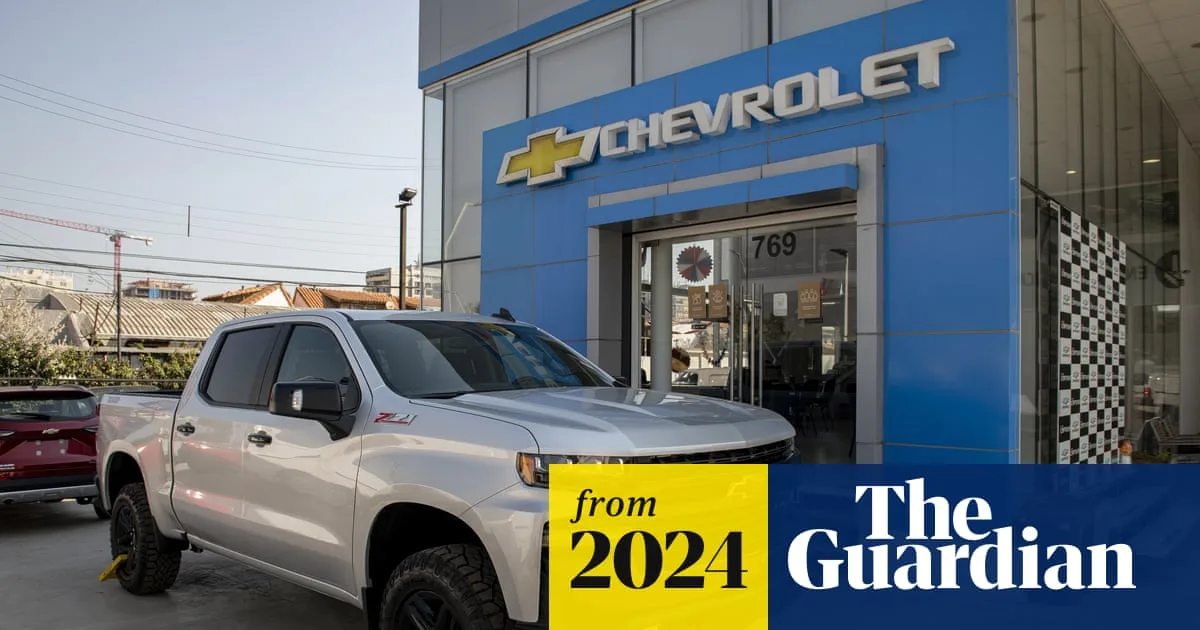
A loophole in Australia's luxury car tax is subsidising the price of large utes such as Ram and Chevrolet SUVs, costing taxpayers more than $250m a year in forgone revenue, according to new research from the Australia Institute.
The luxury car tax (LCT) – introduced in 2000 for imported cars – applies a 33% rate on the value above a threshold of $80,576. However, vehicles classified as commercial, defined as those able to carry twice the payload in goods as in people, are exempt. Almost every dual-cab ute on the market in 2024 meets this requirement, and there is no need to prove the vehicle is used for work.
The analysis found that the exemption incentivises buyers to choose larger, less fuel-efficient vehicles over smaller cars or electric vehicles. For example, a 2024 Chevrolet Silverado 1500 ZR2 priced at $138,000 incurs no LCT, while a hybrid Mercedes E350 EQ Hybrid costing $133,370 faces $15,841 in tax, making the Mercedes more expensive overall. Similarly, a 2024 Mercedes-Benz EQE 300 electric car at $133,575 would cost $8,231 more than the Chevrolet after tax.
The Australia Institute said ending the exemption would discourage purchases of environmentally damaging vehicles. Most of the lost revenue – nearly three-quarters – comes from sales of Ram and Chevrolet models, with a 2024 Ram 1500 TRX Final Edition avoiding more than $50,000 in tax. The institute noted that non-luxury utes used by tradespeople typically sit below the LCT threshold, so removing the exemption would not affect most work-related buyers.
Australia Institute research director Rod Campbell said the public is subsidising “big, dumb utes” by hundreds of millions of dollars each year, with the forgone revenue more than ten times federal spending on bike paths.




