
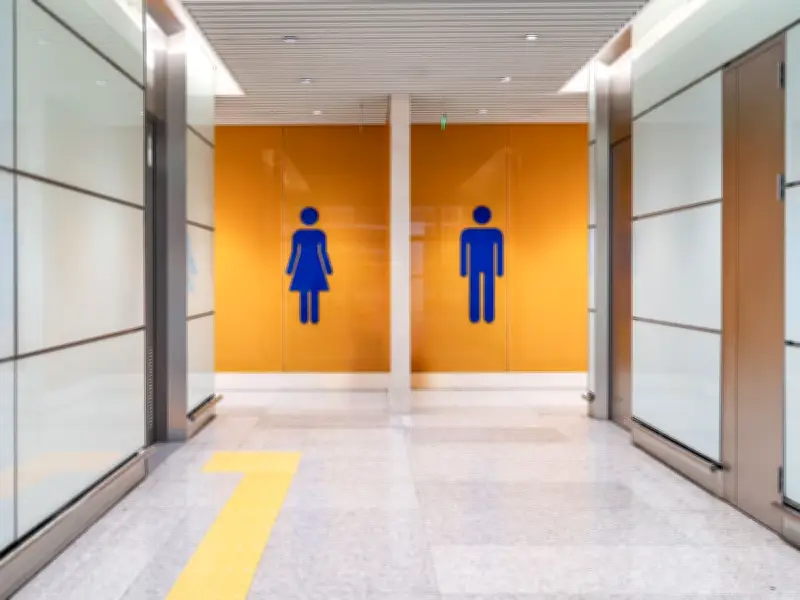
Nearly 13,000 toilets and more than 5,000 changing rooms at gyms, hospitals, and leisure centres across Britain will require costly renovations when new guidance on single-sex spaces comes into force, according to figures obtained by the Press Association. At least 18,000 signs also need updating.
Cost Breakdown and Impact
The updated code of practice, covering England, Scotland, and Wales, mandates that single-sex facilities such as toilets, changing rooms, and hospital wards must be used based on biological sex, not gender identity, following a Supreme Court ruling in April 2025. Public-sector bodies face unadjusted cleaning costs of £20.6 million and construction costs of £14.2 million annually, though totals could be higher after adjustments for optimism bias.
A financial impact assessment published in May estimated total 10-year costs at £703.1 million, including cleaning, construction, staff training, and policy updates. New data from the EHRC, obtained via a Freedom of Information request, reveals an estimated 12,895 toilets and 5,526 changing rooms are affected, with 18,422 signs requiring changes. Most facilities are in the private sector: 10,563 toilets, 4,527 changing rooms, and 15,091 signs.
Implementation Timeline
Thursday marks the end of the 40-day scrutiny period since the guidance was laid in Parliament, but it could still be weeks before the code formally takes effect. The code, updated for the first time in over a decade, was published by the Government after being handed over from the Equality and Human Rights Commission (EHRC), facing criticism for delays.
Service providers including restaurants, leisure centres, hairdressers, council services, and sports clubs with at least 25 members must comply. The code notes it would be “very unlikely to be proportionate to put a trans person in a position where there is no service that they are allowed to use,” suggesting unisex self-contained cubicles as an option.
Reactions and Compliance
EHRC chairwoman Mary-Ann Stephenson acknowledged financial impacts but said “in a lot of situations the cost is not going to be very high,” noting many providers already have male and female toilets plus accessible unisex facilities. For Women Scotland (FWS), which claimed victory in the Supreme Court ruling, hailed the guidance as a “significant milestone.” A FWS spokeswoman said: “It’s important to remember that the code does not represent a change in the law, just practical help for implementing it. If businesses have been complying with the law, there shouldn’t be a need for major changes.”
Campaign group NION (Not In Our Name) Women raised concerns, stating in an open letter: “We reject the false choice between protecting women and treating trans people with dignity, and believe women’s rights are best advanced when we stand in solidarity with our trans siblings.” A Government spokesperson said: “Many businesses will already be largely compliant with the code so there will be no cost at all. For those that do need to make changes, these are likely to be small, such as changing signs on existing facilities.”




