
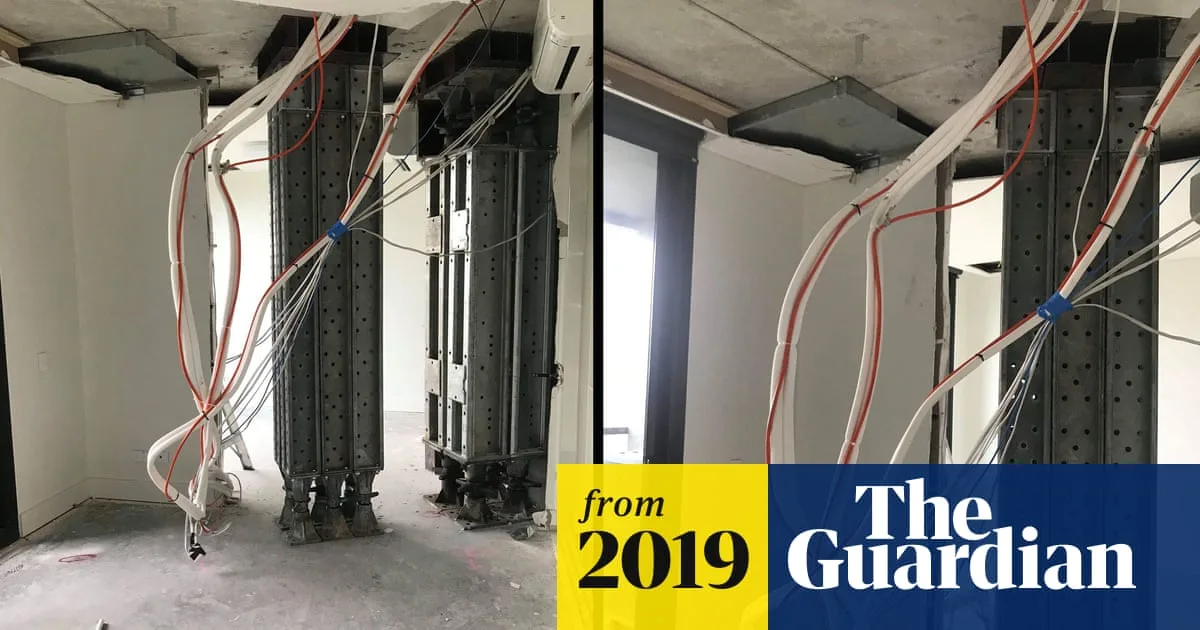
A New South Wales government report has identified a series of construction defects in Sydney's Opal Tower, including beams designed with safety factors below required standards and reinforcing bars made to incorrect lengths. The interim report, released on Tuesday, could not make definitive conclusions about the exact cause of the damage that occurred on Christmas Eve, when a dramatic crack appeared in the new apartment building.
Professor Mark Hoffman from the University of New South Wales, one of the report's authors, said residents should not move back in until repairs and checks are completed, a process that will “stretch over many weeks”. He described the necessary rectification works as “significant”, warning that the building would become “effectively into a construction site”.
The report found that the building is structurally sound and not in danger of collapsing. However, it noted several defects: two hob beams had safety standards lower than required, a dowel bar connecting a hob beam and a panel was incomplete, precast concrete panels were 200mm wide instead of 180mm, and reinforcing bars were 20mm instead of 28mm. Professor Hoffman said it was too early to determine the significance of these faults.
New South Wales Planning Minister Anthony Roberts emphasised that this is an interim report and further investigations will follow. He stated that the question of whether residents should re-enter their homes was beyond the report's scope, but Professor Hoffman recommended against returning until independent engineers confirm safety.
Despite the builder, Icon Co, declaring the tower safe for return last Friday, residents have overwhelmingly refused. Shady Eskander, chairman of the body corporate, said over 300 owners attended a meeting and decided not to return until independent engineers provide written confirmation of safety. “No resident wants to live on a construction site,” he said, describing the situation as “an Australian nightmare”.




