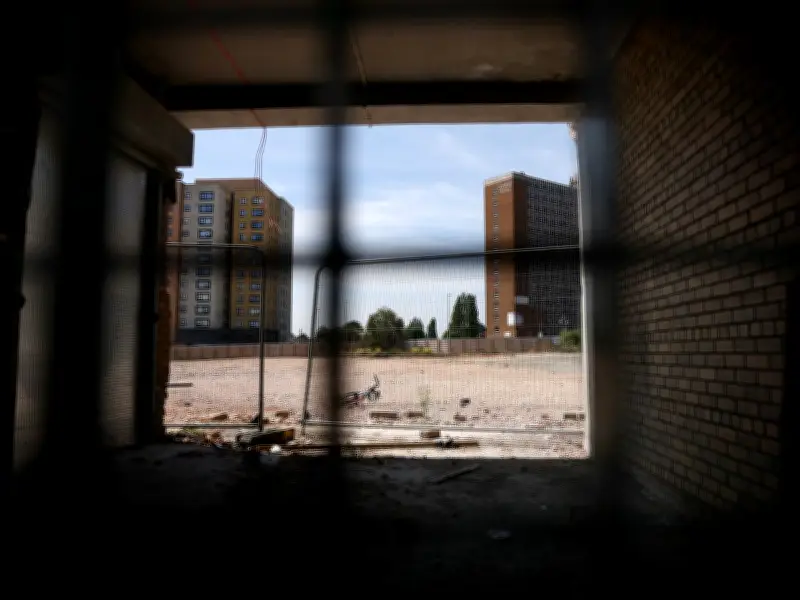
Almost 35,000 new homes and vast employment space will reshape Salford by 2043 under the newly approved Local Plan. Council cabinet members signed off the masterplan this week, setting out development goals for every neighbourhood.
Housing and Employment Targets
The plan mandates at least 34,818 new homes over 17 years, alongside 268,000 square metres of office floorspace and 584,000 sqm of industrial and warehouse space—equivalent to 120 football pitches. A public consultation runs from July 31 for eight weeks.
Claremont, Weaste and Seedley
Some 625 new homes are planned, but council officers foresee 'relatively little change'. Priorities include maintaining the residential character, improving Buile Hill Park and Weaste Cemetery, and expanding Salford Royal Hospital. Bolton Road and Duncan Matheson are earmarked as strategic sports hubs.
East Salford
At least 2,100 dwellings are targeted, with flood risk from the River Irwell a key consideration. Redevelopment of Mocha Parade in Lower Broughton is underway, but future development will be 'significantly less' than recent years. The Irwell Valley wildlife corridor and green spaces like Kersal Moor will be protected. A former school field at Cheltenham Crescent may yield 20 homes.
Eccles, Barton and Winton
Around 1,250 new homes are planned, including in Eccles town centre regeneration. Demolition of the old shopping centre finished in 2025. An officer said: 'Over recent years Eccles town centre has struggled with empty shops and an overall lack of investment. It is time for this to change.' The plan promises diverse housing, M60 junction improvements, and protection for Monton local centre from over-dominance of food and drink uses.
The Quays, Ordsall, Pendleton and Charlestown
A huge 8,650 new homes are planned. This includes completing Ordsall Waterfront's residential evolution and more apartments on Liverpool Street. Industrial land at Orchard Street is slated for 300 houses and 170 apartments; two sites east of Langley Road for at least 200 homes. The Duchy Road site will expand by 35 pitches for gypsies and travellers. High streets in Pendleton, Ordsall, and Regent Road will see mixed-use schemes with greenspace and community facilities. A new Metrolink link between Salford Quays and Salford Crescent is also planned.
Cadishead, Lower Irlam, Higher Irlam and Peel Green
Port Salford, a logistics hub, is a major project. Boysnope Wharf and Clubhouse will become logistics hubs. Some 550 new homes are proposed, 160 near Hayes Road and Green Lane. Improved connectivity includes extending the Trafford Park Metrolink line to Salford Community Stadium and Port Salford, plus changes to Liverpool Road and town centres.
Little Hulton, Walkden North and Walkden South
Around 2,100 new homes across eight sites. The former Brackley Golf course will deliver 700 homes, already under construction. Other sites include Rothwell Crescent, Crescent Drive, Aspinall Crescent, and former industrial land on Fereday Street, Kestrel Avenue, Moss Lane, Ladywell Avenue. The report notes: 'The area has the capacity to deliver more [housing] than any other neighbourhood within the Salford Inner Area.' Walkden Town Centre redevelopment and improvements to Cutacre, Blackleach, Peel, and Parr Fold parks are committed.
Swinton and Pendlebury
Swinton town centre regeneration is hindered by private ownership, but the council plans to repurpose the Civic Centre for vibrant spaces. A total of 750 new homes are planned, including 130 on the former St Ambrose Barlow High School site and 65 on Little Moss and Wyndam Avenue park.
Worsley and Westwood Park, Boothstown and Ellenbrook
Described as 'one of the most sought-after residential locations in Greater Manchester', 850 new homes are planned, including 700 allocated to Hazelhurst Farm and East of Boothstown via Places for Everyone—sparking local protests. The plan emphasises higher-value housing and tourism, with protections for conservation areas, Worsley Old Hall, and Lime Kiln. High streets in Boothstown and Ellenbrook will be supported.