A remarkable collection of rare 400-year-old tokens, originally issued as private currency during the 17th century, is poised for auction with an estimated value of up to £15,000. These historical artefacts, numbering over 700 pieces, were used by traders and merchants across Cornwall at a time when the government failed to provide sufficient small change for everyday transactions.
The Historical Significance of Private Tokens
During the 17th century, when official coinage was scarce, private individuals, merchants, and organisations took matters into their own hands by issuing their own tokens. These pieces served as a vital currency substitute, facilitating local commerce in communities throughout Cornwall. Expert Peter Preston-Morley explains, "Tokens were a currency substitute issued by private individuals, merchants and organisations when governments were not, for various reasons, issuing small change."
A Thirty-Year Collection Effort
The collection being auctioned was meticulously assembled over three decades by dedicated numismatist Mac McCarthy. These tokens originate from numerous Cornish locations, including St Keverne, East Looe, Penzance, Liskeard, Lostwithiel, Padstow, Penryn, Truro, Camelford, Falmouth, Helston, Launceston, St Ives, and Fowey. McCarthy's ultimate goal is to compile the first properly illustrated catalogue of the Cornish token series, a scholarly endeavour that has yet to be accomplished.

Highlight Pieces and Their Stories
Among the collection's most notable items is a previously unpublished 1656 farthing, believed to be associated with James Ingleton of St Keverne, with an estimated value between £600 and £800. Another significant token from Liskeard is a rare farthing linked to Joseph Upcott of Morval, estimated at £400–£500. Historical records reveal that Upcott died intestate, leaving his wife Anne to settle substantial debts totalling £146 7s 4d.
The Tale of Ursula Spurr
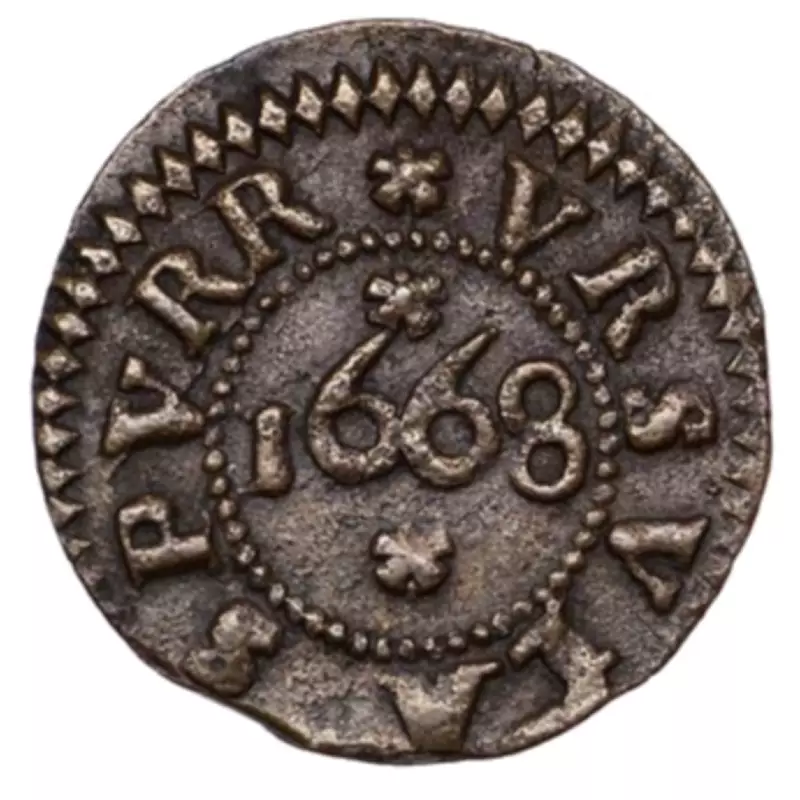
Perhaps the most intriguing piece is an extremely rare 1668 farthing from Penryn, inscribed with the name "Ursula Spurr" and valued at £400–£500. Research into Spurr's family history reveals fascinating personal details: her father, Vincent Smaley, left a will in 1658 suggesting she was married to an "unsatisfactory" husband. Smaley's will provided her with £8 per year during her husband's lifetime, increasing to £100 annually should he predecease her.
Material Composition and Historical Context
These tokens are predominantly made of copper, though during the Napoleonic wars, silver tokens were also produced and circulated. As Preston-Morley notes, "They are mostly copper, although, during the Napoleonic wars, silver tokens were also made and circulated." What makes these artefacts particularly valuable to historians is their ability to provide "fascinating, gritty local detail" that official records often overlook, offering unique insights into daily life and economic conditions in 17th-century Cornwall.
Auction Details and Future Scholarship
The entire collection will be auctioned by Noonans in London on April 22, presenting a rare opportunity for collectors and institutions to acquire these historical treasures. Beyond their monetary value, these tokens represent an important chapter in British economic history, documenting how local communities developed their own solutions to currency shortages. McCarthy's planned catalogue promises to shed new light on this under-documented aspect of Cornish history, preserving these stories for future generations.