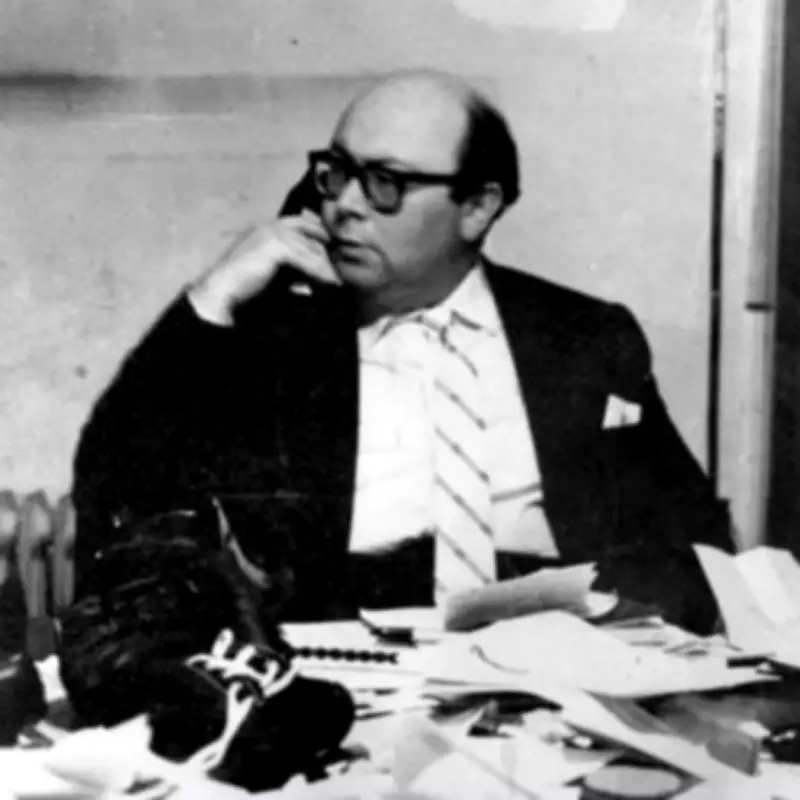
The Notorious Rise of Peter Rachman: Britain's Original Slum Lord
A new biography titled Slumlord: Peter Rachman and the Postwar London Underworld by author Neil Root exposes the brutal and scandalous life of the man whose name became permanently etched into British consciousness as the archetypal rogue landlord. Peter "Perec" Rachman's journey from penniless Holocaust survivor to feared property magnate reveals a dark chapter in London's history, where exploitation, violence, and political negligence created perfect conditions for his empire.
From Siberian Labour Camp to London's Underworld
Born into a Jewish family in Lviv in 1919, Rachman enjoyed a comfortable childhood before his world shattered with the Nazi invasion of Poland. Captured while serving in the Polish army, he endured horrific conditions in a Siberian labour camp, where he later described making clothes from newspapers and listening to lice explode in flames. After escaping and fighting with the Allies, he arrived in Britain in 1946 as a stateless refugee with nothing but determination.
His early years in London saw him working various jobs in Hatton Garden and Soho before discovering his true calling in the early 1950s. Rachman purchased an eight-room house near Harrow Road for under £1,000, exploiting the area's bomb-damaged properties and rent-controlled tenants. This modest beginning would launch one of Britain's most infamous property empires.

Building an Empire Through Exploitation and Intimidation
The Conservative government's 1957 Rent Act proved Rachman's golden opportunity, removing rent caps for new tenants and allowing him to systematically force out long-term renters. He replaced them with desperate West Indian immigrants facing racial discrimination and limited housing options, charging exorbitant rents for overcrowded, substandard accommodation.
Rachman operated what author Neil Root describes as "on the fringes of the London underworld," employing a terrifying crew of enforcers including ex-wrestler Norbert "Fred" Rondel, known for biting off ears, and Michael de Freitas, who later became notorious as Black Power activist Michael X. Another associate, Tommy Yeardye, would become father to Jimmy Choo founder Tamara Mellon.
Even establishment figures crossed his path unknowingly. Young Oxford graduate Michael Heseltine, later a Tory grandee and Lord, sold Rachman the New Court Hotel in 1957, only realizing his buyer's identity when Rachman arrived in person. Heseltine recalled in 2024: "One look at him confirmed my view that his reputation was justified."Gangster Threats and Scandalous Affairs
Rachman's criminal connections extended to London's most feared gangsters. The brutal Kray twins targeted him for protection money, with Root noting that "Rachman knew the Krays were far above him in the underworld food chain." His crew suffered a beating from the Kray firm in Notting Hill to emphasize their dominance.
His personal life proved equally dramatic. Despite marrying long-time girlfriend Audrey O'Donnell in 1960, Rachman maintained multiple affairs with some of London's most notorious women. He installed Mandy Rice-Davies in a Westminster flat previously occupied by another mistress, Christine Keeler. Both women would become central figures in the Profumo affair that rocked the British establishment in 1963.
Keeler later insisted her relationship with Rachman wasn't merely transactional, stating: "I really loved him. I was completely besotted by him." Rachman's connection to these women first brought him into public consciousness, though he died in 1962 at just 42, never witnessing the full scandal unfold.
A Legacy That Still Haunts Britain
Root argues Rachman's story remains painfully relevant today as Britain continues grappling with housing crises and exploitative landlords. The term "Rachmanism" entered the Oxford English Dictionary, permanently associating his name with landlord abuses.
"Complacency, apathy and inertia regarding top-down social responsibility led to the lack of political will to protect vulnerable tenants," Root writes, drawing direct parallels to the Grenfell Tower tragedy of 2017 that claimed 72 lives. "This same mentality of official negligence allowed Rachman and many others to take advantage of the market in their drive for profit."

From Siberian survivor to property tycoon, from Kray target to establishment scandal figure, Peter Rachman's life exposes how systemic failures, criminal networks, and personal ambition created one of Britain's most enduring symbols of exploitation. His story serves as both historical record and contemporary warning about the human cost of housing inequality.