Millionaire Homeowners Battle Developer Over Protected Trees in Hampshire Estate
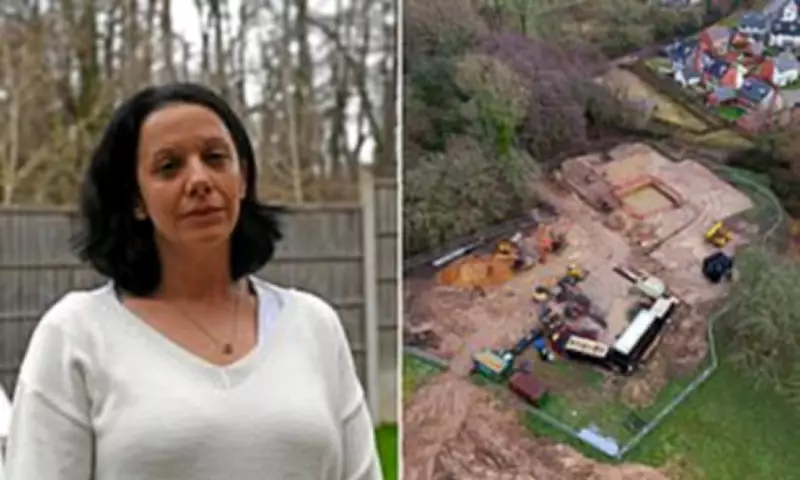
A significant dispute has erupted between affluent homeowners and a property developer in Hampshire over plans to remove a dozen protected trees that separate two housing estates. Residents of the exclusive Oxlease Meadows development in Romsey are vehemently opposing Stratland Homes' proposal, which they argue will destroy their privacy and damage a sensitive ecological area.
Privacy and Environmental Concerns at the Forefront
The conflict centres on twelve alder trees that form a small woodland buffer between the luxury Oxlease Meadows estate, where homes average £1.02 million, and a neighbouring development. Wealthy residents argue that removing these trees would allow less affluent neighbours to peer directly into their bedrooms, bathrooms, and rear gardens, fundamentally compromising their privacy.
Beyond privacy issues, the proposed tree felling has raised serious environmental concerns. The woodland serves as a habitat for deer, birds of prey, and potentially otters, while also acting as a natural flood defence by binding the soil. Crucially, the site borders a designated Site of Special Scientific Interest (SSSI), leading councillors to warn that tree removal could breach strict environmental protection rules.

Residents Voice Their Opposition
Local residents have mobilised against the development plans through multiple channels. Psychotherapist Mr Richardson, 52, whose property backs onto the proposed site, stated: 'We opposed the plans online on the planning portal and then we went and opposed the plans at the council meeting. It just seems really excessive to rip out all these trees.'
He added: 'Not to sound cynical but I think they're doing it so the houses will have bigger rear gardens to make more money. You have to draw the line somewhere. Ripping out the trees is unnecessary.'
Georgina Harris, 46, a local government worker whose garden edges the threatened woodland, highlighted additional practical concerns: 'They've closed a byway that was the only point of access between the estates. Now the traffic has to go elsewhere and it gets backed up which is a real problem.'
She also expressed safety worries for her 13-year-old son, who now must walk home through unlit lanes during winter evenings. Furthermore, Harris noted that some trees have Tree Protection Orders, including one she personally lodged for a distinctive aspen tree residents affectionately call 'the fizzy tree' due to its shimmering leaves.
Council Opposition and Developer Response
Romsey Town Council has formally objected to the tree removal application twice, describing it as 'an unjustified felling of several healthy trees in a diverse natural habitat' that would 'destroy any privacy that existing residents have benefited from thus far.'
Councillor Ian Culley, a retired solicitor, emphasised the legal implications: 'The main issue here is the Site of Special Scientific Interest and potential drainage problems. The law is very strict - if the SSSI could be damaged or affected by outside activities, any approving body must refer to Natural England.'
In response, Stratland Homes Development Director Seb Clarke defended the company's approach: 'Stratland Homes received original planning permission in February 2022 for the development of four detached dwellings. As part of that application, consent was granted for the removal of six trees, which were felled a few months ago prior to the commencement of works on site.'
Clarke explained that following site assessment, additional tree removal became necessary for garden space and construction access. He emphasised that ecological surveys had been conducted and that the company was following all regulations, with no confirmed otter presence on site but provisions made should they appear.
Regarding the access way closure, Clarke clarified: 'There is a private access owned by Stratland, which is not a public footpath. It is unlit and, for safety reasons, has been closed during construction.' He noted the route would reopen after completion and that alternative access exists between developments.

Planning Status and Ongoing Dispute
The development plans have undergone significant revision, with the original proposal for 49 homes reduced to just nine after council intervention. Test Valley Borough Council has granted partial consent for tree works, allowing removal of five trees and arboricultural works to fifteen others, though no work has yet commenced.
Residents remain unconvinced by the developer's assurances. Retired development manager Tony Brown, whose house backs onto the site, stated: 'It's unnecessary. In the original plan they had houses in a place that meant trees didn't need to be cut down.' His wife Sue added: 'There are problems. We're not at all happy. Cutting the trees down could've been avoided.'
Another resident, Gurdve Tut, expressed broader environmental concerns: 'It's nature, isn't it? They're destroying nature. They shouldn't build at all around there but they're doing it anyway.'
The dispute highlights the tension between property development and environmental conservation in desirable residential areas, with wealthy homeowners using both privacy arguments and ecological concerns to challenge development plans they believe threaten their quality of life and local biodiversity.