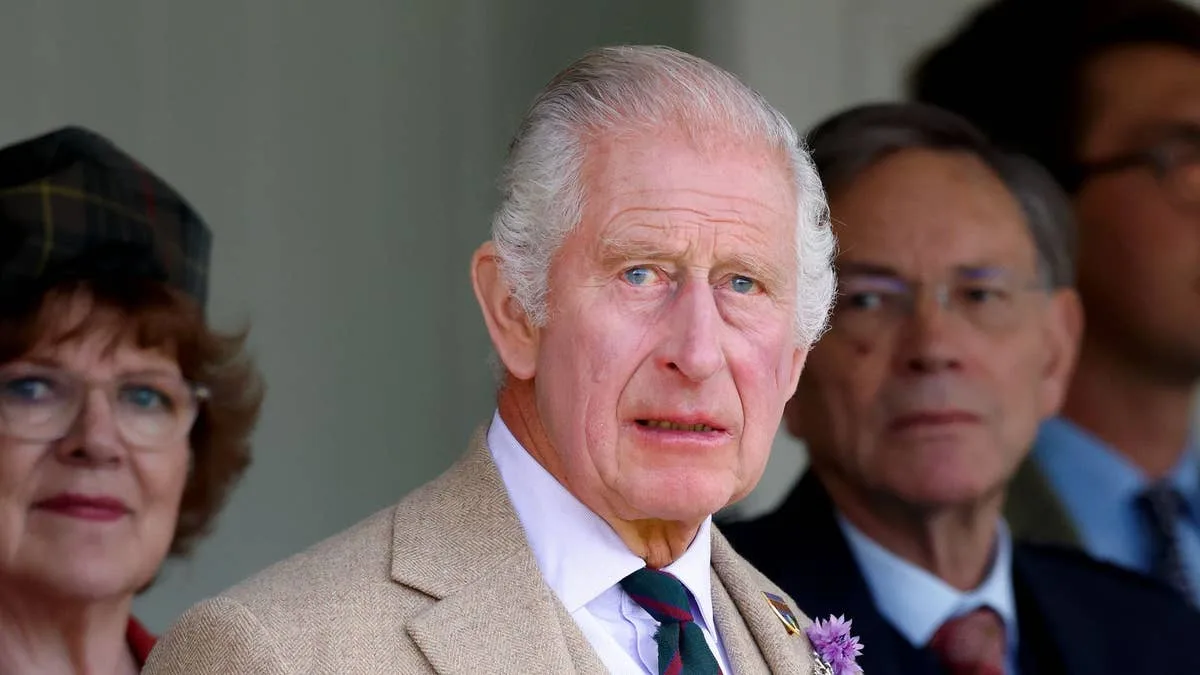
The architectural vision of King Charles III for his model town of Poundbury has been publicly challenged by one of Britain's best-known design critics. Grand Designs presenter Kevin McCloud has delivered a starkly contrasting assessment, describing the interiors of homes in the Dorset extension as 'intolerable' and akin to a 'modern developer home'.
A Royal Vision Meets Critical Scrutiny
King Charles, speaking in his former role as the 24th Duke of Cornwall, recently celebrated the success of Poundbury, the urban extension to Dorchester he pioneered. He stated that the project, designed according to the principles he outlined in his book 'A Vision of Britain', had proven its sceptics wrong and was now a 'thriving urban settlement'. The monarch had been determined to break the mould of conventional housing development to create an attractive place for people to live, work, and play.
However, this triumphant narrative was directly contested last week by Kevin McCloud during a keynote lecture at the V&A Museum. The event marked the 50th anniversary of the heritage campaign group SAVE Britain's Heritage. McCloud, a Cambridge University graduate in the history of art and architecture, used his platform to voice a deeply personal critique of the Poundbury experiment.
'Dead' Interiors Behind Georgian Facades
In his lecture, entitled 'Reinventing Buildings: A Manifesto for the Imagination', McCloud detailed his visits to the estate. He acknowledged the externally 'very fine' Georgian-style houses with correct period details like lime mortar joints and proper glazing bars. Yet, he argued the buildings were spiritually 'dead' because they were constructed internally with modern materials like breeze block.
McCloud provided a specific example of visiting a beautiful thatched cottage in Poundbury. He found the experience 'horrible', comparing it to a standard modern developer home, but with the added discomfort of low, historically accurate ceilings. He lamented the absence of the charming, authentic details one would expect in a 17th-century cottage, such as flagstone floors or crooked beams, and noted the strict design rules that prevented residents from adding features like conservatories.
'It was intolerable as an environment to put people in, I thought from the experience of the architecture internally,' McCloud stated. He conceded that higher-status buildings on the estate were more impressive but maintained there were 'less comfortable aspects' to the overall scheme.
Respectful Disagreement with a Monarch's Taste
The designer and TV host was careful to frame his criticism as a matter of personal taste, while acknowledging the authority of the King's vision. 'I have every respect for his Majesty’s tastes and views being the King,' McCloud said. 'Obviously, his taste arrogates itself about mine or anybody else’s, right?'
He concluded that while Poundbury was an interesting social and architectural experiment, it was ultimately 'not for me'. Beyond the Poundbury critique, McCloud used his V&A lecture to call for a moratorium on demolishing any building within the first 100 years of its life, citing the near-loss of London's St Pancras station as a cautionary tale.
The debate highlights the enduring tensions in British architecture and planning between traditional aesthetics, modern construction methods, and authentic place-making. It sets the King's deeply held architectural philosophy, realised through the Duchy of Cornwall's vast £1.2 billion landholdings, against the critique of a leading popular design commentator.




