Historic Glasgow Building to Be Demolished After Devastating Fire
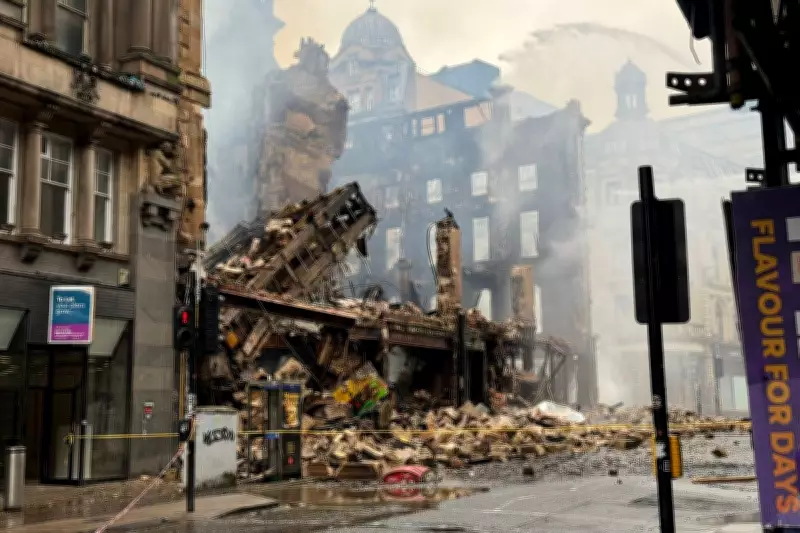
Glasgow City Council has confirmed that the fire-ravaged remains of a historic building in the city centre must be demolished in the interests of public safety. The B-listed Victorian structure on Union Street, adjacent to Glasgow Central station, has continued to collapse in the days since a major blaze broke out on Sunday 8 March 2026.
Council Assessment and Safety Concerns
Following a full and final assessment by building standards officials, the council announced on Thursday 12 March that demolition of the remaining section is necessary. In a statement, the authority said: "We are now in control of the Union Street site, and after a full and final assessment of the remaining structure, our building standards team have decided that demolition must happen in the interests of public safety." The Scottish Fire and Rescue Service remains on site to manage remaining hot spots.
The fire originated in a vape shop on Union Street and spread extensively, leaving only the facade at the junction with Gordon Street standing. Parts of the southern gable collapsed on Tuesday night, highlighting the ongoing instability of the structure.

Impact on Transport and Infrastructure
The blaze forced the closure of neighbouring Glasgow Central, Scotland's busiest railway station. While the lower level has resumed services, authorities indicate the main part of the station will remain shut for the rest of the week. Network Rail stated that all options for safely reopening the station are being explored, including potential partial or phased reopening of platforms.
Ross Moran, route director at Network Rail Scotland, explained: "Our teams are prepared to carry out the detailed inspections, cleaning, repairs and operational checks that may be required, depending on the findings of the local authority's assessment. We're committed to completing this work as quickly and safely as possible once the station is returned to us." Engineers have so far identified no significant structural issues with the station itself, with damage mainly limited to water ingress affecting a small office and glazed area on the Union Street side.
Political Response and Business Support
During First Minister's Questions on Thursday, Scottish Conservative leader Russell Findlay pressed First Minister John Swinney on support for affected businesses. Findlay stated: "The immediate focus must be on local businesses who already face severe pressure," calling for clarity on support measures. Swinney responded that the government is in active discussion with Glasgow City Council to gather information from businesses, adding: "I'm not in a position to say definitely what financial support will be available, but I expect to be able to do so very shortly."
Scottish Labour leader Anas Sarwar raised concerns about fire service capacity, noting reductions in high-reach appliances from 26 to 16 across Scotland and from six to two in Glasgow since the national service was established in 2013. He questioned why both of Glasgow's high-reach appliances were unavailable due to annual inspection on Sunday, requiring one to be called from Edinburgh. Sarwar called for an immediate investigation into any potential impact on the response.
Government Coordination and Fire Service Defence
A cross-government ministerial board has been established to coordinate the Scottish Government's response to the fire, chaired by Justice Secretary Angela Constance. The group will oversee development of a support package for recovery, involving Glasgow City Council leader Susan Aitken and multiple government ministers including Deputy First Minister Kate Forbes and Transport Secretary Fiona Hyslop.
Constance said: "The fire has left a scene of ruin in the heart of Glasgow and I am determined that the Scottish Government will stand with the city as it recovers. There are the immediate issues of making the site safe and the recovery of the transport network, with significant ongoing work to return rail and road systems back to normality as soon as possible."

In response to Sarwar's comments, Scottish Fire and Rescue Service Assistant Chief Officer David Farries strongly defended the operational response: "We strongly refute any suggestion that we did not have the necessary resource in place to respond to what was a large and complex building fire." He explained that high-reach appliances were strategically deployed, with the first arriving from Coatbridge within 19 minutes, though not required for external operations until almost two hours later. Farries emphasized that these appliances are national resources and their provision had no negative impact on the response, praising crews for their tireless efforts in challenging conditions.