Glasgow's Historic Union Street Building to be Demolished After Devastating Fire
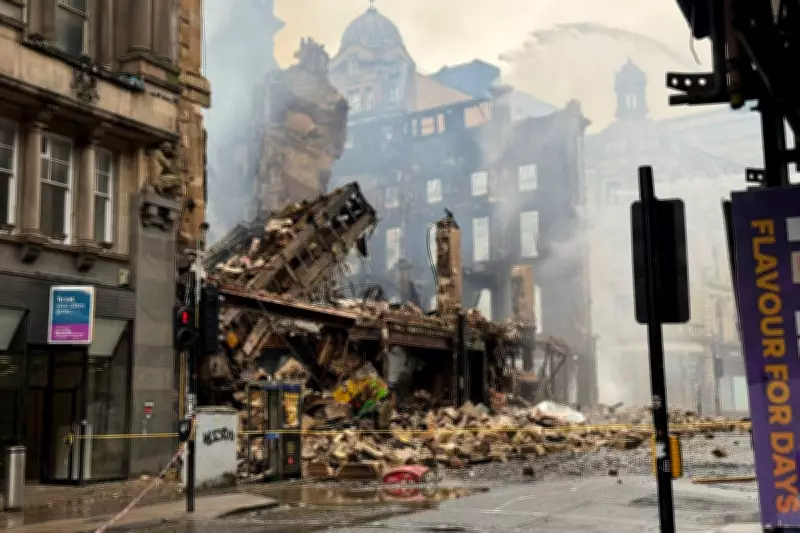
Glasgow City Council has confirmed that the fire-ravaged remains of a historic B-listed Victorian building on Union Street will be demolished in the interests of public safety. The decision follows a full structural assessment conducted after a severe blaze broke out on Sunday, which has caused ongoing collapse of the building over subsequent days.
Structural Collapse and Safety Concerns
The council announced on Thursday that their building standards team determined demolition was necessary after parts of the southern gable collapsed on Tuesday night. The structure, located adjacent to Glasgow Central station, has continued to deteriorate since the initial fire incident.
"We are now in control of the Union Street site, and after a full and final assessment of the remaining structure, our building standards team have decided that demolition must happen in the interests of public safety," the council stated. "Scottish Fire and Rescue Service are still on site to take care of remaining hot spots."

Impact on Transport and Local Area
The fire originated in a vape shop on Union Street and spread extensively through the building, leaving only the facade at the Gordon Street junction standing. The blaze forced the closure of neighbouring Glasgow Central station, Scotland's busiest railway hub.
While the lower level of the station has resumed services, authorities confirmed the main station area will remain closed for the remainder of the week, causing significant disruption to commuters and travellers across the region.
Political Response and Business Support
During First Minister's Questions on Thursday, Scottish Conservative leader Russell Findlay pressed John Swinney on government support for businesses affected by what he described as a "devastating inferno." Findlay emphasized that local businesses already facing economic pressures needed immediate assistance.
Swinney responded that the Scottish Government is in active discussions with Glasgow City Council to gather information about affected businesses' circumstances. "I'm not in a position to say definitely what financial support will be available, but I expect to be able to do so very shortly," he stated.
Fire Service Capacity Concerns
Scottish Labour leader Anas Sarwar raised serious questions about fire service resources, noting that high-reach appliance numbers have been reduced from 26 to 16 across Scotland since 2013, with Glasgow's allocation dropping from six to two. Sarwar revealed that both of Glasgow's high-reach appliances were unavailable on Sunday due to annual inspections, requiring one to be called from Edinburgh.
"More than 1,200 firefighter jobs have been lost since the national service was set up in 2013," Sarwar noted, calling for an immediate investigation into whether reduced capacity affected the fire response.
Government Recovery Coordination
A cross-Government ministerial board has been established to coordinate both immediate and long-term responses to the fire. Chaired by Justice Secretary Angela Constance, the group includes Glasgow City Council leader Susan Aitken and multiple Scottish Government ministers.
The board will oversee development of a comprehensive support package for recovery efforts. Constance stated: "The fire has left a scene of ruin in the heart of Glasgow and I am determined that the Scottish Government will stand with the city as it recovers."
She acknowledged the recovery would require significant time and effort across government departments, but emphasized the board's role in ensuring "the city can get back on its feet as quickly as possible." Immediate priorities include making the site safe and restoring normal transport operations, with longer-term focus on business support and site redevelopment.