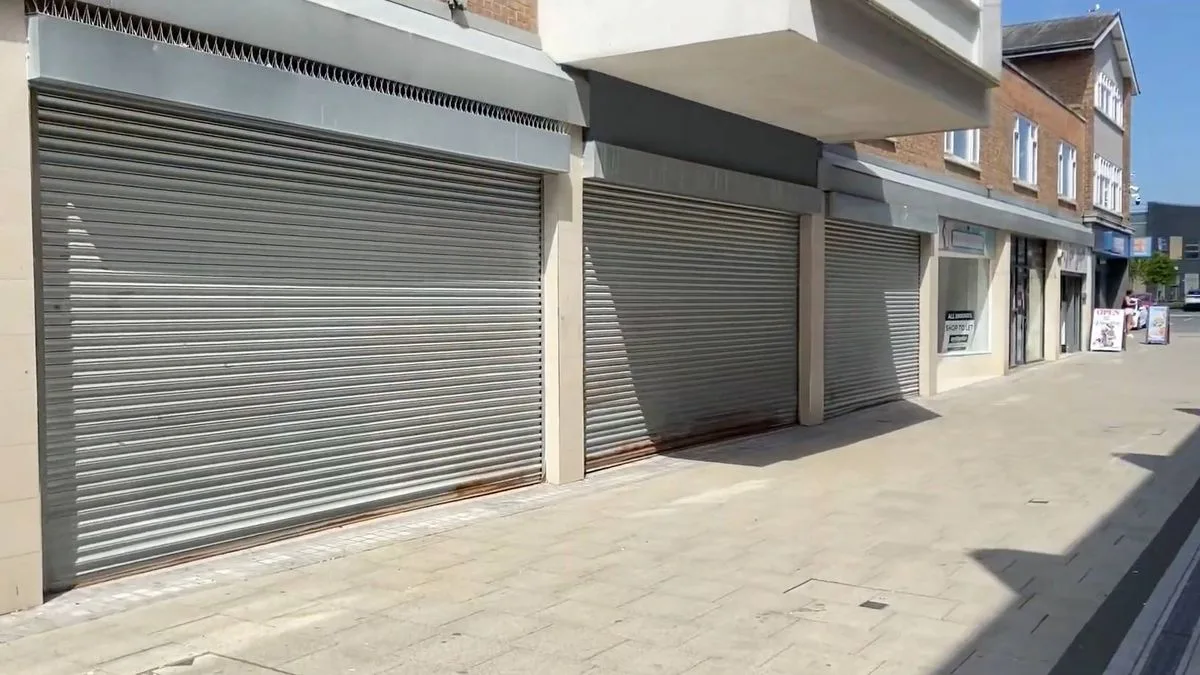
Billionaire's High Street Becomes Ghost Town While Nearby Chippy Wins National Award
Ghost Town High Street Near UK's Best Fish and Chips

Newton Aycliffe's High Street Decline Contrasts with Nearby Culinary Success

The once vibrant high street of Newton Aycliffe now stands as a stark example of urban decay, with more than half of its retail units sitting empty. Beveridge Way, the town's main shopping thoroughfare, has transformed from a bustling hub into what locals describe as a "ghost town", creating a troubling contrast with a celebrated culinary destination just six miles away.

A Retail Landscape in Crisis

Of the 45 shop spaces along Beveridge Way, a staggering 23 currently lie vacant. This vacancy rate represents four times the national average for empty retail units across the United Kingdom. The street that once hosted retail giants like Woolworths and British Home Stores now features predominantly closed storefronts, with only a handful of businesses remaining operational.

Local shopper Diane Young recalls the dramatic transformation: "We used to have a weekly market - the town centre was heaving on Tuesdays, market day. You couldn't move for people. It's massively gone downhill." The decline accelerated following the closure of the local Woolworths in 2009, marking the beginning of the high street's downward spiral.

Billionaire Ownership and Community Concerns

The entire high street falls under the ownership of property magnate Benzion Freshwater through his company Daejan Holdings. The 77-year-old billionaire's firm maintains properties on both sides of the Atlantic, with the £3.2 million investment in Aycliffe representing just a fraction of their extensive portfolio. Despite once being dubbed London's largest private commercial landlord by the Guardian, Daejan Holdings remains notably silent regarding the condition of their Newton Aycliffe properties.

North Durham MP Luke Akehurst is actively campaigning for legislative changes that would empower local councils with additional authority over properties left vacant for prolonged periods. He argues that too many empty units are controlled by "absentee landlords with no stake in the community", highlighting a systemic issue affecting numerous British towns.

Culinary Contrast: Award-Winning Fish and Chips Nearby

While dining options within Newton Aycliffe remain sparse, residents can take solace in their proximity to culinary excellence. Just six miles away in Darlington sits the Yarm Road Fish and Chip shop, crowned the UK's best fish and chip takeaway in 2025. This award-winning establishment serves as a shining example of successful independent retail, standing in stark contrast to the struggling high street in neighbouring Newton Aycliffe.

Resident Janet Mills expressed frustration with the local retail situation: "To get anything decent you have to go to a retail park and if you don't have a car you're done for. I just hate this town centre - it's absolutely useless." Her sentiments reflect the growing discontent among locals who witness independent shops becoming increasingly rare in their community.

Broader Implications for British High Streets

The decline of Newton Aycliffe's high street reflects wider national trends affecting smaller towns across the United Kingdom. Government security minister Dan Jarvis has warned that such decline not only disappoints shoppers but also facilitates concerning criminal activities. He cautioned that short-term retail leases are being exploited as covers for money laundering and more serious organised crime.

"Criminals are using these dodgy shops as fronts for serious organised crime, money laundering and illegal working, risking the future of the British high street," Jarvis stated, highlighting the security implications of retail decline.

Law Enforcement Response to High Street Crime

Towards the end of last year, the National Crime Agency launched Operation Machinize 2 specifically to tackle questionable enterprises operating on British high streets. Rachael Herbert, Director of the National Economic Crime Centre at the NCA, explained: "Operation Machinize targets businesses on our high street that are being used as cover for a wide range of criminality, making our communities less safe and less prosperous."

The operation has already yielded significant results, with hundreds of thousands of harmful and illegal products removed from circulation and over £10 million in cash, frozen bank accounts, and criminal assets seized. Herbert emphasized that depriving criminals of their income sources has tangible impacts, limiting their ability to reinvest in further offending while deterring them from occupying spaces that legitimate businesses could utilize.

Reform leader Nigel Farage has similarly highlighted what he describes as the "absolute racket" of cash-only establishments that appear to have minimal custom yet somehow afford luxury vehicles, suggesting deeper economic irregularities within struggling retail environments.

The situation in Newton Aycliffe serves as a microcosm of broader challenges facing British high streets, where billionaire ownership, changing retail patterns, and criminal exploitation converge to create complex urban landscapes far removed from their former bustling glory.




