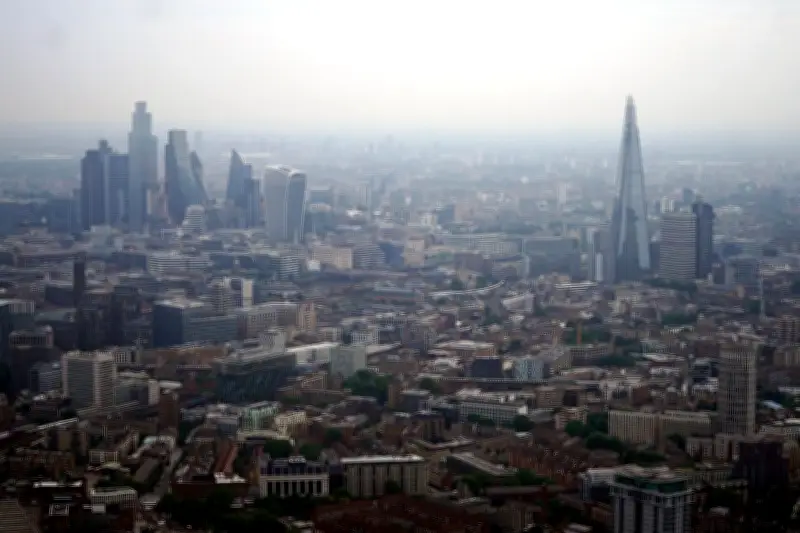
Ultra-wealthy foreign investors are artificially inflating London’s housing market by leaving homes empty and pushing residents to the outskirts of the city, the London Assembly has been warned.
Empty Homes on the Rise
There were 105,138 empty homes in London in 2025, according to data from the Ministry of Housing, Communities and Local Government (MHCLG). This represents 2.7 per cent of all homes in the capital and an 81 per cent increase since 2016. While the number of local authority-owned empty homes has risen in recent years, the vast majority – 88 per cent – are privately owned.
On Wednesday, the London Assembly Housing Committee heard that overseas investors are now the only buyers who can afford the most expensive properties in London, and that most empty homes are concentrated in the priciest areas.

Impact on Local Residents
Dr Jonathan Bourne, Honorary Research Fellow at University College London’s Centre for Advanced Spatial Analysis, told the committee that properties are either used as a “leisure related” investment or left empty for future financial gain. “The people who would be living in luxury houses – stockbrokers, partners – now cannot afford to,” he said. “So they get pushed out into a nearby area, and that’s what causes this ripple. The international super rich can afford to spend more than the London super rich.”
He added: “While the number of empty homes may not be large in absolute terms, it’s the concentration that has an impact. High levels [in one area] act like a lever on the housing market and cause intense bubbles of high demand and high price that ripple out.”
Geographic Disparity
Dr Bourne noted that there are no empty homes in London’s most affordable areas, while the most expensive parts see much higher rates. He argued that focusing solely on housing supply is misplaced, and that City Hall must work with developers to make new properties unattractive to foreign investors.
“We risk a ‘doughnut’ London, where people move from the centre to the outskirts because they cannot afford a family home in areas where they’ve grown up,” he warned. “Their property in the centre is then converted into an empty home.”
Current Measures and Calls for Action
The Mayor of London has taken some steps, including the 2021 London Plan, which states that boroughs should promote efficient use of existing housing stock to reduce vacant and under-occupied dwellings. It also supports mechanisms to ensure new homes are occupied, addressing “buy to leave” properties.
However, Dr Bourne suggested more radical interventions are needed. He criticised the current empty homes surcharge – extra council tax on unoccupied, unfurnished properties – as having “no relevance” to the wealth of many investors. He cited Vancouver’s system, which charges a percentage of the property’s value annually when empty, but noted London lacks a detailed housing register to make this viable.
Instead, he proposed the most “legally plausible” lever is changing what homes are built to be affordable for residents but “unappealing for the investment class.”
Mayoral Response
Deputy Mayor for Housing Tom Copley defended the Mayor’s record, suggesting many “luxury” flats are actually “ordinary flats with luxury price tags.” He told Assembly Members that the most effective way to lower prices is to build more homes overall. “Supply is constrained and has not kept up with demand – there are those who just want to buy a property, but the problem is the luxury price tag and that is the result of supply and demand,” he said.
Copley emphasised that “the primary way of resolving the housing crisis is delivering the social and affordable homes that Londoners need.” He noted that while the Mayor lacks direct power over empty homes – that rests with boroughs – recent Right to Buy-back programmes have enabled councils to buy 2,400 homes back. “It is fair to assume a number of them will have been empty homes,” he added.