

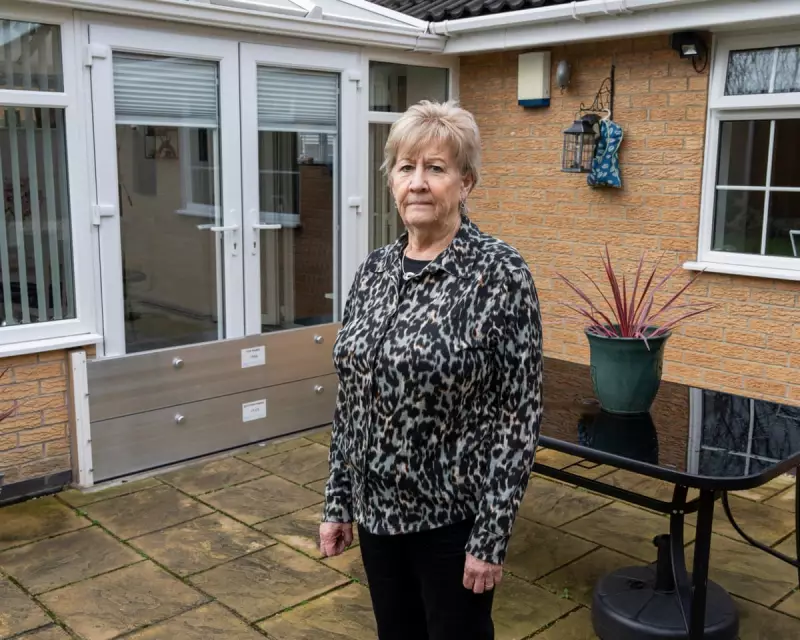
Imagine your home becoming impossible to sell, your retirement dreams washed away by relentless floodwater. This is the stark reality for Christine and her neighbours in Trowell, Nottinghamshire, where repeated inundations have rendered their properties virtually worthless on the open market.
A Bungalow Under Siege
When visiting Christine's bungalow, her humour masks a deep-seated anxiety. "I'll be getting a new carpet soon enough when it floods again," she quips. The 70-year-old great-grandmother has even had to climb through her conservatory window after flood barriers sealed her doors. "If you don't laugh, you'll cry," she admits, but the underlying truth is devastating: her home is unsellable due to multiple major floods.
The crisis began in 2020 when a local brook burst its banks, sending water pouring into Christine's home and those of her neighbours, Jackie, 67, and Rhona, 76. The aftermath was brutal: floorboards, skirting boards, kitchen units, and entire bathrooms had to be ripped out. Appliances and furniture were lost to skips.

While insurers covered the refurbishments, the Environment Agency's (EA) Property Flood Resilience assessments led to a fateful decision. Because not enough houses were affected, large-scale defences like embankments were deemed too costly. Instead, a cheaper solution was implemented: individual homes were fitted with flood doors, barriers, and pumps. This work, delayed by Covid, finished in 2023. Just eight months later, their homes flooded again.
A Flawed Defence and a Life of Vigilance
The critical flaw was soon discovered. The assessments had missed that the properties were built on platforms, allowing groundwater to rise up through the floors. The installed barriers only stopped surface water. Now, the women live in a state of constant alert. During heavy rain, they monitor flood warnings, stay up all night fully dressed, and track water levels on a brook gauge via a group chat.
Jackie has a meticulous plan to stack furniture on plastic raisers. The physical toll is immense; the flood barriers are as heavy as barbells. The EA considers its job done, having made the homes "flood-resilient"—meaning flooding is expected, and damage is merely minimised. For the pensioners, this is no way to live.
Residents point to new housing developments upstream as the root cause, increasing discharge and surface runoff into the brook. The lead local flood authority states that once all planned developments are complete, runoff will be 44% higher than pre-development levels. The brook's shape means excess water creates a second river—directly into their living rooms.
A National Crisis in the Making
The personal financial impact is severe. Homeowners must declare any flooding in the past five years to potential buyers, crippling property values. A study from Bayes Business School suggests flood-risk homes sell for 8% to 32% less. Jackie, wanting to move closer to family, faces slashing her price and using pension savings.
Even finding a buyer is no guarantee, as some lenders refuse mortgages. While a government scheme caps flood insurance premiums until 2039, its end date and exclusions make lenders wary of properties destined to lose value.
This dynamic threatens to worsen. Labour's housing push may see more building on green belt land, reducing natural defences. Guardian analysis predicts over 100,000 new homes could be built on England's highest-risk flood zones. Meanwhile, EA data shows 6.3 million properties are currently at risk, rising to 8 million by 2050 due to climate-driven extreme weather.
The potential ripple effect on the financial sector is significant. Post-2039, negative equity and mortgage defaults could leave banks with reduced collateral. For now, Christine, Jackie, and Rhona remain at the mercy of the weather forecast, their lives and life savings held hostage by the next downpour.






