

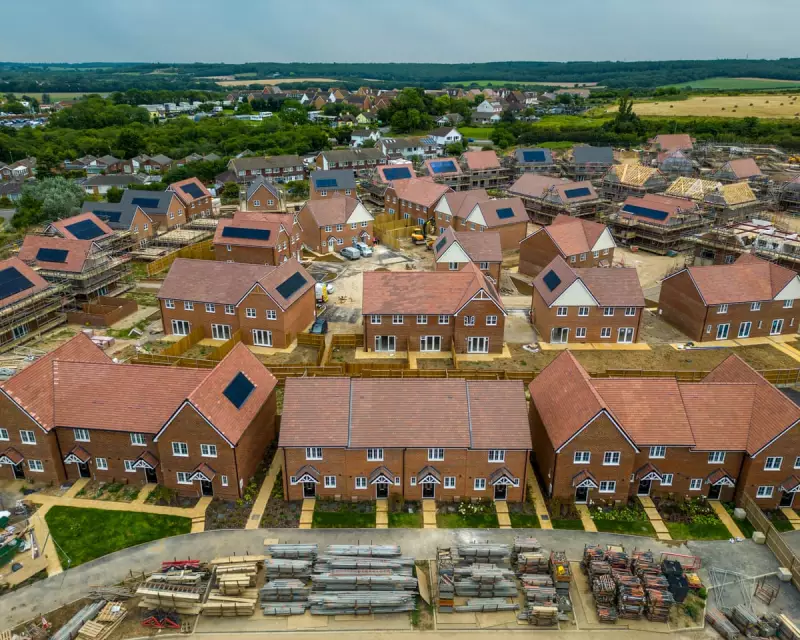
The UK government has provoked fury by announcing a dramatic reduction in targets for accessible new-build homes in England, a move campaigners have labelled a "monumental reversal" that leaves disabled people feeling "betrayed and excluded".
A Sharp Climbdown on Accessibility Standards
Under new proposals for the planning system, the government states that a minimum of just 40% of new-build homes will need to be constructed to improved accessibility standards, known as M4(2). This standard includes features like step-free access, wider doorways, and corridors to aid people with limited mobility and older residents.
Furthermore, the proposals set no minimum target whatsoever for the proportion of new homes that must be fully wheelchair accessible, classified as M4(3). Disability rights groups argue that at least 10% of new homes should meet this higher standard.

This represents a major retreat from the previous Conservative administration's commitment to ensure 100% of new homes met the M4(2) standard, a policy designed to drive industry-wide improvement in accessible housing.
Campaigners Decry 'Lack of Principle'
Mikey Erhardt, policy and campaigns officer at Disability Rights UK, expressed disbelief at the government's change of heart. "It is absolutely incredible to witness the government's lack of principle on this issue," he said.
"This decision leaves disabled people feeling betrayed and excluded, and questioning the government's commitment to disability equality," Erhardt continued. He argued that requiring all new homes to be accessible, with 10% suitable for wheelchair users, would have created a level playing field for developers and modernised the UK's housing stock.
Mark Gale, policy manager at the disability charity Sense, echoed the disappointment. "Inaccessible housing can be a huge barrier to independence for disabled people with complex needs," he stated. "Sadly, there is often far too little suitable housing stock available."
Regional Disparities and Government Defence
The existing picture of accessible housing in England is starkly uneven. Analysis by the Centre for Ageing Better found that only 13% of homes in England are fully accessible.
People living in the East Midlands or north-east of England were found to be six times less likely to live in a fully accessible home compared to Londoners. In the capital, since 2015, the standard has been for 90% of new homes to meet M4(2) and 10% to meet M4(3).
While the national target is now 40%, the government's proposal suggests that local authorities should "set requirements for M4(2) that meet or exceed their locally assessed need".
Housing Secretary Steve Reed defended the wider planning changes as part of a plan to "get Britain building", adding "we owe it to the people of this country to do everything within our power to build the homes they deserve".
Millie Brown, deputy director for homes at the Centre for Ageing Better, called the 40% target an "important step in the right direction", but acknowledged it was a step back from previous ambitions. She expressed hope that local authorities would view the figure as a minimum to be exceeded.
The Ministry of Housing, Communities and Local Government has been contacted for further comment on the criticism.






