

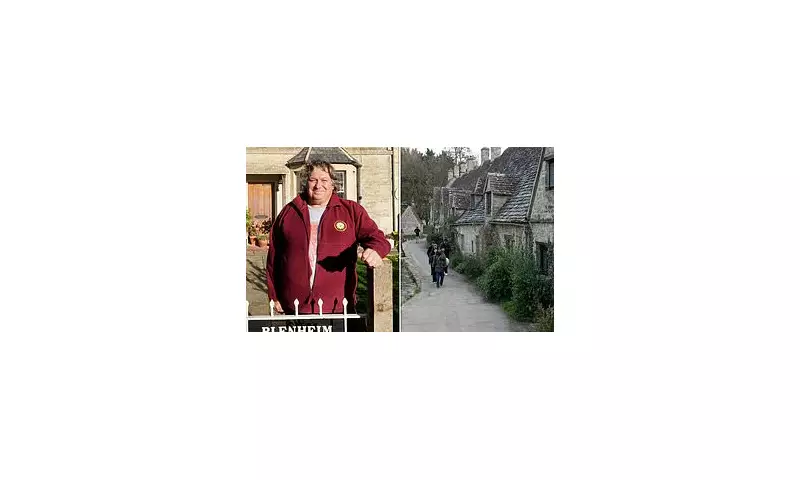
The Great Cotswolds Compromise: Preserving Beauty Through Planning Restrictions
In the heart of England's most picturesque countryside, a planning revolution is quietly unfolding. While many homeowners might bristle at council rules dictating what colour they can paint their own front door, residents across the Cotswolds are embracing strict regulations that preserve the region's historic character.
The famous principle that "an Englishman's home is his castle" is being balanced against the collective desire to maintain the area's unique aesthetic appeal. Scores of towns and villages throughout this sought-after region, popular with the rich and famous, now operate under Article 4 directions that ban even minor alterations to properties without formal planning permission.
Preserving Chocolate-Box Perfection
In Bibury, a Gloucestershire village often described as chocolate-box perfect and overwhelmed by coachloads of Chinese tourists each summer, the restrictions are particularly comprehensive. Locals cannot replace or repaint their front doors or window frames in different colours, erect gates or fences, or lay patios in their front gardens without securing often lengthy and expensive agreements.

Rather than protesting these constraints, many residents see them as essential protection. One local told the Daily Mail: "I am fully supportive of strict planning regulations; the last thing we need is different colour doors. The whole character of the Cotswolds revolves around history - it doesn't revolve around trends."
Craig Chapman, chairman of Bibury Parish Council, adopts a rigorous approach to planning applications. "Every month we look at planning applications. We're fairly rigorous I would say, and anything that's out of step with other properties, we would object," he explained. The council maintains a limited list of approved colours for doors and windows, with green and white being typical acceptable choices.
The Frustrations of Preservation
Not everyone welcomes the strict oversight. One builder from a neighbouring village, who wished to remain anonymous, voiced concerns about practical implications. "I think it's very hard to get anything done, and this is why everything costs so much money," he said. "The rules are there for a reason; you need to protect the heritage, but you also need to evolve and go with the flow of the times, otherwise you're going to stand very still very quickly."
Christa, a Bibury resident for six years, experienced firsthand the delays that can accompany the process. It took nine months to secure approval for a small garden office. "I appreciate them because it means people can't build anything modern here, but it is a bit frustrating," she acknowledged. "It's not so much the rules, but the length of time it takes them to make a decision."
In Avening, where Princess Anne resides at Gatcombe Park with her daughter Zara Phillips and husband Mike Tindall, homeowner Charlotte McDermott endured a three-year planning battle for a loft conversion. Her preferred design with dormer windows was rejected for being too visible from the road. "It was very annoying," she recalled. "It was added costs and just frustration and time; we had a growing family, and I've also been sick this year and we needed the extra space."
Widespread Support for Protection Measures
Despite these frustrations, many residents actively support the preservation efforts. Paul, who retired to the Cotswolds five years ago, recently sought permission to replant a hedge in his front garden and found the process reasonable. "Our building now is 204-years-old, so it's doing the right thing for the building. There's lots of heritage to respect," he reflected.
In Leighterton, retired textiles weaver Pauline Scrivens proudly maintains her pale cream front door, declaring she wouldn't want it any other colour. "If people were allowed a free for all on their colour schemes, it would only take a few to spoil the aesthetic environment," she argued.
The Article 4 directions, first imposed in Bibury and Avening in 1998, continue to expand across the Cotswolds. The comprehensive regulations restrict numerous alterations including:

- Changing front doors and windows
- Replacing painted woodwork with wood stain
- Rendering or cladding the front of houses
- Painting stonework
- Adding porches or altering roofs
- Installing gates, fences or patios
Building company owner Ollie Smith, who regularly works within these constraints, acknowledges the challenges but appreciates the outcomes. "We find ourselves dealing with planning officers on an almost daily basis, but it is worth it," he said. "They are sticklers for ensuring we use exactly the right traditional materials and built in the right way and I think as a result it makes every house we work on blend in perfectly."
The regulations now extend across numerous Cotswolds locations including Snowshill, Chippenham, Didmarton, Bourton On The Water, Lower Slaughter, and Stroud. Even celebrity residents in areas like Chipping Norton, home to Jeremy Clarkson, and Bath, where numerous famous faces reside, must comply with similar restrictions.
A Cotswold District Council spokesperson explained: "Cotswold District Council's planning policies aim to protect the unique character and heritage of our towns and villages. In some more sensitive areas, additional controls are in place to ensure that alterations are in keeping with the local setting."
As the balance between individual property rights and collective aesthetic preservation continues to evolve, the Cotswolds stands as a living experiment in how communities can protect their heritage while accommodating modern life.





