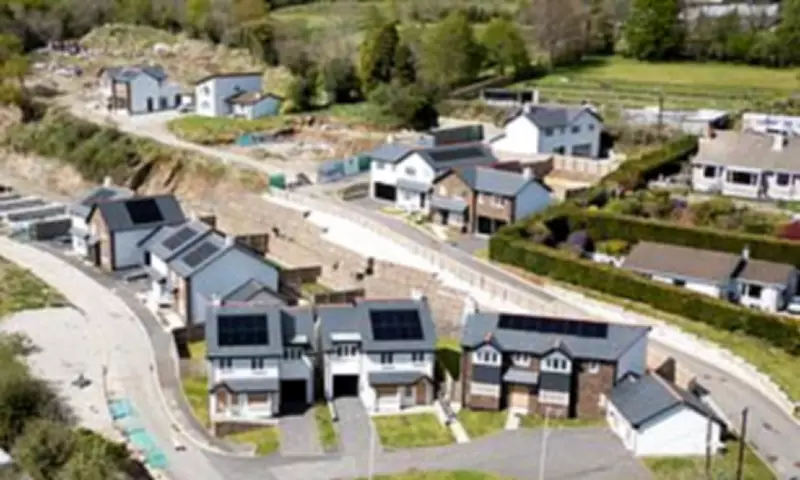
Cornwall's 'Ghost Estate' Remains Vacant After Eight Years of Planning Disputes
Furious residents in Calstock, Cornwall, are blaming a 'ghost estate' of 33 new-build homes that has stood empty for eight years on properties being constructed for 'wealthy outsiders' rather than local needs. The development, granted planning permission in 2018, has never been occupied, left unfinished and boarded up after developers cited costs spiraling out of control due to ongoing delays and legal conflicts with Cornwall Council.
Affordable Housing Promises Unfulfilled
Initially, 15 of the homes were allocated for affordable housing, but neighbours argue these were still too expensive for area residents. Many of the other properties are believed to have been valued between £500,000 and £800,000, fueling accusations that the development caters to affluent buyers from outside Cornwall.
One local resident expressed frustration, stating: 'Why on earth don't the council take them over and rent them out as social housing? It seems ridiculous to knock them down.' Another added: 'This development is adjacent to my son's home hence my knowledge. It has been frozen for a few years, absolutely ridiculous.'

Legal Battles and Cost Overruns
The developers, Michael Wight and Adele Fulner of Construction Partners Ltd, intended for nearly half the properties to be affordable. However, a series of disputes with Cornwall Council led to revised planning applications and a reduction in affordable homes from 15 to 10 units. The council maintained this still met village requirements, but the spat took years to resolve, during which construction costs escalated dramatically.
Director Michael Wight previously accused Cornwall Council of 'weaponising' legal agreements, claiming officers added extra requirements like a second road and a £750,000 retaining wall that eroded their budget. In response, the council stated it is actively engaged in discussions with stakeholders, noting issues have been 'ongoing for several years' and that they must adhere to local and national planning policies.
Local Outcry and Calls for Action
Residents are demanding solutions to utilise the vacant properties. A third local suggested: 'In situations like this councils should have the power to set a deadline for completion or the revocation of the planning permission will take place.' They highlighted broader concerns, adding: 'I dread to think how many unfinished properties there are in the UK that could be used to reduce homelessness, overcrowding and people living in substandard accommodation.'
Another proposed: 'Perhaps the government should buy these properties and arrange for them to be completed. Then hand them over to the relevant council to be used as social rented homes.' This sentiment echoes widespread anger over the wasted potential of the estate, with one local telling Cornwall Live: 'The developers then didn't continue with the social housing part of the development, which was the reason why they got planning in the first place. It is such a shame.'
Council's Stance and Ongoing Efforts
Cornwall Council reiterated its commitment to working with developers to ensure housing developments, including affordable homes, are delivered as per planning permissions. A spokesperson said last year: 'The Council remains in active discussions with stakeholders to find a solution to secure the delivery of the development, including the vital affordable housing element.' However, the prolonged inactivity has left the community disillusioned, with many viewing the 'ghost estate' as a symbol of failed planning and misplaced priorities in addressing local housing crises.