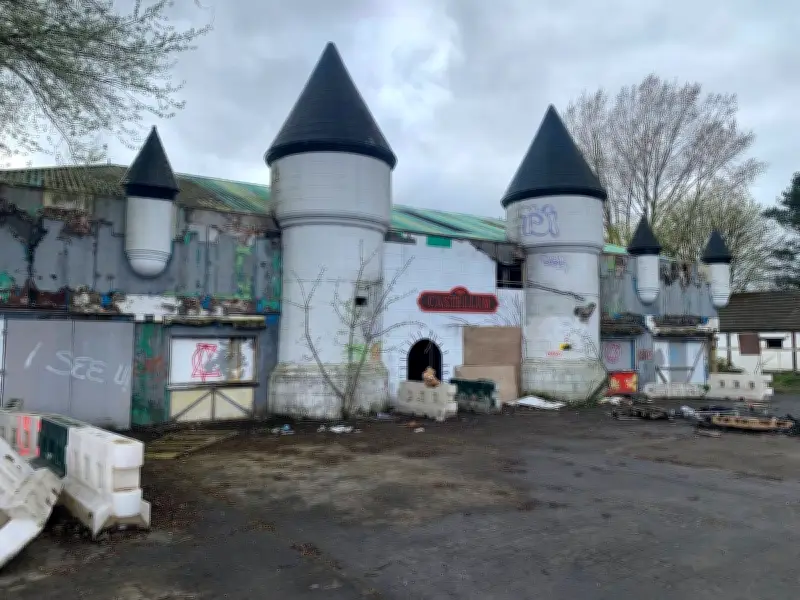
A government-appointed planning inspector has approved plans to build 350 homes on the site of the former Camelot Theme Park in Charnock Richard, Lancashire, 12 years after the first redevelopment application was submitted. The decision, reached after a public inquiry, ruled that the land falls within the 'grey belt' category and that the development is not inappropriate.
Decision Sparks Local Backlash
The approval has drawn sharp criticism from local representatives. One councillor described the ruling as 'utter nonsense' and 'grotesque', warning that the development will worsen traffic congestion on surrounding roads. Despite the opposition, Story Homes, the developer behind the scheme, welcomed the decision, stating it paves the way for transforming the long-derelict site.
Details of the Development
The project includes up to 350 homes, half of which will be affordable housing, along with a community hub and nearly £5 million in contributions toward local infrastructure and services. Story Homes had previously failed twice to secure planning permission for similar schemes. The company said the development will deliver much-needed housing, boost the local economy, and leave a lasting legacy for the area.
The appeal was lodged after Chorley Council failed to determine the application within the required timeframe. During the appeal, the council did not oppose the scheme in principle.
History of Camelot Theme Park
Camelot Theme Park, centred on the legend of Camelot, first opened in 1983. The 140-acre site, owned by Park Hall Leisure, attracted families and school groups from across Merseyside. It featured thrill rides such as Knightmare, Excalibur, Tower of Terror, Gauntlet, Dragon Heights, and Whirlwind.
The park's popularity began to wane by the mid-1990s. After Prime Resorts Limited purchased the site, rides like Excalibur and Tower of Terror were removed, though new attractions such as Excalibur 2, Whirlwind, and Knightmare were introduced. Despite these additions, annual visitor numbers fell to 400,000 by 2000 and dropped below 300,000 by 2009. The park permanently closed in 2012, with many rides sold to European venues. Since then, the site has hosted occasional events, including live-action zombie horror experiences. Today, the medieval-themed location remains largely abandoned, with graffiti-covered structures, decaying roller coasters, and unsettling reminders of its past.