Historic Town Overrun by Barber Shops Sparks Money Laundering Concerns
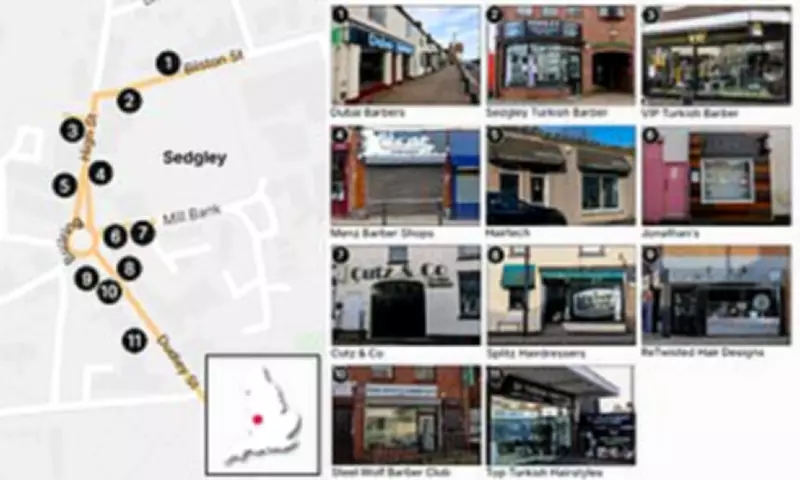
The historic West Midlands town of Sedgley has been dramatically transformed by what locals describe as an overwhelming proliferation of Turkish-style barber shops and hair salons. More than thirty grooming establishments have seemingly materialised along the High Street, fundamentally altering the character of what was once considered a quaint community hub.
From Quaint Village to Barber Shop Capital
Residents report that these businesses have "sprang up out of nowhere" in recent years, creating a density of approximately one salon for every 390 people. This remarkable concentration has led some to dub Sedgley as one of the United Kingdom's unofficial barber shop capitals. The visual landscape has shifted so dramatically that many long-time inhabitants no longer recognise their own High Street.
Local business owner Jessie Southan, who operates Butterflies card shop, expressed concern about the changing retail environment. "I used to be in the market and that closed down," she explained. "People say they want a grocers or a bakery, but they were in the market, so it's hard to know what to do anymore. It seems that fast food, barbers and nail bars seem to be what people want at the moment."

National Context and Criminal Concerns
This local phenomenon mirrors a nationwide trend, with over 750 barbers launching across the UK in 2024 alone. The rapid expansion has raised legitimate suspicions in some quarters about potential criminal infiltration of the industry. There are growing concerns that certain establishments might be operating as fronts for money laundering operations.
Last year, coordinated operations involving National Crime Agency officers, local police forces, immigration enforcement officers, and HM Revenue and Customs inspectors resulted in raids on thirty-three barber shops linked to money laundering and other criminal activities. These operations seized more than £500,000 in illicit cash and led to seven arrests.
While there is no indication that Sedgley's barber shops are involved in illegal activities, the national context has understandably coloured local perceptions. Housing Secretary Steve Reed acknowledged last year that communities have legitimate reasons to be suspicious of barbers that remain open despite having few visible customers.
Community Voices and Economic Sustainability
Hospital worker Rebecca O'Neil, 36, highlighted the lack of retail diversity: "I don't think there's enough diversity in the shops here. It all tends to be loads of new barbers opening and some long-standing hairdressers have closed down as a result. It's a shame there's no boutiques or small independent shops so it ends up looking like a small town rather than a village."
Clive Page, 74, a Sedgley resident, questioned the economic viability of so many similar businesses: "There's too many in the area and there's a lot of Turkish barbers, which we don't really need. They can't be making enough money as there's so much competition. You need a lot of customers to keep thirty hairdressers open."
Another anonymous resident echoed these concerns: "There's loads of Turkish barber shops opened up in the last year or so. There's hardly any for ladies though, it all seems to be men's and there's too many Turkish barbers. It will stop other independent businesses coming to the area I fear."
Established Businesses Adapt to Changing Landscape
Despite the influx of new competition, some long-established barbers have managed to maintain their customer base through loyalty and adaptation. Phillip Dunn and Tony Colabella, both 60, have jointly operated Menz Barber Shops on High Street for twenty-four years.
Phillip explained their survival strategy: "What's enabled us to stay open really is our long-standing customers, many of whom have been with us for this length of time and express loyalty toward us. There is undoubted competition around but we like to think it is healthy competition."
Tony offered a surprising perspective on the proliferation: "We were kind of almost grateful when more opened up because we were that busy it took a bit of pressure off us. After all, you can only cut one person's hair at a time and now it is probably more manageable."

Broader Implications for Community Character
Michael Evans, 85, from Sedgley believes the concentration of hairdressers diminishes the town's unique character: "It's something I've been concerned about for a long time because some of the hairdressers have been here for years and it's not fair on them. It takes a little pride away from them, possibly business as well from the longstanding ones, and you don't want the retail landscape to be dominated by hair shops and barbers."
Yet not all perspectives are negative. George Washington, 72, suggested the barber shops might actually serve as an attraction: "The young people will become the lifeblood eventually and other than pubs, barbers or salons might attract them to get their hair done. The market is re-opening soon as well so we could have even more shops."
The situation in Sedgley reflects broader tensions between economic development, community character, and legitimate concerns about potential criminal exploitation of certain business models. As the town grapples with its new identity as a barber shop hub, residents and business owners alike are calling for greater retail diversity and sustainable economic planning to preserve what remains of the historic town's unique character.