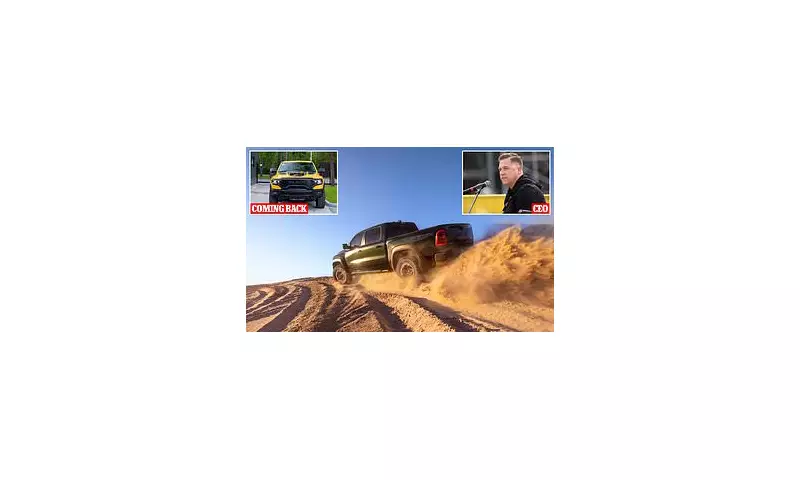
In a dramatic reversal, the American truck manufacturer Ram has confirmed it will bring back its most powerful and controversial pickup truck, the 1500 SRT TRX, for the 2027 model year. Dubbed the 'apex predator,' the supercharged beast was axed in early 2024 but is now being resurrected as its parent company, Stellantis, navigates a sales slump and a shifting regulatory landscape.
A High-Octane Comeback
The decision to reboot the TRX comes at a pivotal moment. Ram's parent conglomerate, Stellantis—which also owns Jeep, Dodge, and Chrysler—has been grappling with a severe 15-percent slump in sales, prompting what insiders described as crisis talks akin to an 'emergency room' atmosphere. The revival of this flagship 'halo' vehicle is a key part of a broader strategy to reignite customer interest and sales momentum.
The new TRX will arrive at dealerships in the summer of 2026, carrying a staggering price tag of $102,590, including destination charges. This represents a significant increase from its 2021 launch price of around $92,000. Powering this return is a familiar but formidable heart: a 6.2-litre supercharged Hemi V8 engine that now produces 777 horsepower. Ram boldly claims this makes the 2027 TRX "the fastest and most powerful production gas pickup truck in the world."

The Regulatory Green Light
The TRX's initial demise was largely due to its prodigious thirst for fuel. Averaging just 12 miles per gallon, its environmental footprint and cost of ownership became untenable under tightening federal Corporate Average Fuel Economy (CAFE) standards. However, the regulatory winds have shifted decisively.
In December, the Trump administration rolled back ambitious fuel efficiency targets. The goal for fleet-wide fuel economy by 2031 was slashed from over 50 miles per gallon to 34.5 mpg. Stellantis CEO Antonio Filosa was present in the Oval Office as these new, lower targets were established. This regulatory relaxation has effectively given Ram the clearance to reintroduce its gas-guzzling performance icon without jeopardising its corporate averages.
Mixed Reactions and Strategic Pivot
The announcement has sparked intense debate. On online forums like Reddit, some enthusiasts have celebrated the return of what they see as the ultimate performance truck, praising its brute force and off-road prowess. Others, however, have condemned the move as environmentally irresponsible. "Larger, stronger wildfires, floods and hurricanes everywhere," wrote one critic, questioning the logic of "carbon-spewing big-block V8s" in the current climate.
Despite the controversy, the TRX's return signals a clear broader U-turn for Stellantis. The company's response to its sales crisis is twofold: cutting prices on existing models and reviving vehicles that customers demonstrably want. Alongside the TRX, this strategy includes the recent relaunch of the standard V8-powered Ram 1500, plans to reboot the Jeep Cherokee SUV, and the introduction of the tiny Fiat Topolino electric vehicle to the US market—a move seemingly designed to also appeal to political calls for small, affordable American-built cars.
Ram CEO Tim Kuniskis left no doubt about the philosophy behind the TRX's return, stating, "SRT doesn't limbo; we high-jump—and 721 horsepower wasn't going to cut it." The message is clear: in a changed regulatory environment, Ram is betting that a renewed embrace of excess will drive its comeback.