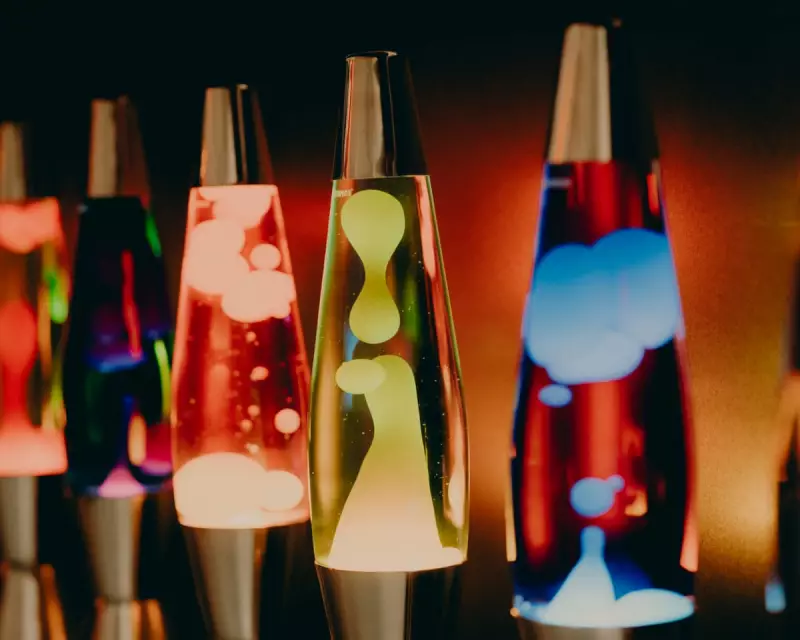
In a dazzling display of retro resurgence, the iconic lava lamp is experiencing a major comeback, with British pioneer Mathmos reporting it has completely sold out of stock in the crucial run-up to Christmas. The surge in demand signals a third wave of popularity for the hypnotic lighting, fuelled by younger generations seeking analogue calm and mid-century style.
The Nostalgia-Fuelled Revival
According to Cressida Granger, the managing director of Mathmos, interest in the company's lamps has skyrocketed. "It feels like they’re in the current conversation in a way they haven’t been," she observed. Granger attributes the appeal to a powerful blend of nostalgia and tranquillity. "They’re sort of nostalgic, aren’t they? So that’s comforting when the world’s changing," she said, highlighting their role in mindfulness and focus.
The lamps offer a slow, analogue experience in a fast-paced digital world, taking around two hours to warm up fully. Sales have been rising steadily for years, but 2024's festive season has proven exceptionally strong, leaving the company short of stock for January. The trend is linked to a growing appreciation for mid-century interiors and Generation Z's fascination with the aesthetics of the late 1990s and early 2000s.

British Heritage and Handmade Magic
Mathmos, originally named Crestworth, was founded in 1963 by inventor Edward Craven Walker, an eccentric figure who created the original Astro lamp, later known as the lava lamp. After a sales slump in the 1980s, Granger, a former vintage dealer, took over the business in 1989 and masterminded its renaissance.
Despite the decades, production retains its artisanal touch. The secret formula for the "lava"—a coloured wax suspended in water—is still loosely based on Walker's designs, and the bottles are filled by hand at the company's factory in Poole, Dorset. Alan Staton holds the unique role of being the only person in Europe who spends his working day putting the lava into the lamps, a task he has performed for three decades.
"Every other lava lamp’s made in China," notes Granger, underscoring the brand's authentic British heritage. This authenticity resonates with customers, including newer staff like Henry Currer, who joined from a Birmingham foundry, drawn by the chance to work for a historic British brand.
Collectors, Collaborations, and Lasting Appeal
The classic Astro model remains the bestseller, but designs like the 1990s rocket-shaped Telstar and newer candle-lit versions are also popular. Mathmos has also successfully tapped into the collector's market through high-profile collaborations. Limited editions with photographer Rankin, band Duran Duran, and designer Sabine Marcelis have sold out in hours.
A recent release of only 1,000 red Rolling Stones-themed lamps caused a queue outside the band's Carnaby Street store in November. "They were going for more money than people bought them for during the time we were selling them," Granger revealed.
The company has cultivated a dedicated community of enthusiasts who often own multiple lamps and gift them to others. "We’ve got quite a big collecting community... We do have some collectors who’ve got hundreds," said Granger, comparing the tactile, ceremonial experience of using a lava lamp to playing a vinyl record.
After periods where cheaper copies threatened the business, Granger now views imitation as a backhanded compliment: "If you’re not being copied you’re not doing anything successful." For Mathmos, the future looks as fluid and bright as the mesmerising blobs in its iconic lamps, proving that sometimes, the new lava lamp is simply the original, timeless lava lamp.