

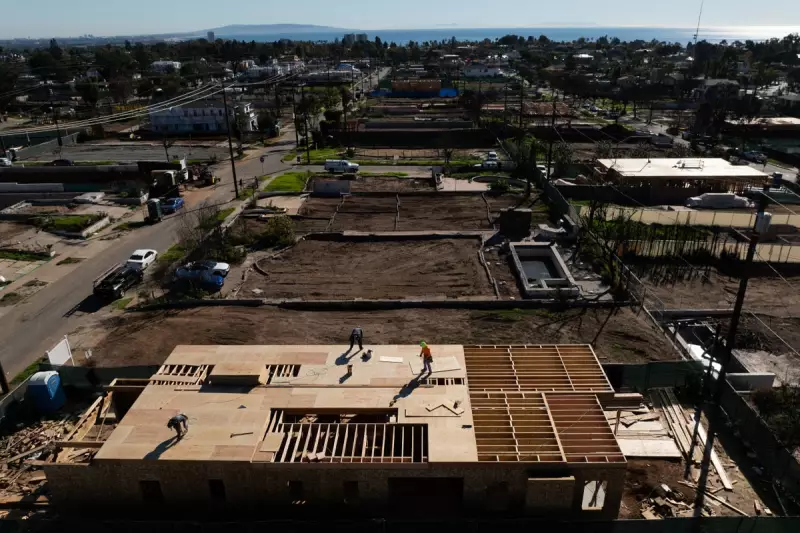
A full year after catastrophic wildfires tore through the Los Angeles area, the landscape of recovery remains bleak. On the anniversary of the Palisades and Eaton fires, which erupted on 7 January 2025, fewer than a dozen homes have been fully rebuilt across Los Angeles County.
A Landscape of Loss and Lingering Delays
The fires, supercharged by drought and hurricane-force winds, claimed 31 lives and destroyed approximately 13,000 homes and residential properties. Today, streets in Pacific Palisades and Altadena are still lined with empty dirt lots. In Malibu, the remnants of beachfront homes are reduced to lonely foundations and concrete piles. Many neighbourhoods lie in darkness at night, with streetlamps yet to be replaced, and even surviving homes often stand empty as families grapple with toxic contamination.
For the vast majority of displaced residents, the path home is blocked by a formidable financial hurdle: insurance. Joy Chen, executive director of the Eaton Fire Survivors Network, representing some 10,000 survivors, highlights a critical issue. "We’re seeing huge gaps between the money insurance is paying out... and what it will actually cost to rebuild," she states. A survey by the nonprofit Department of Angels found that by December, less than 20% of those who lost everything had finalised their insurance claims.

Insurance Shortfalls and a Determined Few
Dissatisfaction with major insurers like State Farm and the California FAIR Plan is rampant, with policyholders citing lowball estimates and burdensome processes. This logjam has prompted a civil investigation by Los Angeles County into State Farm's practices. Without clear financial answers, households cannot commit to rebuilds that can easily exceed $1 million.
Against this backdrop, the few success stories stand out. Ted Koerner, 67, of Altadena, is an exception. With his insurance payout delayed, he liquidated most of his retirement savings to rebuild swiftly, driven partly by a desire to get his ageing golden retriever, Daisy Mae, back home. His new house was completed in just over four months. "We made it," he said, emotional as he watches his dog in their yard.
However, most face a far grimmer calculus. Jessica Rogers, who lost her Pacific Palisades home, discovered her coverage had been canceled. After a gruelling application, she secured a $550,000 SBA loan but now faces emptying her 401(k) to cover the rest. As executive director of a local recovery group, she estimates hundreds in her community are similarly "stuck."
An Unequal Recovery and a Long Road Ahead
The slow pace mirrors other disasters, like the 2021 Colorado wildfires, where significant rebuilding often didn't begin until 18 months later. Experts warn this delay will expose deep inequalities. Andrew Rumbach of the Urban Institute notes the second year of recovery reveals "who’s doing well and who is really struggling and why."
This concern is acute in Altadena, a community with a historically high rate of Black homeownership. Research from UCLA indicates that as of August, 7 in 10 Altadena homeowners with severe damage had not started to rebuild or sell. Among them, Black homeowners were 73% more likely to have taken no action, threatening to erode hard-won community gains.
Despite the challenges, resolve persists. Al and Charlotte Bailey, aged 77, live in an RV on their empty Altadena lot, determined to rebuild where they raised their family. "We decided that, whatever it’s going to cost, this is our community," said Al Bailey. With about 900 homes currently under construction, hope for a wider recovery remains, but for thousands, the future is still written in the ashes.






